Top 20 Wabi Sabi Home Decor Ideas for Quiet Beauty
Published: 13 Nov 2026
Introduction
A perfect home can feel cold, while a worn one feels warm and true. Wabi sabi finds beauty in cracks, faded wood, and soft linen, and it suits any home that wants calm. This guide shares 20 wabi sabi ideas.
Wabi Sabi Home Decor means styling with age, wear, and simple natural things. It uses limewash, aged wood, and handmade ceramics to make rooms feel calm and true. These wabi sabi decor ideas suit every budget and every small home.
Before You Start
Start by looking, not by buying a single new thing. Walk through each room and note what already shows age, wear, and a good story. A cracked pot, a worn chair, or a faded rug can lead the whole room.
Next, pick two or three ideas from this guide and start small. One limewash wall, one handmade bowl, or one linen throw can change a room in one weekend. Add more aged pieces over time, and let your home grow calm with you.
1. Limewash Walls with a Soft, Aged Look
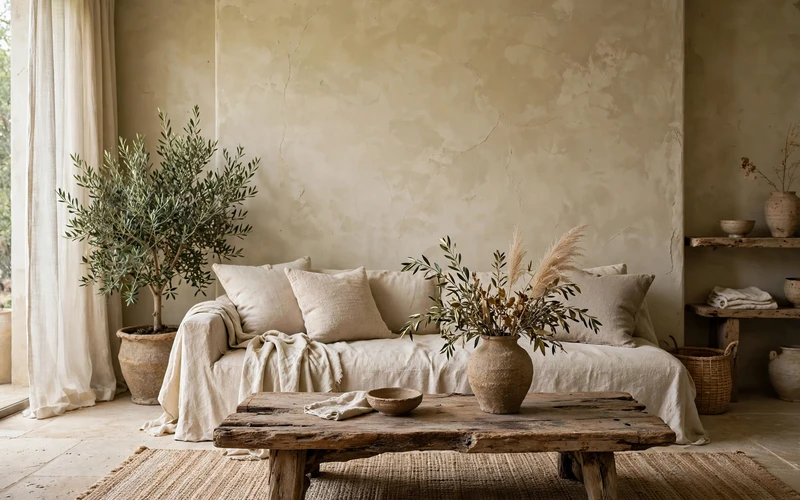
Limewash walls are the heart of wabi sabi, since they age with a soft, cloudy glow no flat paint can match. The uneven wash shows the hand that made it, and it suits rooms of any size. Limewash walls bring calm to every wall they touch.
Brush the limewash on in thin, loose coats, and let each coat dry before the next one. The wall will show soft clouds and faint brush marks, and that is the point. Keep the rest pale, so the aged wall stays the quiet star.
2. Kintsugi Bowls That Show Their Gold Seams
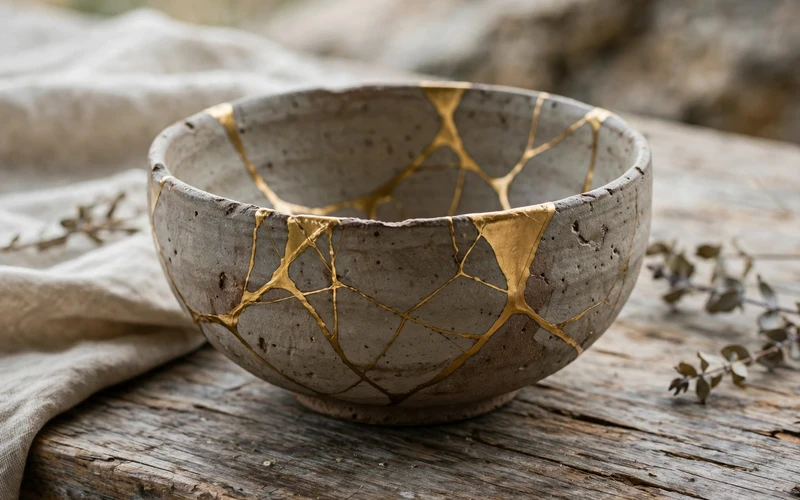
Kintsugi is the clearest sign of wabi sabi, since it turns a crack into gold. A broken bowl mended with a gold seam is more loved than a new one, and it tells a story. Keep one mended bowl where you see it each day.
Use a food-safe gold repair kit, and follow the steps with care and patience. The gold line will catch the light each time you lift the bowl, and the flaw becomes the best part. Display the bowl on a wood shelf, never hidden away.
3. Aged Wood Furniture with Visible Grain
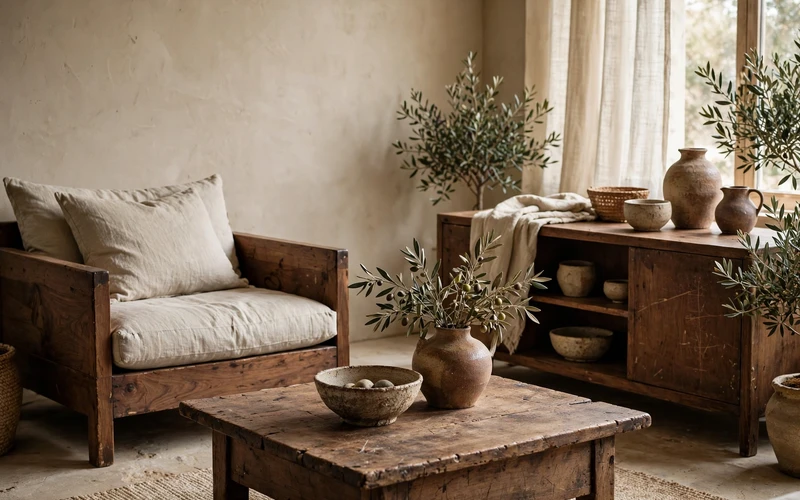
Aged wood is the soul of a wabi sabi room, since every scratch and knot holds a past life. Walnut, oak, and reclaimed pine share one warm glow, and they suit deep calm in any home. Pick one aged piece to lead the room.
Oil the wood twice a year, so the grain stays deep and the colour stays rich. A worn table, a scarred bench, or a reclaimed shelf is enough for one room. Let the marks stay, since they are the proof that the wood has lived.
4. Handmade Ceramics in Uneven Shapes
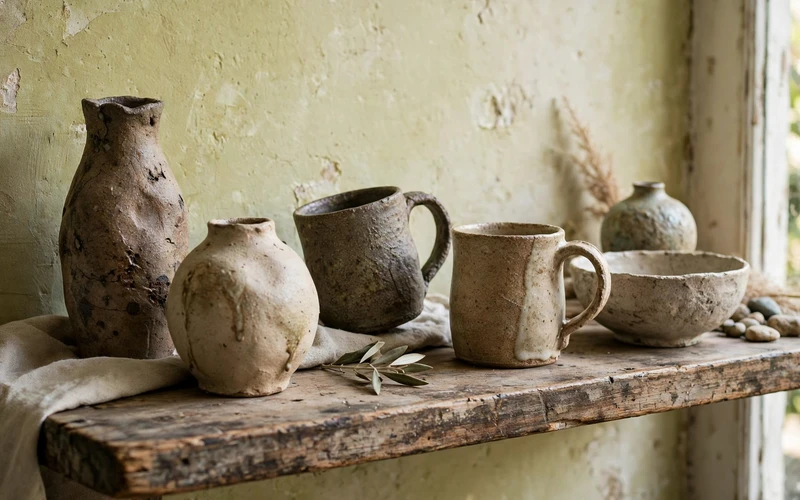
Handmade ceramics are the soul of wabi sabi, since no two pieces ever match. A wheel-thrown vase leans a little, a hand-built bowl dips at one edge, and each flaw makes it yours. Choose pieces that show the hand of the maker.
Mix four stoneware mugs in one tone but different shapes, and let them live on an open shelf. A small vase with one stem is enough for a table, and a rough bowl holds fruit with ease. Buy from local potters when you can, and keep the glaze matte.
5. Natural Linen That Softens with Time
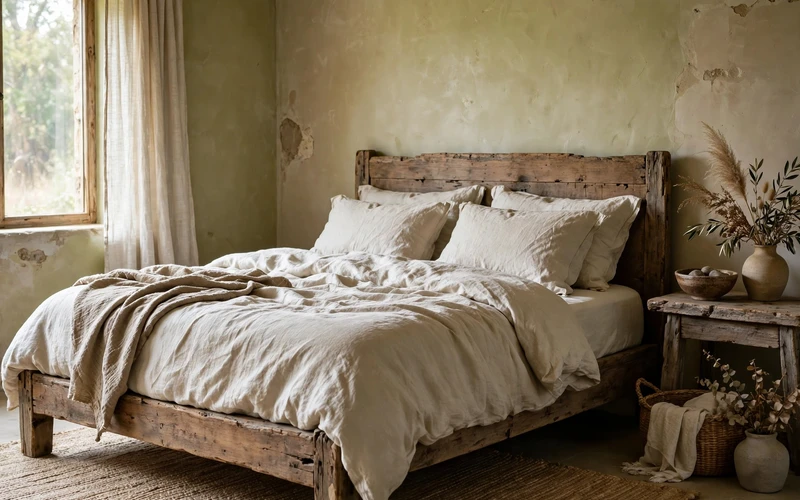
Natural linen is the softest sign of wabi sabi, since it wrinkles, fades, and grows softer each year. Washed linen bedding, loose curtains, and soft cushions bring calm to any room. Pick linen in warm white, sand, or soft stone grey.
Wash linen in cold water, and hang it to dry so the fibres stay soft and loose. Never iron it flat, since the gentle creases are the whole point of the cloth. A linen throw over a worn chair adds warmth on long, quiet nights.
6. A Wabi Sabi Living Room Built on Patina
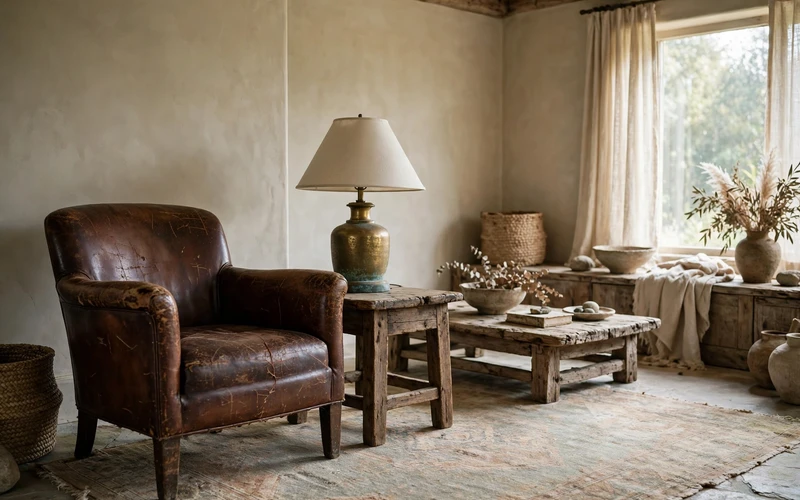
A wabi sabi living room grows from patina, not from new things. A worn leather chair, a faded rug, and a brass lamp with soft tarnish share one quiet glow. The room feels lived in, and that is what makes it calm.
Start with one worn piece, then add a second that shares its warm tone. A living room refresh ideas list starts the same way, with one strong piece and few bold moves. Keep the walls pale, so the aged pieces read as stars, not clutter.
7. Negative Space That Lets the Room Breathe
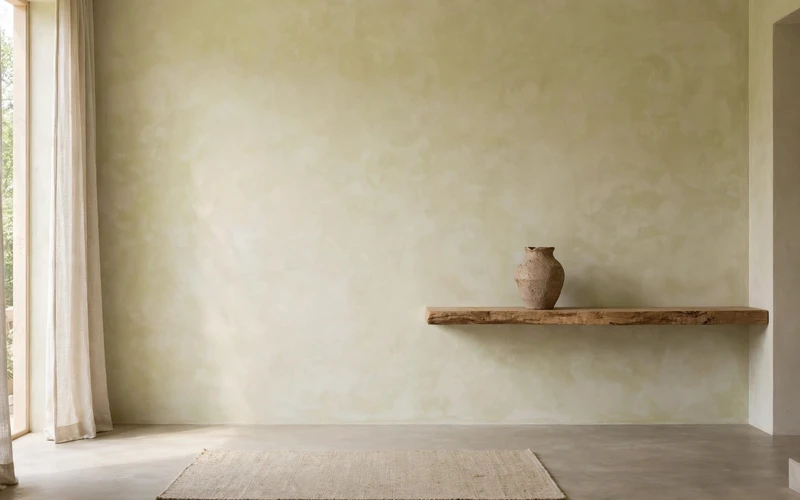
Negative space is the quiet heart of a Japanese wabi sabi interior, since empty space lets each object speak. One vase on a bare shelf means more than ten small things in a row. Leave one wall plain, and let the room rest.
Fill only seventy percent of each shelf, and leave the rest bare for the eye to rest. A clear table, an empty corner, or a plain wall keeps the room from tipping into clutter. Step back each week, and remove one piece that no longer earns its place.
8. Wabi Sabi Bedroom in Washed, Worn Layers
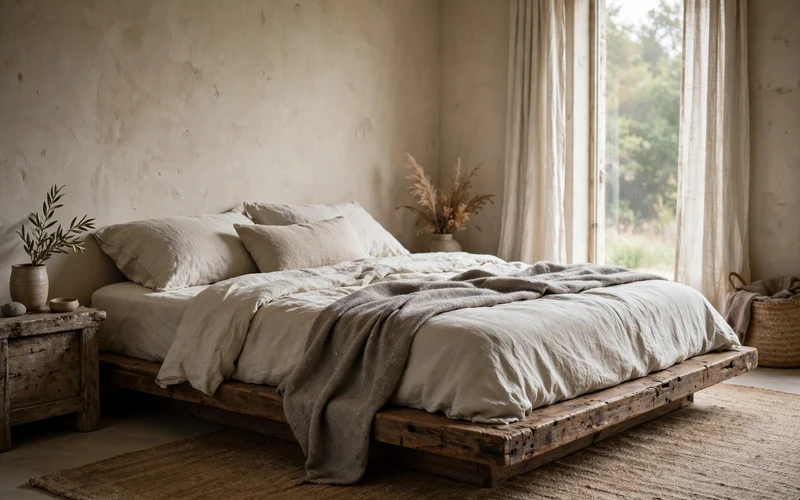
Wabi sabi bedroom ideas start with a low bed and washed, worn layers that invite deep rest. Rumpled linen sheets, a soft wool throw, and a faded quilt share one calm tone. The fewer things in the room, the more peaceful it feels.
Keep the bed frame in aged wood, and let the grain and small dents show. One handmade ceramic lamp and a single dried stem are enough for the side table. Close the curtains soft, and let the room grow dark and still at night.
9. Imperfect Beauty Decor on Open Shelves
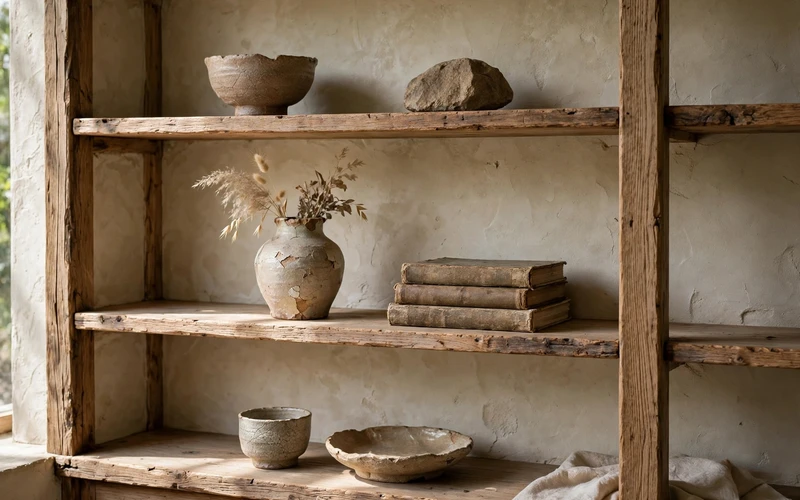
Imperfect beauty decor turns an open shelf into a small story of your life. A chipped vase, a worn book, and a rough stone sit side by side, and each one holds a memory. The shelf feels collected, never staged or stiff.
Group objects in odd numbers, and mix tall, short, and flat shapes for a calm rhythm. Leave gaps between the groups, so the eye can rest on each piece in turn. Repeat one warm tone through the shelf, so it looks planned and calm, and the imperfection beauty stays clear.
10. Wabi Sabi Kitchen Decor with Worn Wood
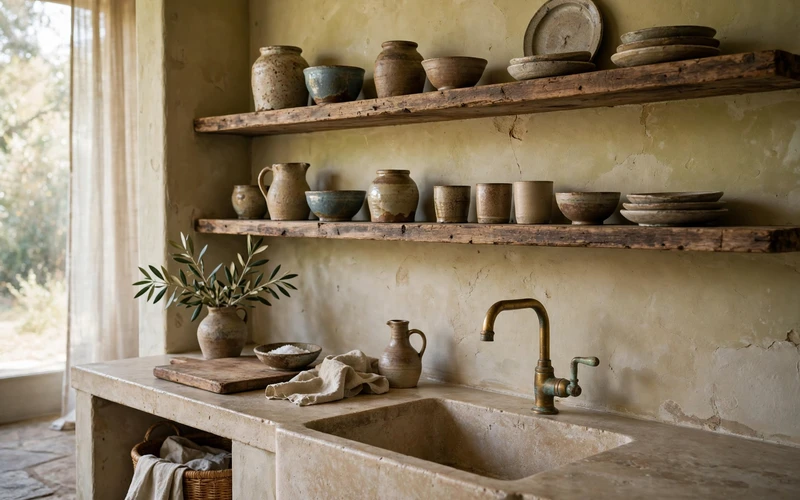
Wabi sabi kitchen decor starts with worn wood and open shelves that show their age. A scarred wood table, mismatched stoneware, and a brass tap with soft patina make the kitchen feel warm. The room invites slow cooking and long talks.
Keep one shelf for daily bowls and cups, and let the rest stay bare and calm. A bowl of rough stones, a clay pot of herbs, and a linen towel are enough for the counter. Wipe the wood with oil twice a year, so the grain stays deep.
11. A Stone Basin with an Uneven Edge
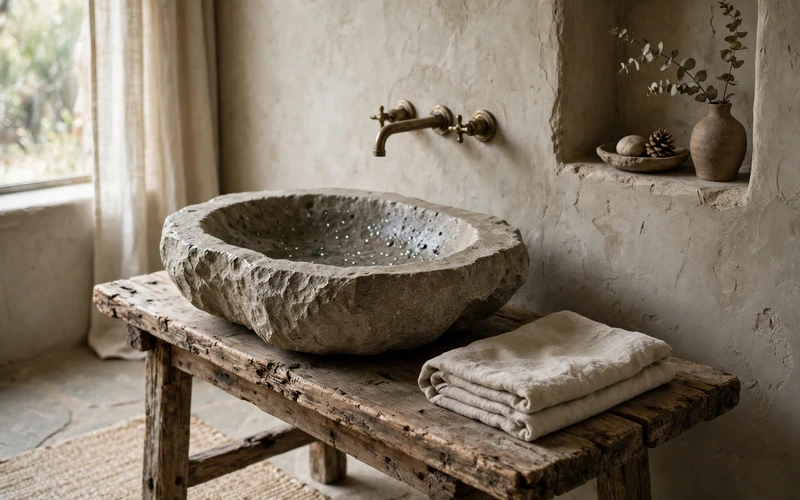
A stone basin with an uneven edge brings the raw calm of nature indoors at once. The rough rim, the soft grey tone, and the cool touch make washing feel slow and kind. No two stone basins ever look the same, and that is the point.
Set the basin on a worn wood stand, and keep the counter clear around it. One small clay cup for a toothbrush and a folded linen towel are enough. Rinse the stone with plain water, and let it dry in soft, natural light.
12. Wabi Sabi Bathroom Ideas with Raw Stone
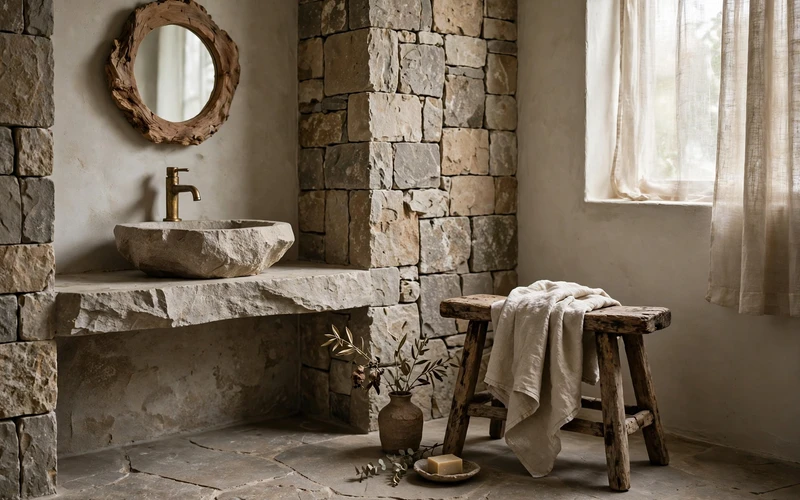
Wabi sabi bathroom ideas start with raw stone and aged wood that grow more calm with use. A rough stone tile, a worn wood stool, and a linen towel share one soft tone. The room feels like a quiet bath house, not a showroom.
Hang one small mirror with a raw wood frame, and keep the glass free of clutter. A clay dish for soap, a single green stem, and soft warm light are enough. Let the stone age and the wood darken, since time is the best decorator here.
13. Asymmetry in Art and Object Placement
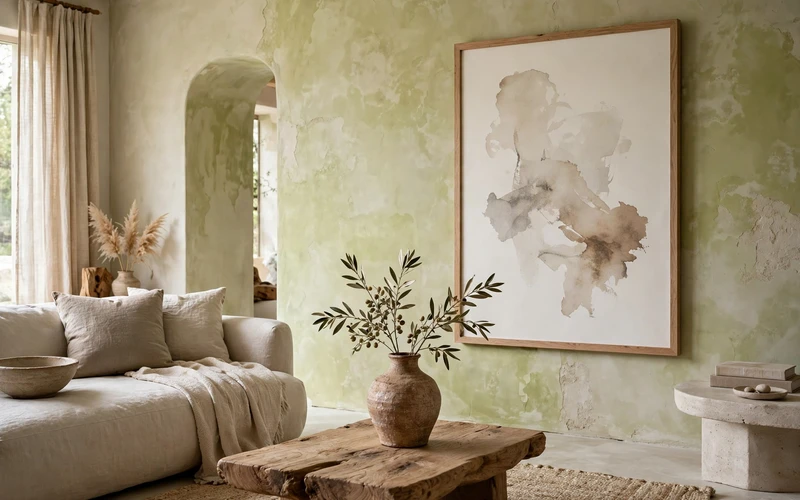
Asymmetry is the soul of wabi sabi, since a slightly off-centre frame feels more alive than a straight row. Hang one large print low on the wall, and let the space beside it stay bare. The eye moves with ease, and the room feels calm.
Place one tall vase on the left of a shelf and two small bowls on the right. Odd numbers and uneven gaps look best in most rooms, since they feel found, not forced. Step back often to check the balance, and trust your eye.
14. Dried Branches and Seasonal Stems
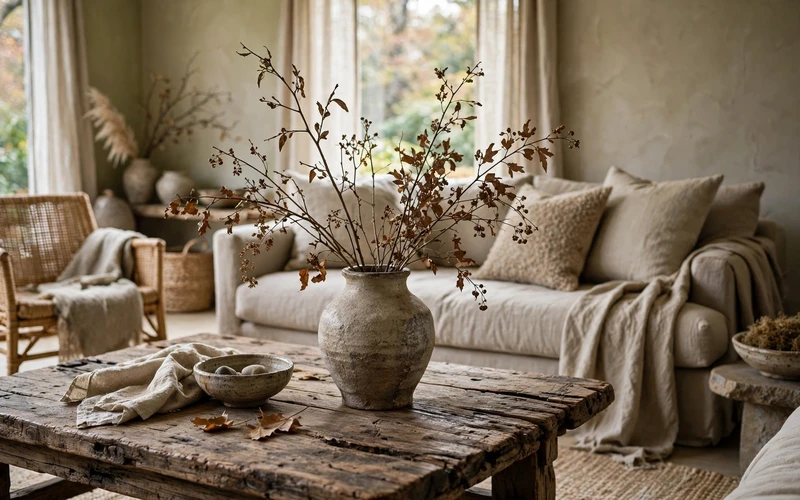
Dried branches are the simplest wabi sabi gesture, since they show the beauty of a season that has passed. One tall branch in a clay vase, a few dried grasses, or a bowl of rough stones is enough. Nature indoors keeps the room tied to the year.
Change the stems with the seasons, and let each one dry in place when its time ends. A branch of quince in spring and dried grasses in autumn both suit the same vase. Keep the vase plain, so the branch stays the quiet star.
15. A Low Wood Table Scarred by Use
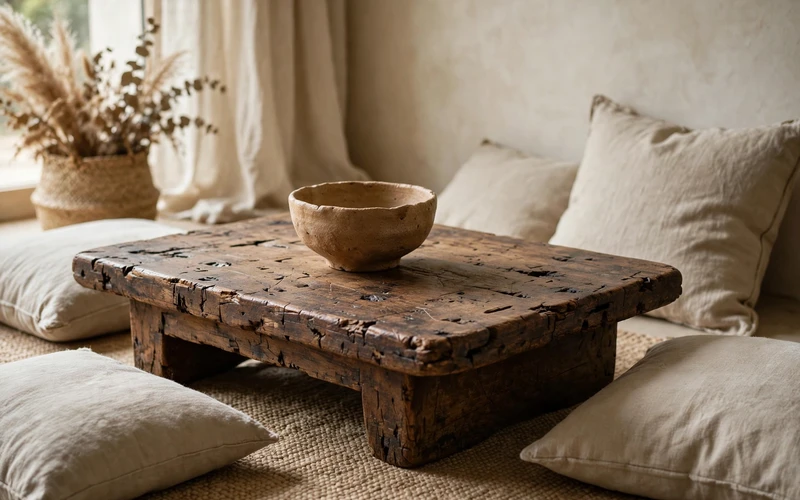
A low wood table scarred by use is the warmest seat in a wabi sabi room. Rings from cups, small dents, and a faded top show years of quiet meals and long talks. The scars are the proof that the table has lived.
Style the table with one stack of books, a small clay bowl, and a low vase of green stems. A scarred table brings the warmth of a cozy winter living room on cold nights, and it suits linen and wool best. Keep the top clear enough to use each day.
16. Mismatched Mugs and Plates on Purpose
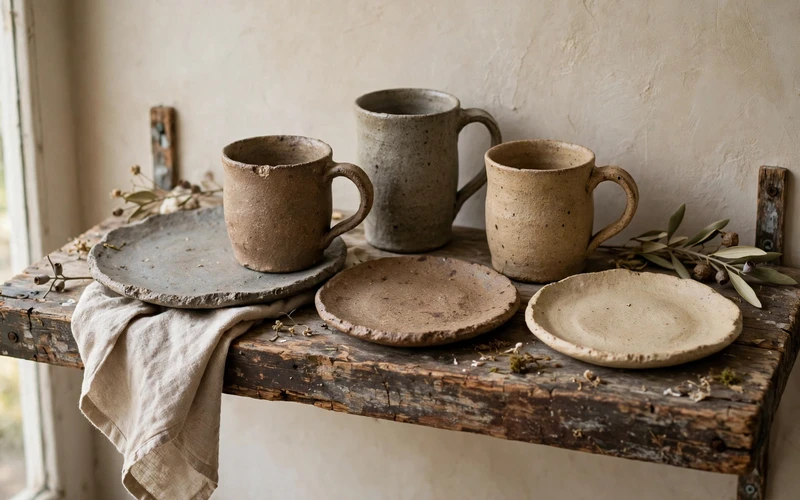
Mismatched mugs and plates are the easiest wabi sabi win, since no two handmade pieces ever match. Four stoneware mugs in one tone but different shapes make a shelf feel warm and real. Each cup holds its own small story.
Set the table with plates that share one warm colour but differ in size and rim. A dining table set this way borrows from dining room decor ideas, with a worn wood table and soft linen napkins. Keep the glaze matte, so the pieces read as one calm family.
17. Earthy Clay Plaster on One Wall
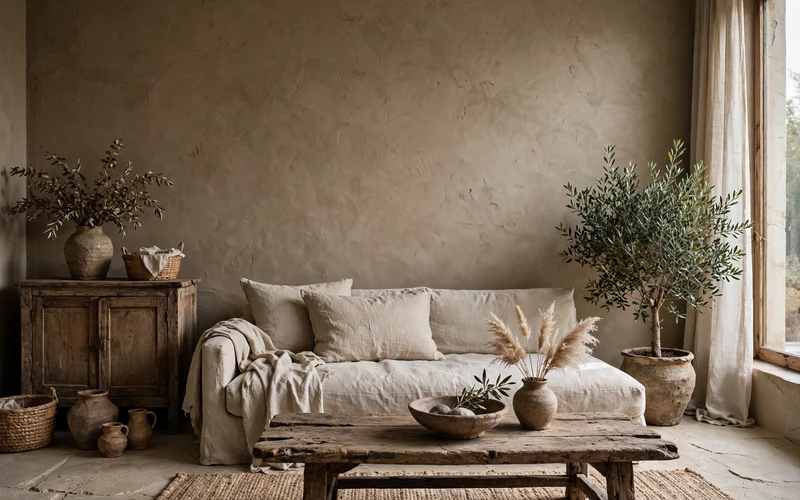
Earthy clay plaster gives one wall the soft, uneven depth that flat paint can never match. The hand-applied surface shows faint trowel marks and warm clouds of tone, and it suits stone, wood, and linen best. Pick one wall, and keep the rest pale.
Apply the plaster in thin coats, and let each coat dry in soft, natural light. The wall will show gentle clouds and faint marks, and that is the point. Seal it with a matte wax, so the surface stays soft and easy to clean.
18. A Handmade Rug with an Uneven Weave
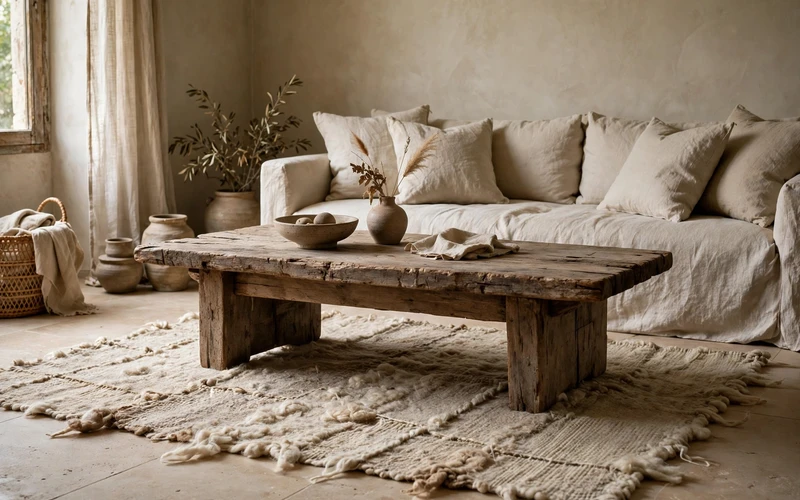
A handmade rug with an uneven weave grounds a wabi sabi room in warmth and craft. Undyed wool, soft cotton, and faded plant dyes share one quiet tone, and the weave shows the hand of the maker. Pick a rug large enough for the front legs of all the seats.
Layer a smaller rug on top for extra texture and a softer feel underfoot. Keep the rug colours in the same family as the cushions and art, so the room reads as one calm story. Shake the rug out each week, and turn it twice a year.
19. Old Brass and Copper with Natural Patina
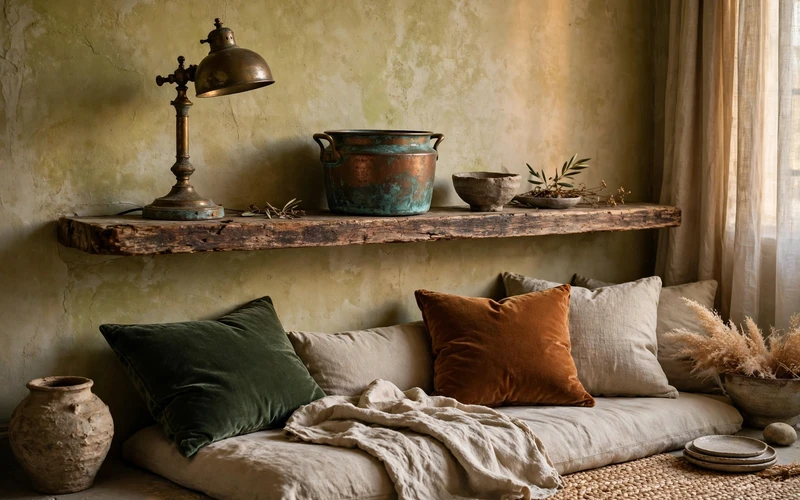
Old brass and copper with natural patina shine softly against worn wood and pale walls. A tarnished lamp, a darkened tray, or a copper pot with green hints adds warmth without noise. Patina is the proof that metal has lived a long, good life.
Use brass in three small spots, not in every corner, so it stays special. A lamp base, a mirror frame, and a tray are enough for one room. Never polish it bright, since the soft tarnish is the whole point of the piece.
20. A Quiet Corner Left Almost Empty
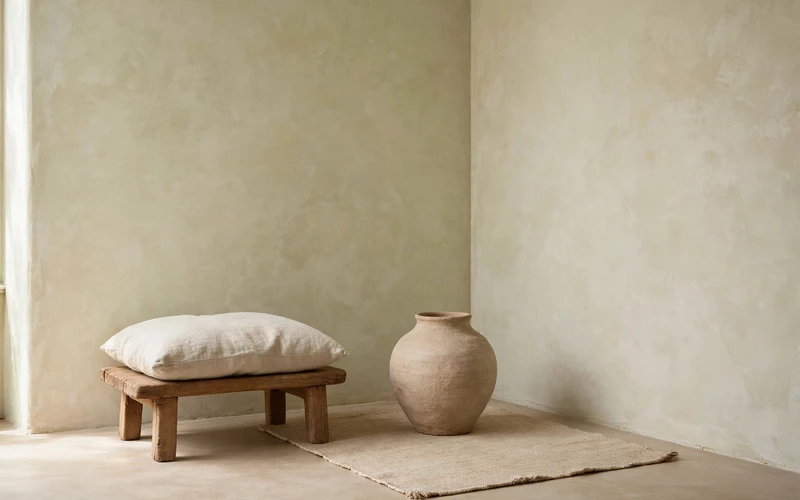
Warm minimalist home decor shows how few pieces can still feel calm, and a wabi sabi corner borrows that quiet. One low stool, one handmade vase, and one soft cushion are enough for a whole corner. The empty space is the luxury here, not the things.
Keep the corner free of screens and clutter, so it stays a place to sit and breathe. A wabi sabi style home needs one such corner in every room, and it costs nothing to make. Sit there each morning, and let the day start slow and calm.
Comparison Table
| Idea | Key Element | Best For | Effort | Budget |
|---|---|---|---|---|
| Limewash walls | Soft limewash, uneven | Living room | Easy | Budget |
| Kintsugi bowls | Gold seams, repair | Shelves, table | Easy | Budget |
| Aged wood | Walnut, oak, pine | Living room | Easy | Mid-range |
| Handmade ceramics | Uneven shapes, matte | Shelves, table | Easy | Budget |
| Natural linen | Washed linen, soft | Bedroom | Easy | Budget |
| Patina living room | Worn leather, brass | Living room | Easy | Mid-range |
| Negative space | Empty shelves, gaps | Whole room | Easy | Budget |
| Worn bedroom | Low bed, linen | Bedroom | Easy | Budget |
| Shelf stories | Chipped vase, stone | Shelves | Easy | Budget |
| Worn kitchen | Scarred wood, stoneware | Kitchen | Easy | Mid-range |
| Stone basin | Rough stone, uneven | Bathroom | Medium | Mid-range |
| Raw bathroom | Stone tile, wood | Bathroom | Medium | Mid-range |
| Asymmetry | Off-centre art | Living room | Easy | Budget |
| Dried branches | Clay vase, stems | Entry, shelves | Easy | Budget |
| Scarred table | Low wood, dents | Living room | Easy | Mid-range |
| Mismatched mugs | Stoneware, one tone | Kitchen, dining | Easy | Budget |
| Clay plaster | Hand-applied, warm | Living room | Medium | Budget |
| Handmade rug | Undyed wool, weave | Living room | Easy | Mid-range |
| Old brass | Tarnished brass, copper | Shelves | Easy | Budget |
| Quiet corner | Low stool, vase | Any room | Easy | Budget |
Frequently Asked Questions
1. What is Wabi Sabi Home Decor?
Wabi Sabi Home Decor means styling a home with age, wear, and simple natural things. It uses limewash, aged wood, and handmade ceramics to make rooms feel calm and true. The style suits any home, and it needs no big change to start.
2. How is wabi sabi different from minimalism?
Minimalism chases clean lines and empty rooms, while wabi sabi chases warmth and age. A wabi sabi room keeps worn wood, cracked bowls, and soft linen, and it values patina over polish. The two styles share calm, but wabi sabi loves the marks of time.
3. What colours work best in a wabi sabi home?
Warm white, stone, clay, mushroom, soft charcoal, and the muted greens of tea and moss work best. Colours meet without sharp edges, so light moves softly across the room. Keep one warm neutral, like cream walls, so the deep tones have room to glow.
4. Can wabi sabi suit a small home?
Yes, wabi sabi suits a small home well, since it needs few pieces and much empty space. Use one aged table, one mirror, and one handmade vase, and keep the walls pale. Slim furniture with visible legs keeps the floor clear, so the room feels open and calm.
5. How do I start wabi sabi on a low budget?
Start with what you already own, and keep the pieces that show age and wear. A cracked bowl, a worn chair, or a faded rug can lead the whole room. Add one limewash wall or one handmade bowl next, and let the home grow calm over time.
6. What is kintsugi?
Kintsugi is the Japanese art of repairing broken pottery with gold lacquer, so the crack becomes the best part of the piece. A mended bowl is more loved than a new one, since it holds a story. Use a food-safe gold repair kit, and follow the steps with care.
7. What materials suit wabi sabi best?
Solid wood, natural stone, clay, linen, wool, and handmade ceramics suit wabi sabi best. These materials age well and gain character over time, while glossy plastic and polished metal do not. Choose matte, raw, and hand-made surfaces, and let them wear with grace.
8. How do I keep a wabi sabi home from looking messy?
A wabi sabi home is clean, edited, and planned, with room for wear inside that order. Fill only seventy percent of each shelf, and leave the rest bare for the eye to rest. Step back each week, and remove one piece that no longer earns its place.
9. How much does wabi sabi home decor cost?
Wabi sabi can start at a low cost with worn pieces, limewash, and handmade bowls. Mid-range ideas include an aged wood table, a handmade rug, or a stone basin. High-end choices, such as a reclaimed wood wall or a brass chandelier, cost more but last for years.
Conclusion
Wabi Sabi Home Decor is not about a bare room. It is about age, wear, and one good piece that fits your home. Start with one wall, one bowl, or one linen throw today, and grow calm from there now.
Pick one idea from this guide and try it this weekend. Mend one bowl with gold, paint one wall with limewash, or hang one linen curtain. Small steps build a home that feels quiet, calm, and true, and your wabi sabi style will thank you with soft days ahead.


- Be Respectful
- Stay Relevant
- Stay Positive
- True Feedback
- Encourage Discussion
- Avoid Spamming
- No Fake News
- Don't Copy-Paste
- No Personal Attacks
- Be Respectful
- Stay Relevant
- Stay Positive
- True Feedback
- Encourage Discussion
- Avoid Spamming
- No Fake News
- Don't Copy-Paste
- No Personal Attacks
