How to Deep Clean Your Mattress: 5 Easy Steps for a Fresh and Clean Bed
Published: 1 Nov 2026
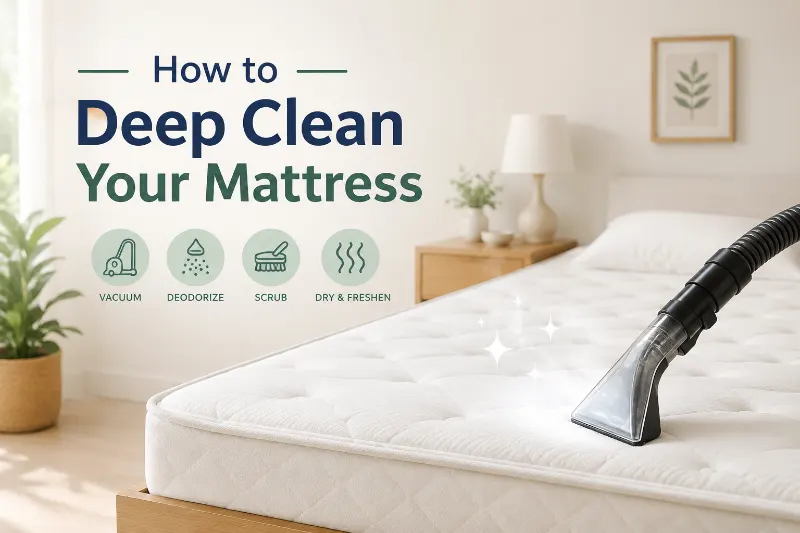
A mattress collects sweat, dust, dead skin cells, body oils, and stains over time. Regular sheet washing cannot remove all this dirt. A deep clean helps your bed feel fresh and keeps your bedroom more comfortable. But how can you clean a mattress without damaging it?
This guide explains how to deep clean your mattress in five simple steps. You will learn how to remove surface dirt, treat stains, use baking soda, and dry your mattress safely. These methods work for many common mattress types, but always check the care label first.
Remove all bedding, vacuum the mattress, and treat visible stains with a suitable cleaner. Sprinkle baking soda over the surface, let it sit, and vacuum again. Allow the mattress to dry completely before putting clean sheets back on.
You do not need expensive equipment for basic mattress cleaning. A vacuum cleaner, clean cloths, baking soda, and a suitable stain cleaner can help you complete the job.
What Do You Need Before Deep Cleaning Your Mattress?
Before you start, gather your cleaning supplies and prepare the bedroom. The right tools help you remove dirt without soaking the mattress. A little preparation also makes each cleaning step easier and helps prevent moisture problems.
Basic Cleaning Supplies
You can clean most everyday mattress dirt with simple household supplies. Check your mattress care label before using any liquid cleaner. Some materials need special care, especially memory foam and latex.
Here are the basic supplies you may need:
- Vacuum cleaner with an upholstery attachment.
- Baking soda and a clean, soft cloth.
- A suitable mattress stain cleaner or mild cleaning solution.
Check Your Mattress Type First
Different mattress materials need different cleaning methods. A traditional spring mattress may handle careful surface cleaning, while memory foam needs extra attention. Too much liquid can damage foam layers and create moisture problems inside the mattress.
Example: A queen-size memory foam mattress in a small bedroom with a simple modern style needs gentle surface cleaning. A homeowner with a limited budget can use a vacuum and a small amount of suitable cleaner.
Remove All Bedding and Mattress Covers
Start by removing everything from your bed. Take off the sheets, pillowcases, blankets, and mattress protector. Put washable items in the laundry. This step exposes the full mattress surface and helps you find hidden stains.
If you enjoy keeping your bedroom clean and seasonal, you can also refresh the rest of the space. For example, simple seasonal changes can complement the cozy look of Christmas fireplace decor ideas.
Renter-friendly tip: Keep your cleaning supplies simple and avoid permanent changes to the bed or bedroom.
Step 1: How Do You Remove Dust and Dirt From a Mattress?
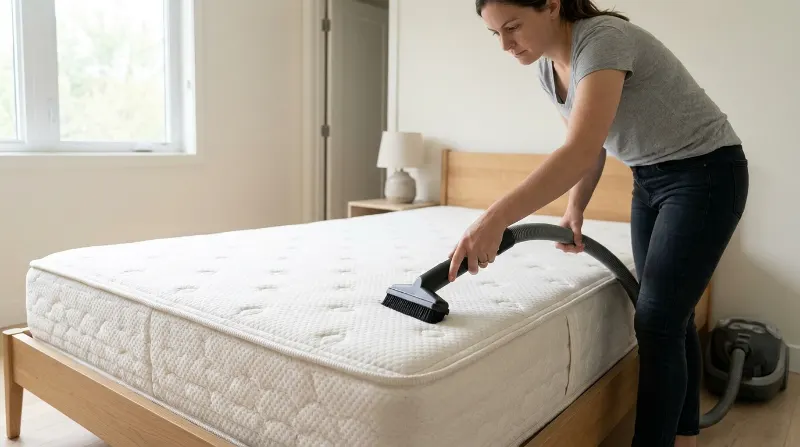
Vacuuming removes loose dirt, dust, hair, and dead skin cells from the mattress surface. Start at the top and work across the entire bed. Use an upholstery attachment to reach seams, corners, and edges without damaging the fabric.
- Remove loose hair and visible debris first.
- Vacuum slowly instead of rushing across the fabric.
- Pay extra attention to seams, edges, and corners.
Start With the Top Surface
Place the vacuum’s upholstery attachment flat against the mattress. Move it slowly from one side to the other. Use gentle pressure and cover every part of the surface. Avoid using a rough brush on delicate mattress fabrics.
A slow cleaning pattern helps you avoid missing dusty areas. Work in small sections and overlap each pass slightly.
Clean the Seams and Edges
Dirt often collects around mattress seams and piping. These areas can hold hair, dust, and small particles. Use a narrow vacuum attachment to clean these spaces carefully. Do not pull or stretch the mattress fabric.
Pay attention to the corners because they often collect dust from the bed frame and surrounding floor.
Vacuum Both Sides When Possible
Some mattresses allow you to clean both sides, while others have a specific sleeping surface. Check the manufacturer’s instructions before flipping your mattress. Clean the underside only when the design allows it.
If your mattress is too heavy, do not lift it alone. You can clean the accessible edges and nearby areas instead.
Example: A full-size spring mattress in a medium-sized family bedroom with a classic style may collect hair and dust around its edges. A renter can use an existing vacuum instead of buying special equipment.
Action steps:
- Remove loose hair from the surface.
- Vacuum the top in slow, straight passes.
- Clean the seams and corners.
- Check the care label before cleaning the underside.
Budget tip: A low-budget approach uses a basic vacuum with an upholstery attachment. A medium-budget option may include a vacuum with a narrow crevice tool. A high-budget option could involve professional mattress cleaning. Check current service prices before booking.
Pet-owner tip: If your pets sleep on the bed, vacuum more often. Pet hair can collect around seams and under pillows.
Step 2: How Can You Remove Stains From a Mattress?
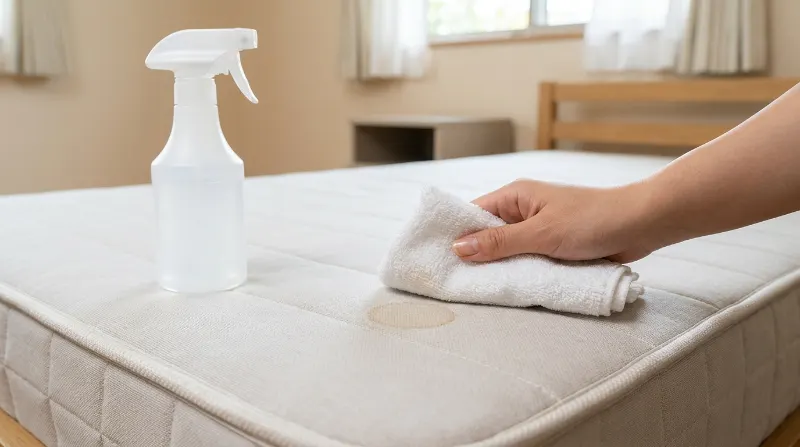
Mattress stains need attention before you clean the entire surface. Sweat, drink spills, food, and urine can leave marks on mattress fabric. Choose a suitable cleaner for the stain and mattress material. Always test it on a small hidden area first.
- Identify the stain before choosing a cleaning method.
- Blot fresh spills with a clean, dry cloth.
- Avoid soaking the mattress with water or cleaner.
Treat Fresh Liquid Spills First
Fresh spills need quick attention because liquid can move into the mattress layers. Use a clean, absorbent cloth to blot the area. Press gently and lift the cloth instead of rubbing the stain.
Rubbing can spread the liquid and push it deeper into the fabric. Repeat the process with a dry section of cloth until you remove as much moisture as possible.
Remove Sweat and Yellow Stains
Sweat and body oils can leave yellow marks over time. These stains often appear around the center of the mattress or near the pillow area. Use a cleaner that suits your mattress fabric and follow its label instructions.
Apply only a small amount to the affected area. Avoid pouring liquid directly onto the mattress.
Clean Urine Stains Carefully
Urine stains need extra care because they can leave both marks and odors. Blot fresh urine with a dry cloth first. An enzyme-based cleaner designed for the relevant stain and mattress material may help break down organic residue.
Follow the cleaner’s directions and test it first. Never mix cleaning products, especially bleach and ammonia-based products.
Handle Old or Set-In Stains
Older stains may need more than one careful cleaning attempt. Do not scrub the fabric aggressively. Apply a suitable cleaner as directed, blot gently, and allow the area to dry between treatments.
Some stains may remain even after careful cleaning. Avoid using stronger chemicals just to make the mark disappear.
Example: A queen-size mattress in a small rental bedroom with a neutral style has an old coffee stain. The renter can test a fabric-safe cleaner in a hidden area before treating the visible mark.
Action steps:
- Identify the type of stain.
- Blot liquid with a dry cloth.
- Test a suitable cleaner in a hidden area.
- Apply a small amount as directed.
- Blot the treated area and let it dry.
Budget tip: A low-budget option is a clean cloth and a small amount of suitable household cleaning solution. A medium-budget option is a fabric-safe stain cleaner. A high-budget option is professional stain treatment. Use [CHECK CURRENT PRICE] before adding any service cost.
Safety note: Never mix bleach, ammonia, vinegar, or other cleaners. Follow the product label and keep the room ventilated.
Step 3: How Does Baking Soda Help Freshen a Mattress?
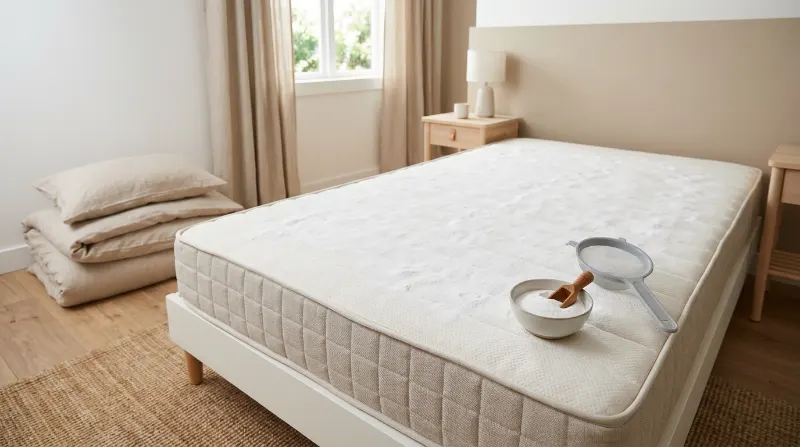
Baking soda can help reduce some surface odors and absorb light moisture. It is a simple option for refreshing a mattress after vacuuming and stain treatment. Use a thin, even layer across the dry surface instead of making thick piles.
- Sprinkle baking soda over the mattress surface.
- Spread it gently with a clean, dry hand.
- Keep the mattress away from moisture during this step.
Spread Baking Soda Across the Surface
Baking soda works best when it reaches the areas that need freshening. Sprinkle a light layer over the mattress and spread it gently. You can use a clean, dry hand to cover the surface evenly.
Do not press the powder into the fabric. A thick layer will take longer to vacuum and may leave residue behind.
Focus on Areas That Hold Odors
Some mattress areas collect more body oils and odors than others. The center, pillow area, and places where people sleep regularly may need extra attention. Add a little more baking soda to these spots.
Avoid using baking soda on a wet mattress. First allow any treated stain areas to dry.
How Long Should Baking Soda Stay on the Mattress?
Allow baking soda to sit for several hours. Many people leave it for a few hours or longer when the mattress care instructions allow it. Keep pets and children away from the powder during this time.
Longer contact does not guarantee that every odor will disappear. Deep odors may need a suitable cleaning treatment.
Example: A king-size mattress in a large family bedroom with a cozy farmhouse style may have light everyday odors. A homeowner with a low budget can use a thin layer of baking soda as part of a basic cleaning routine.
Action steps:
- Make sure the mattress surface is dry.
- Sprinkle a thin layer of baking soda.
- Spread it evenly over the fabric.
- Leave it for several hours.
- Keep pets and children away from the mattress.
Budget options:
| Budget level | Cleaning approach |
| Low | Use a small amount of household baking soda. |
| Medium | Use baking soda with a suitable vacuum attachment. |
| High | Consider professional odor treatment for stubborn smells. |
Pet-owner tip: Do not let pets walk, roll, or sleep on the mattress while loose baking soda covers the surface. Some pets may lick or inhale the powder.
Step 4: How Do You Vacuum Baking Soda From a Mattress?
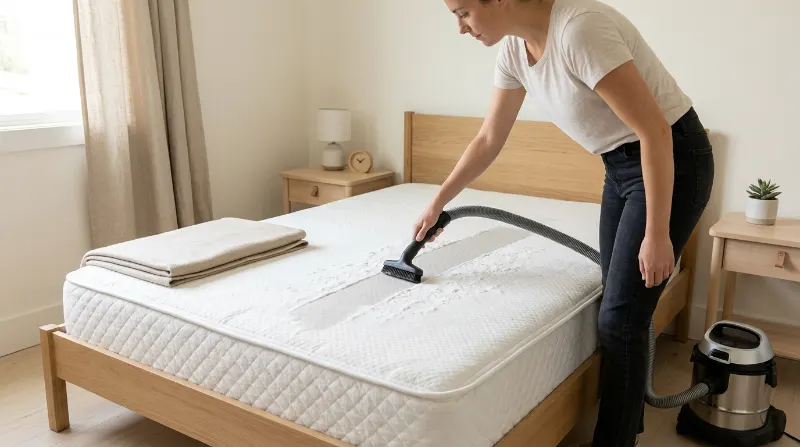
After the baking soda has rested on the mattress, remove it with a vacuum cleaner. This step collects the powder along with some loose dirt. Work slowly and check the seams because baking soda can settle in small fabric gaps.
- Use an upholstery attachment for the main surface.
- Vacuum corners and seams carefully.
- Repeat gentle passes if you see powder remaining.
Vacuum the Entire Mattress Again
Start at one end of the mattress and move the vacuum in straight lines. Cover the full surface and overlap each pass slightly. Use slow movements to collect as much powder as possible.
Do not press the vacuum attachment too hard against the fabric. Gentle cleaning helps protect the mattress cover.
Clean Corners and Fabric Seams
Baking soda can collect in corners, stitched edges, and small fabric folds. Use a crevice attachment to reach these spaces. Check the mattress from different angles to find any visible white residue.
A handheld vacuum can also help with smaller areas. Make sure the attachment is clean before using it.
Check the Mattress Before Moving On
Look over the entire surface after vacuuming. If you still see powder, vacuum those spots again. Do not place clean bedding on the mattress while loose powder remains.
If the vacuum leaves visible residue, check its filter and suction. A blocked filter can reduce cleaning performance.
Example: A queen-size mattress in a medium rental bedroom with a minimalist style has baking soda around its stitched edges. The renter can use a crevice attachment to clean the seams without buying another machine.
Action steps:
- Vacuum the top surface in slow passes.
- Use a narrow attachment around the edges.
- Check the seams and corners.
- Repeat until you remove visible powder.
Budget tip: A low-budget option is your regular vacuum. A medium-budget option is a vacuum with a crevice attachment. A high-budget option is a professional cleaning service if the mattress still has stubborn dirt or odors.
Family tip: Keep children away while you vacuum. This prevents them from disturbing the cleaning area or breathing in loose powder.
Step 5: How Do You Dry a Mattress Completely After Cleaning?
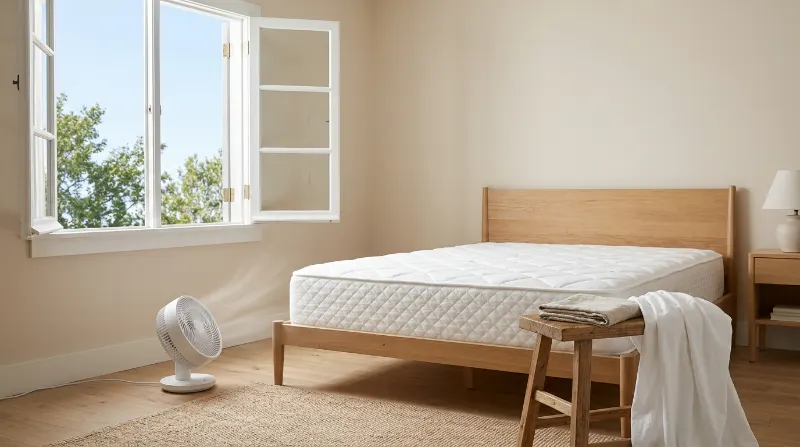
Drying is an important part of mattress cleaning. Even a small amount of trapped moisture can cause problems inside mattress layers. Give the surface enough time to dry before replacing the bedding. Good airflow helps remove moisture safely.
- Open windows when outdoor conditions allow.
- Use a fan to improve airflow around the mattress.
- Check the surface and seams before making the bed.
Improve Airflow Around the Mattress
Open a window to let fresh air move through the bedroom. You can also place a fan near the mattress to improve airflow. Keep the fan at a safe distance and direct air across the surface.
If outdoor humidity is high, use indoor ventilation instead. Avoid placing a wet mattress in a damp or poorly ventilated room.
Keep Bedding Off Until the Mattress Dries
Do not cover a damp mattress with sheets, blankets, or a mattress protector. These items can slow down drying and trap moisture. Leave the mattress uncovered until the surface and treated areas feel completely dry.
Some mattresses need longer drying times than others. Follow the manufacturer’s instructions and allow extra time for thicker materials.
Check the Mattress Before Making the Bed
Touch the cleaned areas and check the seams for dampness. Look for any remaining cleaner or baking soda. Do not make the bed until you are confident that the mattress is dry.
If the mattress still smells musty or feels damp, continue drying and consider professional advice.
Example: A queen-size foam mattress in a small family bedroom with a modern style needs careful drying after stain treatment. A homeowner with a low budget can open the window and use an existing fan.
Action steps:
- Remove all remaining baking soda.
- Leave the mattress uncovered.
- Open windows when weather conditions allow.
- Use a fan to improve airflow.
- Check the mattress before replacing bedding.
Renter-friendly tip: Use portable fans and natural ventilation instead of installing permanent ventilation equipment.
Safety note: Keep electrical fans and cords away from wet cleaning areas. Do not use a hair dryer, heater, or other high-heat equipment to speed up drying unless the mattress manufacturer specifically allows it.
How Often Should You Deep Clean Your Mattress?
Your mattress needs regular care to stay fresh. Daily use brings dust, sweat, body oils, and small particles into the fabric. A simple cleaning schedule helps you manage this dirt before it builds up.
Most people can deep clean their mattress every six months as a general routine. You may need to clean it sooner after spills, accidents, or noticeable odors. Always follow the care instructions for your mattress.
A Simple Mattress Cleaning Schedule
You do not need to repeat all five steps every week. Regular small tasks can reduce dirt between deep cleaning sessions.
| Cleaning task | Suggested frequency |
| Wash bed sheets | Every 1–2 weeks |
| Vacuum mattress | Every 1–3 months |
| Check for stains | Every month |
| Deep clean mattress | About every 6 months |
| Treat fresh spills | As soon as possible |
These are general household suggestions, not fixed rules for every mattress. People with pets, allergies, or frequent spills may need more regular care.
Habits That Keep Your Mattress Fresh
Small habits can reduce the amount of dirt that reaches your mattress. You can make these changes without spending much money.
- Wash your sheets and pillowcases regularly.
- Use a suitable washable mattress protector.
- Clean spills as soon as they happen.
- Keep pets clean before allowing them on the bed.
- Let the bed air out before making it each morning.
A clean bedroom also needs fresh bedding and good airflow. During colder months, warm blankets and comfortable bedding can make the space feel more inviting. You can use simple ideas from ways to keep your house warm in winter without the heating on to improve bedroom comfort.
Example: A medium-size family bedroom with a simple, budget-friendly style may need regular vacuuming because children and pets use the bed. A washable mattress protector can make everyday cleaning easier.
Common Mattress Cleaning Mistakes You Should Avoid
A few cleaning mistakes can damage mattress fabric or make odors worse. Use gentle methods and check the care label before applying any cleaner. A careful approach protects the mattress and helps you avoid unnecessary cleaning problems.
1. Using Too Much Water
Excess water can move into the mattress layers and take a long time to dry. Use a lightly damp cloth when needed. Never pour water directly over the mattress.
2. Scrubbing Stains Too Hard
Hard scrubbing can damage the fabric and spread the stain. Blot the affected area gently with a clean cloth. Repeat with fresh sections of the cloth.
3. Mixing Different Cleaning Products
Some household cleaners can react with each other and release harmful fumes. Never mix bleach with ammonia, vinegar, or other cleaning products. Use one suitable cleaner at a time.
4. Making the Bed Too Soon
Covering a damp mattress can trap moisture. This may lead to unpleasant smells and other problems. Let the mattress dry fully before replacing your sheets.
5. Ignoring the Mattress Care Label
Not every mattress can handle the same cleaning products. Some manufacturers recommend special care for foam, latex, or pillow-top materials. Always check the label before starting.
FAQ
1. Can You Deep Clean a Mattress With Baking Soda?
Yes, baking soda can help reduce some surface odors and absorb light moisture. Sprinkle a thin layer over a dry mattress, leave it for several hours, and vacuum it thoroughly. It does not replace proper stain treatment.
2. How Do You Deep Clean a Mattress With Urine?
Blot fresh urine with a dry cloth first. Use a suitable enzyme-based cleaner according to its instructions and your mattress care label. Avoid soaking the mattress. Allow the treated area to dry completely before using the bed.
3. Can You Use Vinegar to Clean a Mattress?
Some mattress fabrics may tolerate a carefully applied diluted vinegar solution, but it is not suitable for every mattress. Check the manufacturer’s cleaning instructions first. Never mix vinegar with bleach or other cleaners.
4. How Long Does It Take for a Mattress to Dry?
Drying time depends on the mattress material, room temperature, airflow, and amount of moisture used. A lightly cleaned surface may dry faster than a treated stain. Do not use the bed until it is completely dry.
5. Should You Flip Your Mattress During Cleaning?
Not every mattress can be flipped. Some designs have a specific top sleeping surface and should stay in one position. Check the manufacturer’s instructions before turning or rotating your mattress.
Conclusion
A clean mattress makes your bedroom feel more comfortable and inviting. Vacuum the surface, treat stains carefully, use baking soda, remove the powder, and let the mattress dry completely.
You can follow these five steps with basic household supplies and a little time. Regular care also helps you manage dust, spills, and everyday odors.
When was the last time you deep cleaned your mattress? Start with a quick vacuum today and make mattress care part of your regular bedroom cleaning routine.






- Be Respectful
- Stay Relevant
- Stay Positive
- True Feedback
- Encourage Discussion
- Avoid Spamming
- No Fake News
- Don't Copy-Paste
- No Personal Attacks
- Be Respectful
- Stay Relevant
- Stay Positive
- True Feedback
- Encourage Discussion
- Avoid Spamming
- No Fake News
- Don't Copy-Paste
- No Personal Attacks
