Backpack Drop Zone Ideas for a Tidy, Clutter-Free Entryway
Published: 17 Oct 2026
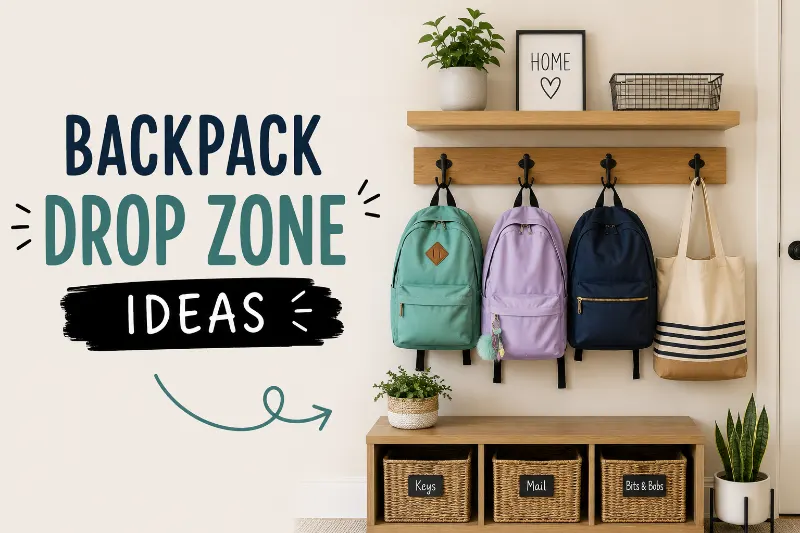
A backpack on the floor can make even a clean home feel messy. Shoes, lunch bags, jackets, and school papers often pile up near the front door when everyone comes home.
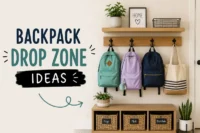
The right backpack drop zone ideas can help you create a simple place for these daily items without spending much money. Do you have a small entryway or a busy family hallway? You can make the space work with a few smart changes.
Choose one spot near the door, add sturdy hooks or a small shelf, and give every family member a clear place for their backpack. Use baskets for small items and keep the setup easy to reach.
What Is a Backpack Drop Zone, and Why Does Your Home Need One?
A backpack drop zone is a set place where family members leave their bags after school, work, or outings. It keeps bags off the floor and makes mornings easier. You can create one in an entryway, hallway, mudroom, or even a small corner.
- Best for: Families, students, renters, and busy households.
- Small spaces: Use wall hooks or the back of a suitable door.
- Medium spaces: Add a narrow bench with hooks above it.
- Large spaces: Create separate areas for bags, shoes, coats, and sports gear.
Example: A family with a small 4 × 5-foot (1.2 × 1.5-meter) entryway can use three wall hooks and one basket. This simple setup suits a casual home and needs little floor space. Keep the design simple so everyone can use it daily.
1. Use Wall Hooks to Keep Backpacks Off the Floor:
Wall hooks offer one of the easiest backpack storage ideas for a busy home. They use vertical space instead of valuable floor space. Place them where children and adults can reach them without stretching or moving other items.
- Install two or three hooks for a small household.
- Choose strong hooks that suit the bag’s weight.
- Leave enough room between bags to prevent tangling.
- Use removable hooks only within the stated weight limit.
Example: In a 4 × 6-foot (1.2 × 1.8-meter) entryway, three hooks in a simple modern style can hold everyday bags. A renter can consider removable hooks, while a homeowner can install hooks into suitable wall supports.
How High Should You Place Backpack Hooks?
Hook height depends on the person using the drop zone. Children need lower hooks, while adults can use higher ones. Measure each person’s comfortable reach before installing anything, and keep bags away from doors that swing open.
For example, a family with a 5-year-old child and a teenager might install separate rows. Use a low row for the younger child and a higher row for the teenager. Check wall materials and fixings before mounting loaded bags.
2. Create a Backpack Drop Zone in a Small Entryway
A narrow entryway needs storage that keeps the walking path clear. Slim shelves, compact hooks, and small baskets can create a useful small entryway organization system without making the entrance feel crowded.
- Use wall space instead of deep floor furniture.
- Choose a shallow shelf for keys and school notes.
- Keep the main walking path open.
- Store seasonal items elsewhere when you do not need them.
Example: A renter with a 3 × 5-foot (0.9 × 1.5-meter) entrance can add two hooks and a narrow wall shelf. A clean, minimalist style with warm white walls and natural wood helps the space feel open.
What Can You Use When There Is No Entryway?
You do not need a formal entryway to organize backpacks. A corner beside the kitchen door, a hallway wall, or a spot near the garage entrance can work just as well. Choose an area that everyone passes when entering the home.
For a small apartment, use a slim hook rail near the door and a labeled basket underneath. Keep bags away from cooking areas and heating equipment. This arrangement suits renters who need a practical setup without adding large furniture.
3. Add a Bench With Hidden Backpack Storage
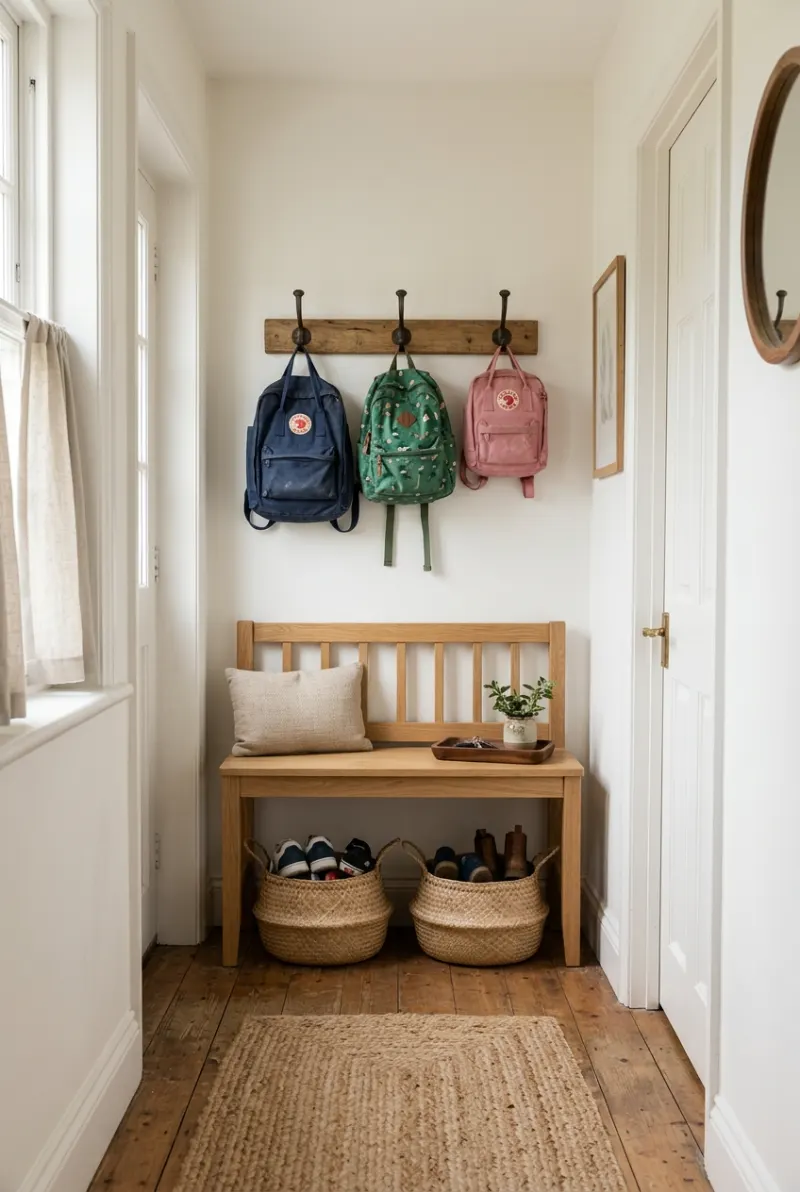
A storage bench gives family members a place to sit while removing shoes. It can also hold lunch bags, hats, and other daily items. Choose a bench that fits your entryway and leaves enough room to walk safely.
- Pick a bench with baskets or open cubbies underneath.
- Keep backpacks on hooks above the bench when possible.
- Use separate baskets for shoes and small accessories.
- Choose a wipe-clean surface for homes with young children or pets.
Example: A family with a medium 6 × 8-foot (1.8 × 2.4-meter) entryway can use a wooden bench with two storage baskets. A farmhouse style with cream walls and light oak creates a warm, practical look.
How Do You Choose the Right Bench Size?
Measure the available wall and walking space before buying or building a bench. A shallow bench often works better in a narrow hallway. Check the seat height and weight rating, and secure tall furniture when the manufacturer recommends it.
For a small home, choose a compact bench that does not block the door. In a larger entryway, a longer bench can serve several family members. Families with toddlers should avoid sharp corners and keep heavy bags out of children’s reach.
4. Turn a Closet Into a Hidden Backpack Station
A closet can hide backpacks and everyday clutter when you want a clean-looking entrance. Remove unused items, assign each family member a space, and use the existing shelves before buying new storage. This idea works especially well in homes with limited wall space.
- Place everyday bags on low, sturdy hooks.
- Add labeled bins for hats, gloves, and school supplies.
- Keep damp bags open until they dry.
- Store occasional-use items on higher shelves.
Example: A family with a 3 × 4-foot (0.9 × 1.2-meter) hall closet can create a simple organized station with two rows of hooks and labeled fabric bins. A neutral, practical style keeps the closet useful without costly changes.
How Can You Organize a Closet Without Spending Much?
Start by using the shelves, hangers, and containers you already own. Remove items that do not belong near the entrance, then group similar items together. Add labels only where family members need help finding their belongings.
For renters, avoid drilling into closet walls unless your lease allows it. Freestanding organizers or existing rails may offer enough storage. If the closet has poor airflow, do not store wet backpacks inside because trapped moisture can lead to unpleasant odors.
5. Make a Family Command Center for Bags and School Items
A family command center combines backpack storage with a simple place for calendars, reminders, and school papers. It helps everyone see what they need before leaving home. Keep the setup focused on daily tasks instead of filling the wall with decorations.
- Give each child a labeled hook or storage bin.
- Add a small board for schedules and reminders.
- Place a tray nearby for permission slips and mail.
- Keep private information away from visitors and public view.
Example: In a medium 5 × 7-foot (1.5 × 2.1-meter) hallway, a family can arrange three hooks, a small paper tray, and a weekly calendar. A modern style with white, muted green, and natural wood looks neat without adding clutter.
What Should You Put in a Backpack Command Center?
Choose items that support your family’s routine. Too many organizers can make the area harder to use, so start with the basics and add storage only when a real need appears.
A small wall board can hold the week’s activities, while separate folders keep school papers easy to find. You can also display family photos in a nearby area using simple DIY picture frame ideas. Keep the bag station itself clear so everyone can grab their things quickly.
6. Use Baskets and Cubbies for a Neat Backpack Area
Baskets and cubbies help sort items that do not hang well on hooks. They work for lunch bags, sports gear, hats, and small school supplies. Choose storage that fits the items you use most, rather than filling every empty space.
- Give each family member one labeled basket or cubby.
- Use open containers for items needed every day.
- Choose washable bins for muddy shoes or sports gear.
- Avoid overfilling baskets, which makes items harder to find.
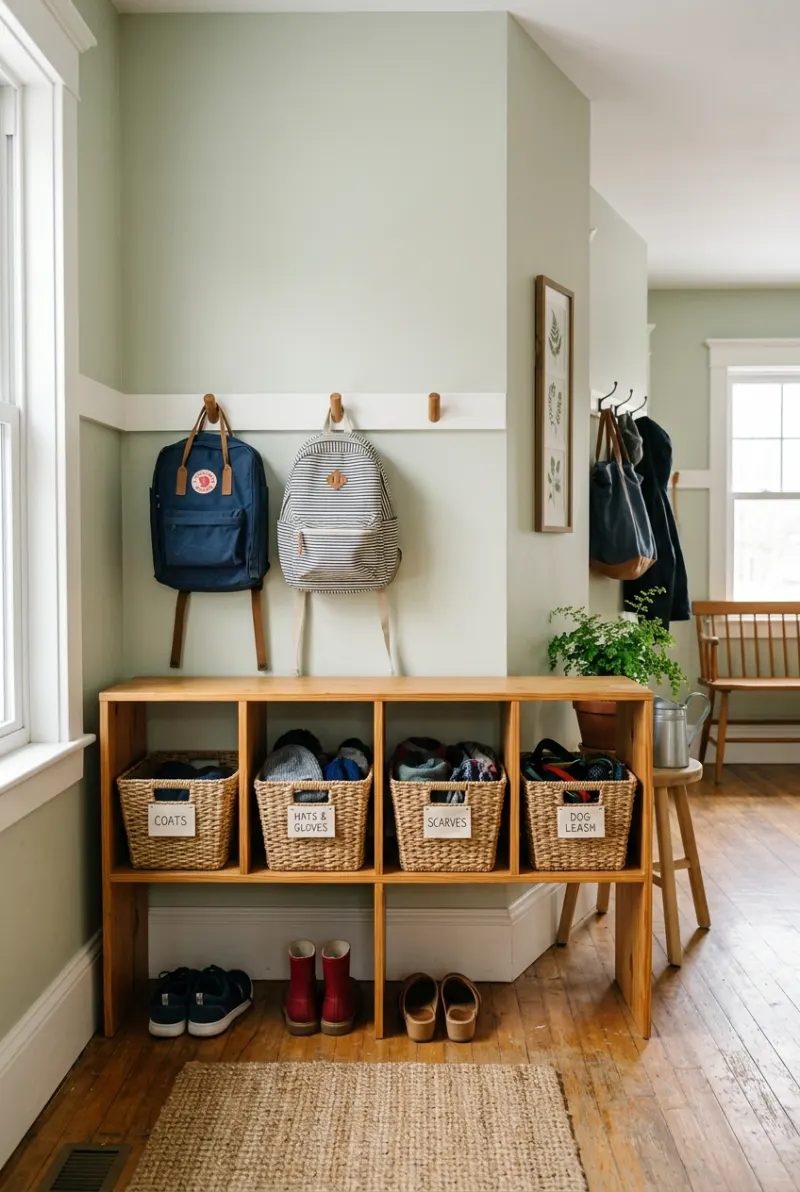
Example: A family with a large 8 × 10-foot (2.4 × 3-meter) mudroom can use four open cubbies and matching baskets. A relaxed farmhouse style with natural wood and soft gray storage makes the room feel organized and welcoming.
Should You Choose Open Cubbies or Closed Baskets?
Open cubbies make bags easy to reach and return. Closed baskets hide small items and give the area a cleaner look. Your choice should depend on your family’s habits, the amount of space, and how often you use each item.
For a small household, two open cubbies may be enough. Families with several children may prefer labeled baskets to prevent mix-ups. If you have pets, keep food, medicines, and small objects in secure containers rather than open storage near the floor.
7. Try a Renter-Friendly Backpack Drop Zone
Renters can create useful storage without making permanent changes to the walls. Removable hooks, freestanding shelves, and existing furniture can provide a simple place for bags. Always check the surface and product instructions before using adhesive storage.
- Use removable hooks only for bags within their weight limits.
- Place a small freestanding shelf near the entrance.
- Reuse a coat rack you already own.
- Choose storage that you can take to your next home.
Example: A renter with a small 4 × 5-foot (1.2 × 1.5-meter) entryway can use a freestanding coat rack and a small shoe basket. A simple Scandinavian style with warm white and light wood keeps the setup airy and easy to move.
How Can You Avoid Damage to Rental Walls?
Test removable products according to their instructions and avoid using them on unsuitable paint or surfaces. Heavy backpacks can pull hooks off the wall, so never assume that an adhesive hook can hold a loaded school bag.
If your lease permits wall mounting, use suitable fixings for the wall type. Otherwise, choose freestanding storage. Renters can also keep seasonal decor simple with reusable items, much like the flexible ideas used in Christmas fireplace decor.
8. Make the Backpack Station Work for Kids
Children need a backpack station that feels simple and easy to reach. A low hook, a clear label, and a nearby place for shoes can help them build a daily habit. Keep the setup practical instead of expecting children to follow a complicated system.
- Place each child’s hook at a comfortable height.
- Use name labels or simple picture labels.
- Keep lunch bags separate from clean clothes.
- Make room for sports bags and school projects when needed.
Example: A family with a small 5 × 6-foot (1.5 × 1.8-meter) entrance can create two low hooks and two labeled baskets. Bright blue, soft yellow, and white work well in a cheerful family style.
How Can You Help Children Put Their Bags Away?
Show children where each item belongs and keep the same arrangement every day. A short routine works better than a storage system with too many steps. Give each child a clear task, such as hanging the backpack and placing shoes in a basket.
For a home with young children, avoid unstable furniture and sharp edges. Secure tall shelves when needed, and keep heavy bags off high hooks. As children grow, adjust the hook height to match their reach.
9. Add Seasonal Storage Without Creating More Clutter
Backpacks often come with extra items such as winter hats, gloves, raincoats, and sports equipment. Keep daily essentials close to the door and move items you use less often into another storage area. This keeps your drop zone ready for everyday use.
- Keep current-season items in easy-to-reach baskets.
- Move unused winter gear to a closet in warm months.
- Dry wet coats and bags before storing them.
- Leave space for extra items during busy weeks.
Example: A family with a medium 6 × 8-foot (1.8 × 2.4-meter) entrance can use one basket for daily accessories and a closet for seasonal items. A simple neutral style keeps the space tidy throughout the year.
How Can You Keep the Area Fresh in Every Season?
Check the drop zone when the weather changes. Remove items the family no longer needs, clean the baskets, and make space for the next season’s gear. This small task can prevent the station from becoming another storage pile.
In winter, keep wet shoes and bags away from cold drafts and allow them to dry fully. If you enjoy seasonal home details, you can add a small festive touch nearby or use ideas for making your house smell like Christmas without placing scented items directly beside school bags.
10. Choose a Backpack Drop Zone That Fits Your Budget
You do not need to buy a complete entryway furniture set to make a useful backpack station. Start with the items you already own, then spend money only on storage that solves a clear problem. Compare options based on space, safety, and daily use.
| Budget level | Practical setup | Best for |
| Low | Reuse a coat rack, existing baskets, or suitable removable hooks | Small homes and renters |
| Medium | Add a hook rail, labeled bins, or a compact bench | Busy families |
| High | Create a built-in cubby station with a bench and shelves | Larger entryways and long-term homes |
Example: A renter with a small 3 × 5-foot (0.9 × 1.5-meter) entrance can begin with a coat rack and a reused basket. A homeowner with a large mudroom may prefer built-in storage in a classic style. Check current prices before setting your budget.
What Should You Buy First?
Look at the problem before choosing new storage. If bags cover the floor, hooks may help most. If small items disappear each morning, labeled baskets may be a better first step. Measure the area and check the weight limits before making a purchase.
Start with a low-cost setup, use it for a short period, and notice what still feels difficult. Upgrade only the parts that do not meet your family’s needs. This approach helps you avoid paying for storage you will not use.
11. Keep the Backpack Drop Zone Safe and Comfortable
A useful drop zone should be easy to walk through and safe for everyone in the home. Keep bags away from door swings, heating equipment, and electrical outlets. Check hooks and shelves regularly so the setup stays secure as your family’s needs change.
- Keep heavy bags on low, sturdy hooks.
- Secure shelves and tall furniture when required.
- Keep the floor clear to reduce trips and falls.
- Store sharp tools and small objects out of children’s reach.
Example: A family with a medium 6 × 7-foot (1.8 × 2.1-meter) entryway can keep backpacks on wall hooks and shoes in a low rack. A simple family-friendly style leaves a clear path from the door into the home.
What Safety Checks Should You Make?
Before mounting hooks or shelves, check the wall material and use suitable hardware. Never drill near hidden electrical wiring or plumbing without checking the area first. For heavy installations, ask a qualified professional for help.
Keep the drop zone away from heaters and open flames. If you add a light or electrical outlet, use a qualified electrician for electrical work. Families with pets should also keep straps and cords out of reach when they could become a chewing or entanglement risk.
12. Build a Daily Routine That Keeps Backpacks Organized
Even the best entryway storage can become messy without a simple routine. Give every item a home and ask family members to return bags after each use. A few minutes of daily care can keep the area ready for the next morning.
- Hang each backpack when you arrive home.
- Empty lunch bags and remove food wrappers.
- Put school papers in the right folder.
- Check the area each evening and clear loose items.
Example: A family in a small 4 × 6-foot (1.2 × 1.8-meter) entryway can follow a two-minute evening routine. A clean, modern setup with white hooks and a wood shelf makes the steps easy to remember.
How Can You Make the Routine Last?
Keep the station simple enough that everyone can use it without help. If bags keep landing on the floor, move the hooks closer to the door or lower them to a more comfortable height. Fix the problem instead of adding more storage.
Families with children can connect the routine to another daily task, such as taking off shoes. For households with an outdoor play area, a separate place for muddy shoes and toys can help too. A well-planned DIY backyard playhouse can also give outdoor toys their own home instead of bringing them into the entryway.
Frequently Asked Questions
1. Where should I put a backpack drop zone?
Place it near the door your family uses most. A hallway wall, entryway corner, mudroom, or closet can work well. Choose a spot with enough room to open doors and walk safely, even when several bags hang there.
2. How do I organize backpacks in a small house?
Use wall hooks, a narrow shelf, or a small basket instead of bulky furniture. Keep only daily essentials near the entrance. If your home has limited storage, use a closet for seasonal gear and leave the floor clear.
3. What is the cheapest way to create a backpack station?
Start with storage you already own, such as a coat rack, spare basket, or existing shelf. Add new hooks only when needed. Check current prices before buying anything, and choose storage that fits your wall and bag weight.
4. How high should backpack hooks be?
Choose a height that lets each person hang and remove a bag comfortably. Measure the user’s reach rather than following one fixed height for everyone. Use lower hooks for children and secure wall-mounted hooks with suitable hardware.
5. How do I stop my backpack area from getting messy?
Give every family member a separate hook or storage space. Empty lunch bags daily, return loose items to their containers, and check the area each evening. A short routine often works better than adding more organizers.
Final Thoughts
The best backpack drop zone ideas fit your space, budget, and daily routine. Hooks, baskets, cubbies, and a small bench can help keep bags off the floor and make busy mornings easier.
Start with one clear spot near the door. Add only the storage you need, keep the walking path open, and give every family member a place for their belongings.
Do you want to make your entryway more comfortable during cold months, too? Simple changes such as draft control and soft rugs can help create a cozier entrance, as explained in these ways to keep your house warm in winter without heating.
Renter-Friendly Balcony Ideas: 12 Easy Ways to Make Your Rental Balcony Feel Like Home




- Be Respectful
- Stay Relevant
- Stay Positive
- True Feedback
- Encourage Discussion
- Avoid Spamming
- No Fake News
- Don't Copy-Paste
- No Personal Attacks
- Be Respectful
- Stay Relevant
- Stay Positive
- True Feedback
- Encourage Discussion
- Avoid Spamming
- No Fake News
- Don't Copy-Paste
- No Personal Attacks
