17 Home Office Ideas for Two People to Share a Stylish Workspace
Published: 17 Oct 2026
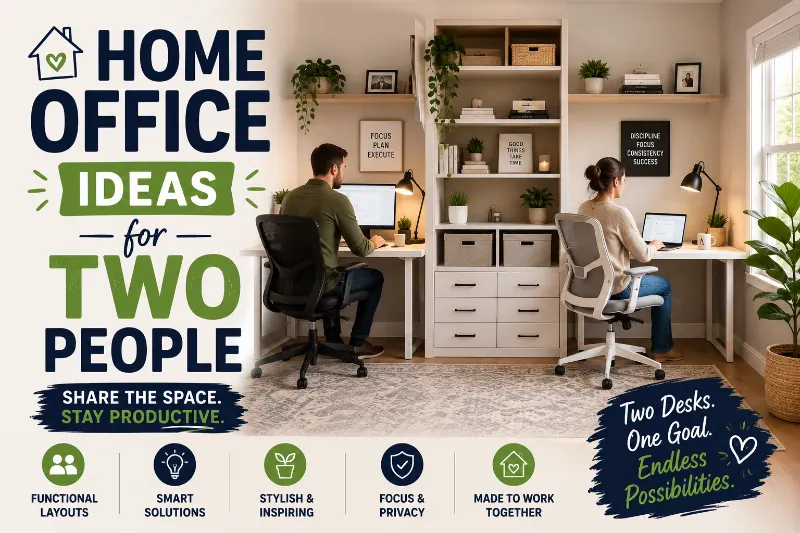
Sharing a home office with your partner, roommate, or family member can feel difficult when you both need space to work. Two desks, different schedules, and daily noise can quickly make a small room feel crowded.
The good news is that you do not need a large room or expensive furniture to create a comfortable shared workspace. These 17 home office ideas for two people will help you save space, organize supplies, and create a setup that suits both people. Which layout would work best in your home?
Place two desks along one wall, use matching storage, and give each person a clear work zone. Add task lighting, cable organizers, and simple sound-control features to make a shared office feel calm and practical.
How to Plan a Home Office for Two People
Before choosing furniture, think about your room size, work habits, and storage needs. A good shared office gives each person enough room to work without blocking walkways or competing for supplies.
For example, a 10 × 10-foot (3.05 × 3.05-meter) spare bedroom may suit two compact desks, while a smaller room may work better with one long desk against a wall. Measure the space before buying furniture.
- Measure the room: Record wall lengths, door swings, windows, and outlets.
- List each person’s needs: Consider computers, notebooks, monitors, and storage.
- Set a budget: Decide what you can reuse before shopping.
- Discuss work habits: Plan for meetings, quiet hours, and different schedules.
17 Home Office Ideas for Two People
These ideas cover different room sizes, styles, and budgets. You can combine several options to create a shared workspace that feels personal, organized, and comfortable for both people.
1. Place Both Desks Along One Wall
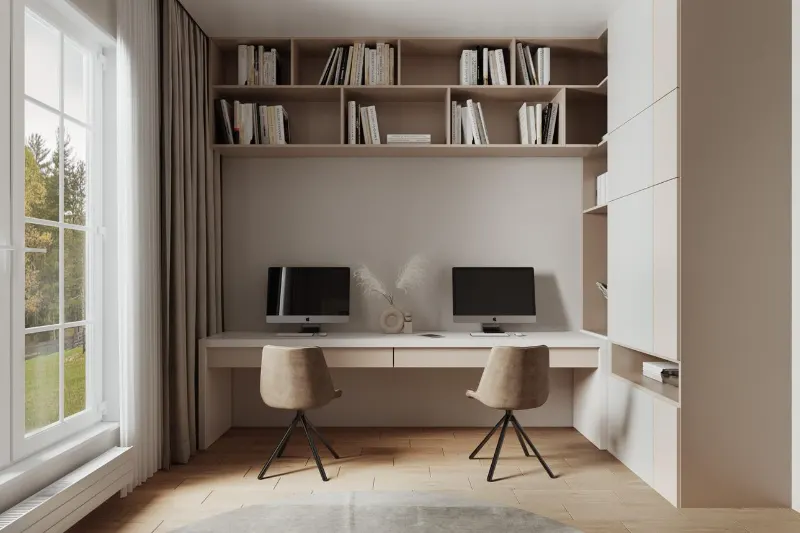
A long desk creates a simple dual desk setup without dividing the room. Both people can work side by side, share a power source, and keep the center of the room open. This layout suits small and medium rooms with a long, clear wall.
- Choose a desk that fits the wall without blocking doors.
- Give each person a separate computer and supply area.
- Use a drawer unit or small organizer between the desks.
- Leave enough legroom for both chairs.
Example: In a 10 × 12-foot (3.05 × 3.66-meter) room, two compact desks can create a clean, modern office on a limited budget.
2. Build a Shared Desk with Separate Work Zones
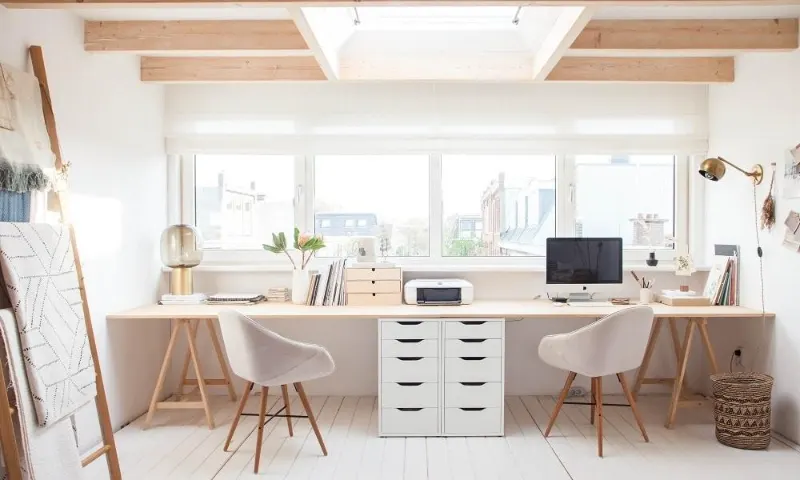
A shared desk can save money and floor space. The key is to give each person a clear work zone. This shared home office arrangement suits couples, students, and roommates who enjoy working in the same room.
- Divide the desktop into two equal areas.
- Keep personal notebooks and chargers on each side.
- Use small trays to separate everyday supplies.
- Choose a desk deep enough for both workstations.
Example: A 72-inch (183-centimeter) desk may suit two compact laptop setups. Check the width of your equipment before choosing the final size.
3. Arrange the Desks in an L Shape
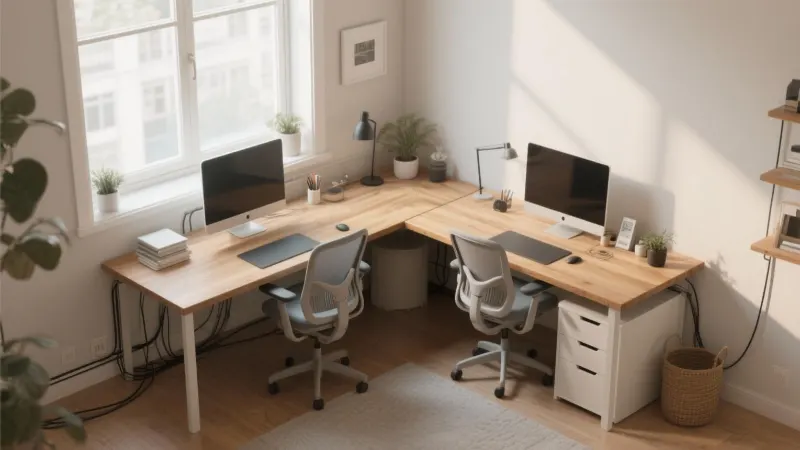
An L-shaped arrangement uses two walls and separates each person’s work area. It suits medium rooms and people who need different equipment. Each person can focus on their own tasks while sharing one room and storage system.
- Place one desk along each wall.
- Keep the corner clear for shared supplies.
- Check that both chairs can move freely.
- Use matching desk colors for a balanced look.
Example: In a 10 × 10-foot (3.05 × 3.05-meter) room, two narrow desks may fit better than one large corner unit. Measure chair space before setting up the room.
4. Face the Desks Away from Each Other
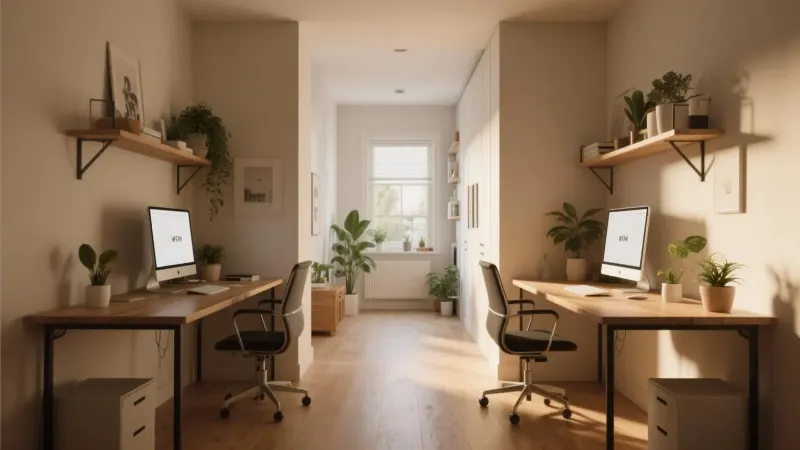
Facing opposite walls can reduce visual distractions when both people need focus. This home office layout works well for medium rooms with enough space for two chairs and a clear path between them.
- Place each desk against a different wall.
- Keep screens out of direct window glare.
- Use separate task lights for each person.
- Add one shared storage cabinet if floor space allows.
Example: Two people in a 10 × 12-foot (3.05 × 3.66-meter) room can use opposite walls for separate workstations. This suits remote workers who attend meetings throughout the day.
5. Use a Window for Natural Light
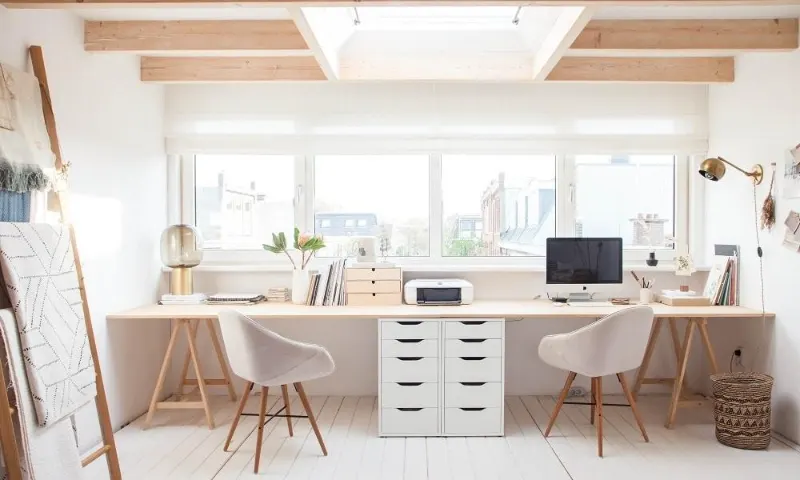
Natural light can make a shared office feel more pleasant during the day. Place desks near a window without putting screens directly in front of bright sunlight. This setup suits small and medium rooms, especially for people who work long hours indoors.
- Use light-filtering curtains to reduce glare.
- Position monitors at an angle to the window.
- Add adjustable lamps for cloudy days.
- Keep plant pots away from computer equipment.
Example: In a 9 × 11-foot (2.74 × 3.35-meter) room, two narrow desks near a window can create a bright, airy look. Renters can use removable curtain hardware where suitable.
6. Add a Bookcase Between the Workstations
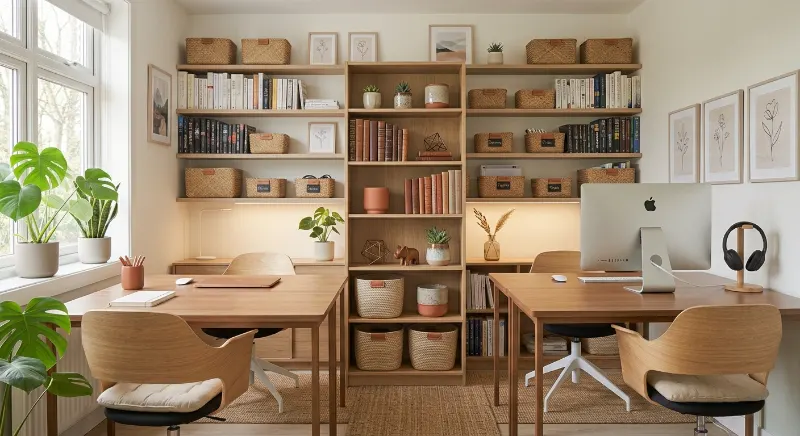
A bookcase can create a visual boundary without building a permanent wall. It suits medium and large rooms where both people need some privacy. Choose open shelves to keep the room light and closed storage to hide clutter.
- Store books and shared supplies on the middle shelves.
- Give each person separate storage sections.
- Keep heavy items on lower shelves.
- Secure tall bookcases to wall studs.
Example: In a 12 × 12-foot (3.66 × 3.66-meter) room, a narrow bookcase can separate two desks while keeping a modern, organized style.
7. Choose Matching Desks for a Calm Look
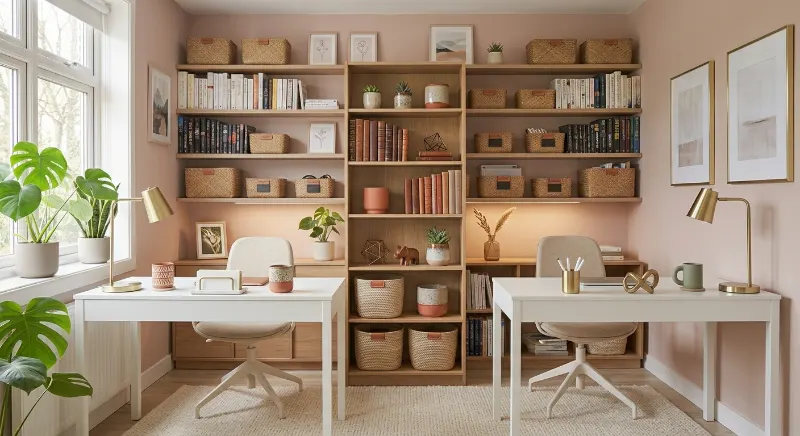
Matching desks help a shared workspace look connected, even when each person has different work habits. This idea suits small rooms, couples, and families who prefer a clean style. You can still personalize each desk with different accessories.
- Choose similar desk shapes and finishes.
- Use different organizers to suit each person.
- Pick warm white, light oak, or soft gray.
- Keep decorative items limited to a few pieces.
Example: In a 10 × 10-foot (3.05 × 3.05-meter) room, two matching narrow desks can create a balanced look without taking over the space.
8. Create Privacy with a Desk Divider
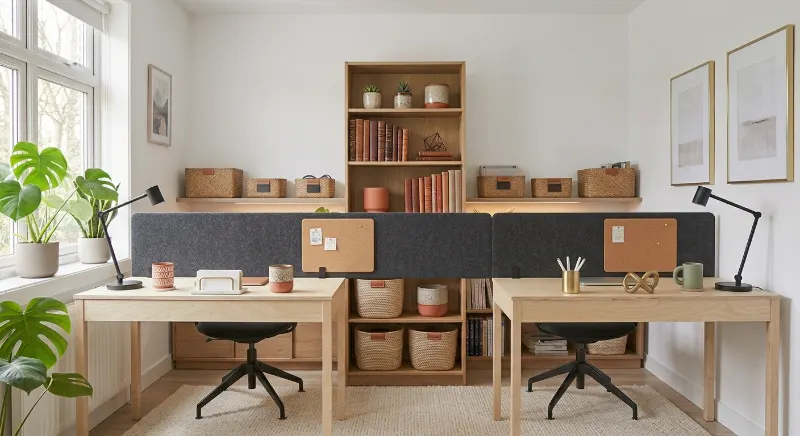
A small divider can help each person concentrate without separating the room completely. This option suits roommates, partners with different schedules, and people who attend video calls. Choose a low or sound-absorbing divider that does not block useful light.
- Try a fabric-covered desktop screen.
- Use a low organizer as a simple boundary.
- Keep the divider below eye level when possible.
- Avoid blocking windows, vents, or walkways.
Example: In a 10 × 12-foot (3.05 × 3.66-meter) room, a low divider between two desks can offer visual privacy while keeping the office open.
9. Use Wall Shelves to Save Floor Space
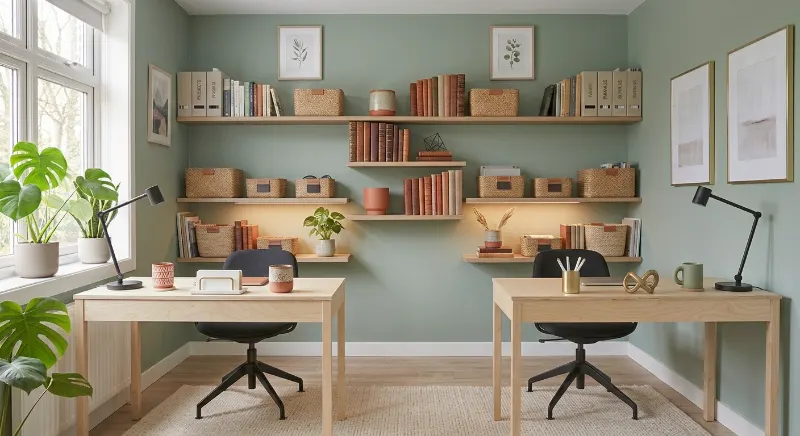
Wall shelves keep books, notebooks, and decor off the desktop. They are useful in small offices where floor space is limited. Renters can consider removable storage options for light items, while homeowners may prefer securely mounted shelves for heavier supplies.
- Store everyday items within easy reach.
- Keep decorative objects away from monitor edges.
- Use matching baskets to hide small supplies.
- Check the wall type before mounting shelves.
Example: In an 8 × 10-foot (2.44 × 3.05-meter) office, shelves above two compact desks can free up valuable desktop space.
10. Add Plants for a Fresh, Natural Style
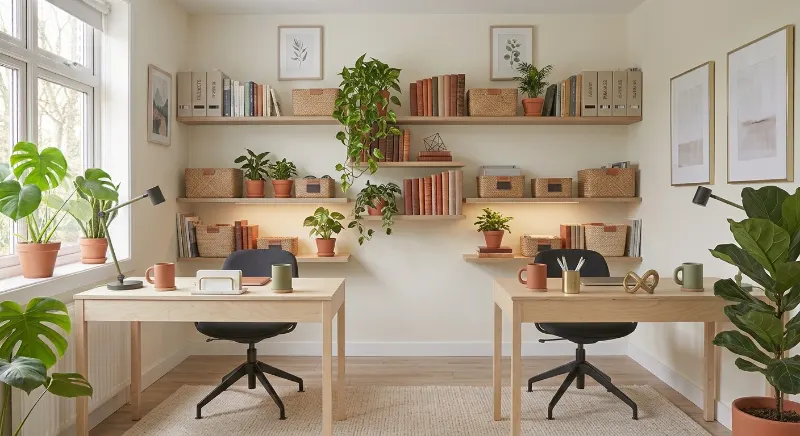
Plants can soften the look of desks, shelves, and plain walls. Choose varieties that suit your room’s light and care needs. This idea works in small and large offices, but pet owners should check plant safety before bringing greenery home.
- Place small plants away from keyboards.
- Use sturdy pots that resist tipping.
- Choose low-maintenance plants for busy schedules.
- Keep water away from electrical equipment.
Example: In a 9 × 10-foot (2.74 × 3.05-meter) room, two small desk plants and one floor plant can add greenery without crowding the work areas. A renter can use lightweight pots on existing shelves.
11. Make a Small Home Office Work with Folding Desks
Folding desks help when one room serves several purposes. You can open the workstations during the day and fold them away when work ends. This is especially useful for renters, families, and people working in a living room or spare bedroom.
- Measure the folded and open desk positions.
- Choose sturdy models that lock securely.
- Store laptops and supplies in nearby bins.
- Keep folding parts clear of fingers and cables.
Example: In an 8 × 9-foot (2.44 × 2.74-meter) multipurpose room, two wall-mounted folding desks can support a simple, space-saving style.
12. Use Separate Storage for Each Person
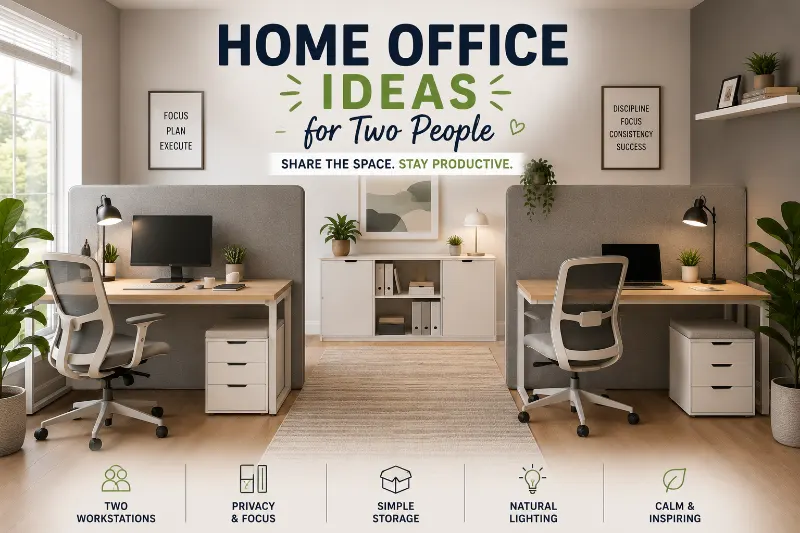
Shared storage often creates confusion when both people need the same supplies. Separate drawers, baskets, or labeled boxes make daily work easier. This home office organization idea suits families, couples, and roommates who want a tidy room without strict rules.
- Give each person a drawer or basket.
- Keep shared paper and printer supplies in one place.
- Store rarely used items on higher shelves.
- Clear each desk at the end of the day.
Example: In a medium home office, two small drawer units can keep work items separate while a shared cabinet stores paper and cables. Choose neutral baskets for a simple, coordinated style.
13. Choose Comfortable Chairs and Correct Desk Heights
Comfort matters when two people use the office for several hours each day. Choose chairs that support the back and adjust to each person’s height. An ergonomic workspace helps you arrange the desk, chair, and screen for a more comfortable working position.
- Adjust the chair so feet rest flat on the floor or a footrest.
- Keep the screen near eye level.
- Leave room for elbows and leg movement.
- Take regular breaks to stand and stretch.
Example: In a 10 × 12-foot (3.05 × 3.66-meter) office, two adjustable chairs and compact desks can suit a modern, practical style. Test chair movement before placing other furniture nearby.
14. Control Noise with Soft Furnishings
Noise can interrupt calls and make shared work tiring. Rugs, curtains, and fabric panels may soften some sound, although they will not fully soundproof a room. This idea suits people who attend meetings while someone else works nearby.
- Add a rug to a hard floor.
- Use thick curtains where the room allows.
- Agree on quiet times for important calls.
- Use headphones when appropriate.
Example: In a medium office with wood flooring, a rug and lined curtains can create a warmer, softer feel. Pick colors such as beige, muted green, or soft gray to keep the room calm.
15. Set Up Separate Lighting for Both Desks
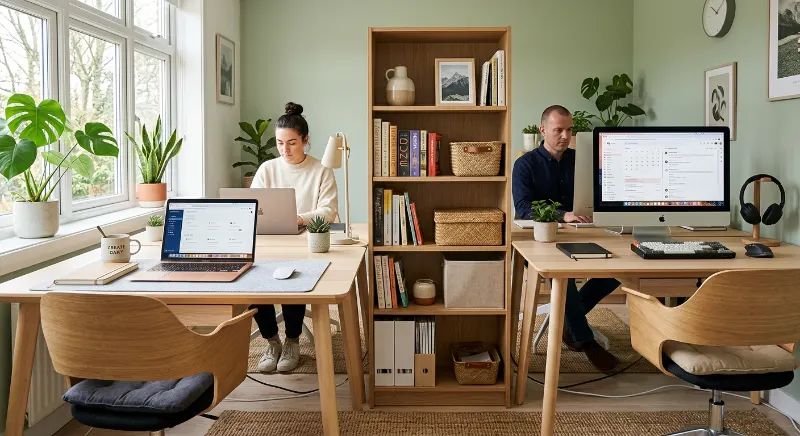
One ceiling light may not meet both people’s needs. Separate task lamps let each person adjust the light without making the whole room too bright. This option suits shared offices with different schedules and people who read or write often.
- Choose adjustable lamps for each desk.
- Keep light sources out of direct screen reflections.
- Use warm white bulbs for a softer feel.
- Ask a qualified electrician to handle new wiring.
Example: In a small office with two desks, matching black task lamps can add contrast to a warm-white and oak color scheme without using extra floor space.
16. Decorate with Personal Art and Simple Colors
A shared office can feel personal without looking busy. Choose one common color palette, then let each person add a few favorite items. This works for couples, roommates, and families who want a workspace that feels welcoming.
- Use warm white as a simple base color.
- Add muted blue, sage green, or terracotta accents.
- Give each person a small display area.
- Hang lightweight art with suitable renter-friendly hooks.
Example: In a 10 × 10-foot (3.05 × 3.05-meter) office, two framed prints and matching desk accessories can create a modern, relaxed look on a modest budget. Keep heavier frames securely mounted.
17. Create a Shared Office That Changes with the Seasons
Small seasonal touches can make a shared office feel fresh without changing the whole room. Keep the main furniture neutral, then switch a few safe accessories throughout the year. This suits families and decor lovers who enjoy small, low-cost updates.
- Use a small wreath or seasonal desk ornament.
- Keep decorations away from screens and vents.
- Store seasonal items in labeled boxes.
- Avoid candles near paper, curtains, and electronics.
Example: In a medium shared office, a small winter decoration can complement a warm-white and natural-wood palette. For a handmade touch, a salt dough ornament can decorate a shelf when it is fully dry and safely placed.
Seasonal decor does not need to look out of place after a holiday. Neutral greenery and natural textures can work with Christmas decor that still looks good after Christmas when you want a calm look throughout winter.
How Much Does a Home Office for Two People Cost?
Your budget depends on the furniture you already own, the room size, and the equipment you need. Start with basic work surfaces and comfortable seating. Add decorative items later, once both people have a setup that meets their daily needs.
| Budget level | What to focus on | Best for |
| Low | Reused desks, existing chairs, DIY organizers | Beginners and renters |
| Medium | Matching desks, drawer units, task lamps | Couples and remote workers |
| High | Custom built-in desks, fitted storage, improved sound control | Homeowners with a dedicated office |
These are budget categories, not price estimates. Check current local prices before buying furniture. You can also save money by reusing storage boxes, repainting an old desk, or choosing simple decor over extra furniture.
How Can Two People Share a Home Office Without Stress?
A good setup depends on more than furniture. Both people need clear boundaries, enough storage, and a plan for calls and quiet time. Agree on these details early so small problems do not become daily frustrations.
Set clear rules for noise and meetings
Tell each other when important calls take place. Use headphones for meetings and agree on a signal for times when interruptions are not welcome. If calls overlap often, position the desks farther apart.
Keep personal items separate
One person may prefer a clear desk, while the other keeps notebooks and supplies nearby. Neither style needs to take over the room. Give each person a personal storage area and agree on what belongs in shared spaces.
Make the office comfortable for both
Discuss lighting, chair comfort, temperature, and screen placement. A setup that suits one person may not suit the other. Adjust each workstation separately instead of expecting both people to use the same settings.
Frequently Asked Questions
How much space do two people need for a home office?
The amount depends on desk sizes, chairs, equipment, and storage. A small room may work with two compact desks, while a larger room offers more privacy. Measure the floor space and keep a clear path to the door before choosing a layout.
What is the best desk arrangement for two people?
A long shared desk works well when both people have similar work needs. An L-shaped layout or opposite-wall arrangement may suit people who need more separation. Choose the layout that fits your room and daily work habits.
How can I create a two-person home office on a low budget?
Reuse existing desks, chairs, and storage before buying anything new. Use baskets to organize supplies and move furniture to improve the layout. Add new lighting or storage only when you identify a real need.
How do we reduce distractions in a shared home office?
Set quiet hours, use headphones, and keep each workstation organized. A low divider, curtains, or a rug may help reduce some distractions. These changes can soften the space, but they will not fully block sound.
Can two people share a home office in a bedroom?
Yes. Use compact desks, wall shelves, and storage that fits the room. Keep the bed and work areas visually separate when possible. Renters can use freestanding furniture and removable decor to avoid permanent changes.
Final Thoughts
A shared home office can work well when both people have enough space, clear storage, and comfortable seating. Choose a layout that fits your room, then add lighting and decor that support your work habits.
Start by measuring your room and listing the items each person needs. Which of these 17 ideas would make the biggest difference in your shared workspace?






- Be Respectful
- Stay Relevant
- Stay Positive
- True Feedback
- Encourage Discussion
- Avoid Spamming
- No Fake News
- Don't Copy-Paste
- No Personal Attacks
- Be Respectful
- Stay Relevant
- Stay Positive
- True Feedback
- Encourage Discussion
- Avoid Spamming
- No Fake News
- Don't Copy-Paste
- No Personal Attacks
