10 Best Bedroom Plants That Actually Improve Your Sleep and Air Quality
Published: 18 Sep 2026
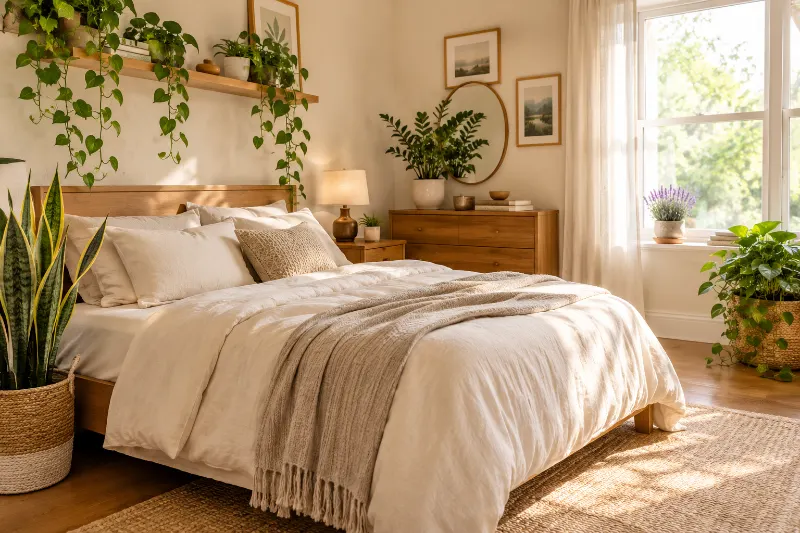
Adding plants to your bedroom can make the space feel fresh, calm, and welcoming. Some plants also help support indoor air quality, while fragrant plants such as lavender and jasmine can create a relaxing bedtime atmosphere.
The right bedroom plant depends on your light, room size, care routine, and personal preference. You do not need a large collection. Even one well-placed plant can add natural beauty and make your bedroom feel more peaceful.
How Bedroom Plants Can Support Better Sleep
Bedroom plants can improve the feel of your space in simple ways. Green leaves bring a natural touch to your room, while some flowering plants add a gentle scent.
Plants should not replace good sleep habits or proper ventilation. Think of them as part of a comfortable bedroom setup rather than a cure for sleep problems.
What to Consider Before Choosing a Plant
Look at these points before bringing a plant into your bedroom:
- Light: Check whether your room gets bright, medium, or low light.
- Watering: Choose a plant that matches your daily routine.
- Room size: Use small pots for nightstands and larger plants for empty corners.
- Humidity: Some plants enjoy more moisture than others.
- Pets: Check plant safety if cats or dogs share your home.
- Scent: Choose lightly scented plants if strong smells bother you.
10 Bedroom Plants for a Fresher and Calmer Space
These plants offer a mix of easy care, attractive leaves, pleasant fragrance, and useful qualities for bedroom spaces. Choose one that matches your room instead of buying a plant simply because it looks good online.
1. Snake Plant
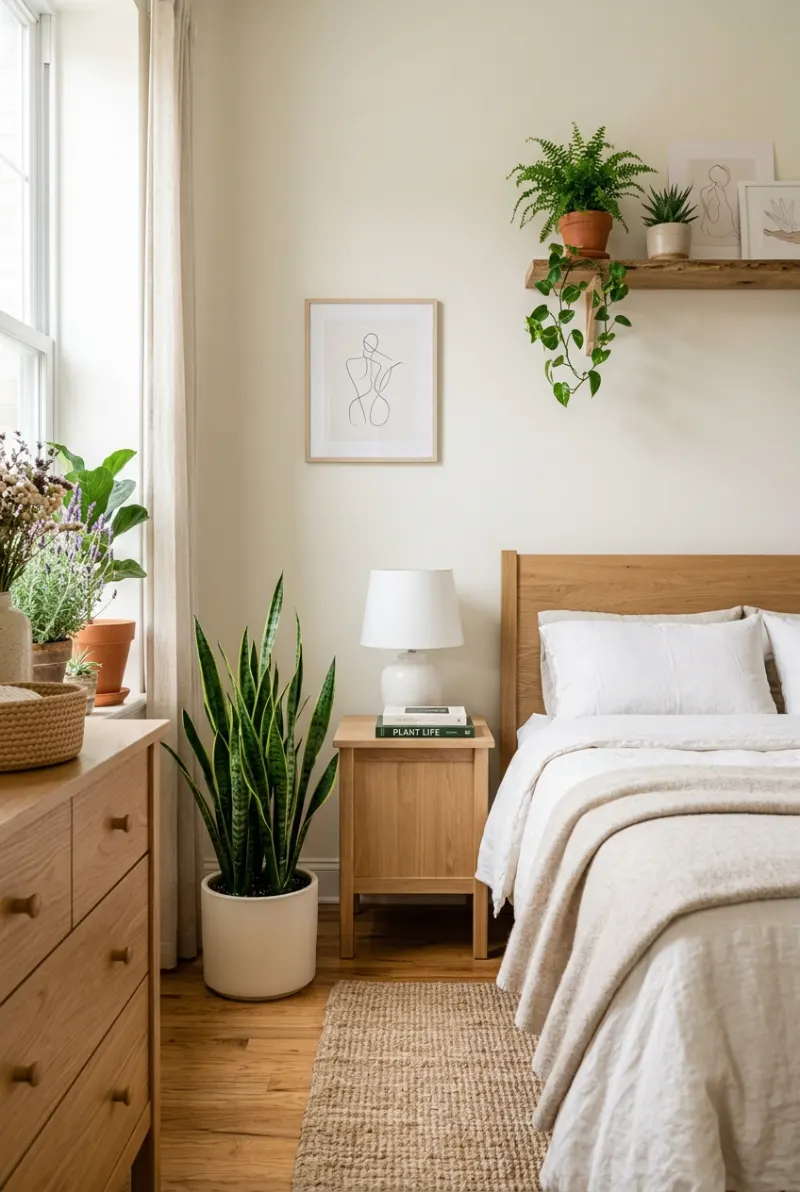
Snake plants are a great choice for bedrooms because they handle low light and need little care. Their tall leaves also take up very little floor space. Place one beside a dresser, near a window, or in an empty corner.
This plant works well for busy people who sometimes forget to water their plants. Let the soil dry between watering sessions. Avoid keeping the pot in standing water because wet roots can cause problems.
2. Peace Lily
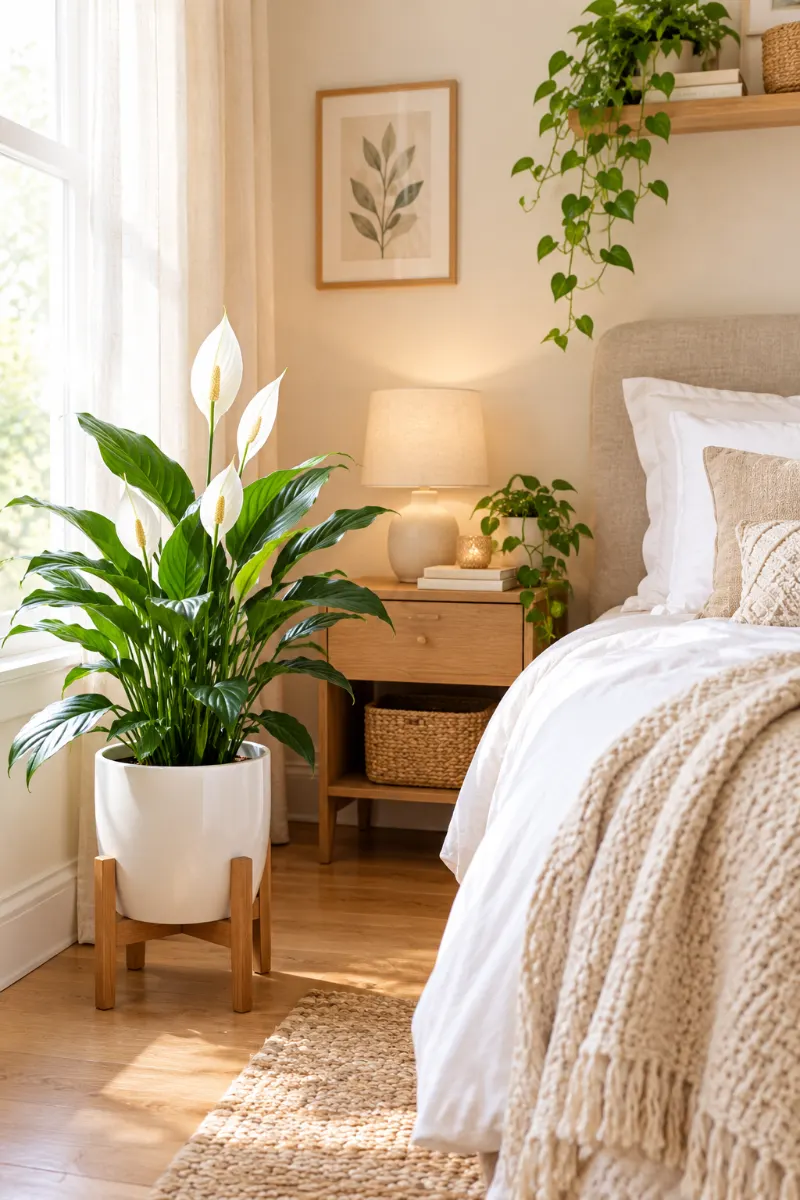
Peace lilies have glossy green leaves and elegant white flowers. They can bring a soft, peaceful look to a bedroom. Their rich green foliage works especially well with white bedding, light wood furniture, and simple neutral decor.
Peace lilies prefer indirect light and evenly moist soil. They can wilt when they need water, which makes their care easy to notice. Keep the plant away from very dark corners and strong direct sunlight.
3. Spider Plant
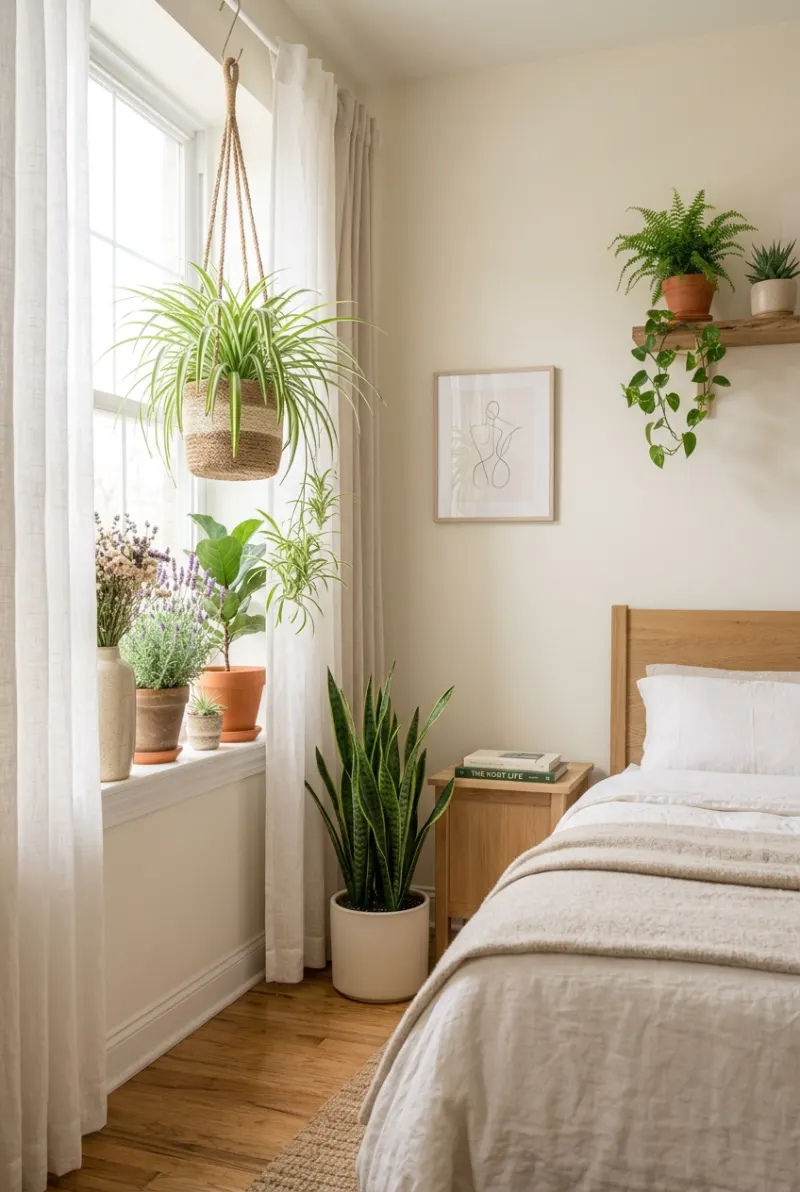
Spider plants have long green leaves that create a light and fresh look. They work nicely on shelves, dressers, and hanging planters. Their arching leaves can also add visual interest without making a small bedroom feel crowded.
This plant is easy to grow and suits beginners. Give it bright indirect light and water when the top layer of soil feels dry. Its small plantlets can also make the room feel more lively.
4. Lavender
Lavender brings a soft purple color and a familiar floral scent into the bedroom. Many people connect its fragrance with relaxation, which makes it a popular choice for bedtime spaces. A small pot can sit beautifully on a sunny windowsill.
Lavender needs plenty of sunlight and well-draining soil. Avoid frequent watering and keep the plant where it receives strong natural light. If your bedroom stays dark, grow lavender near the brightest suitable window.
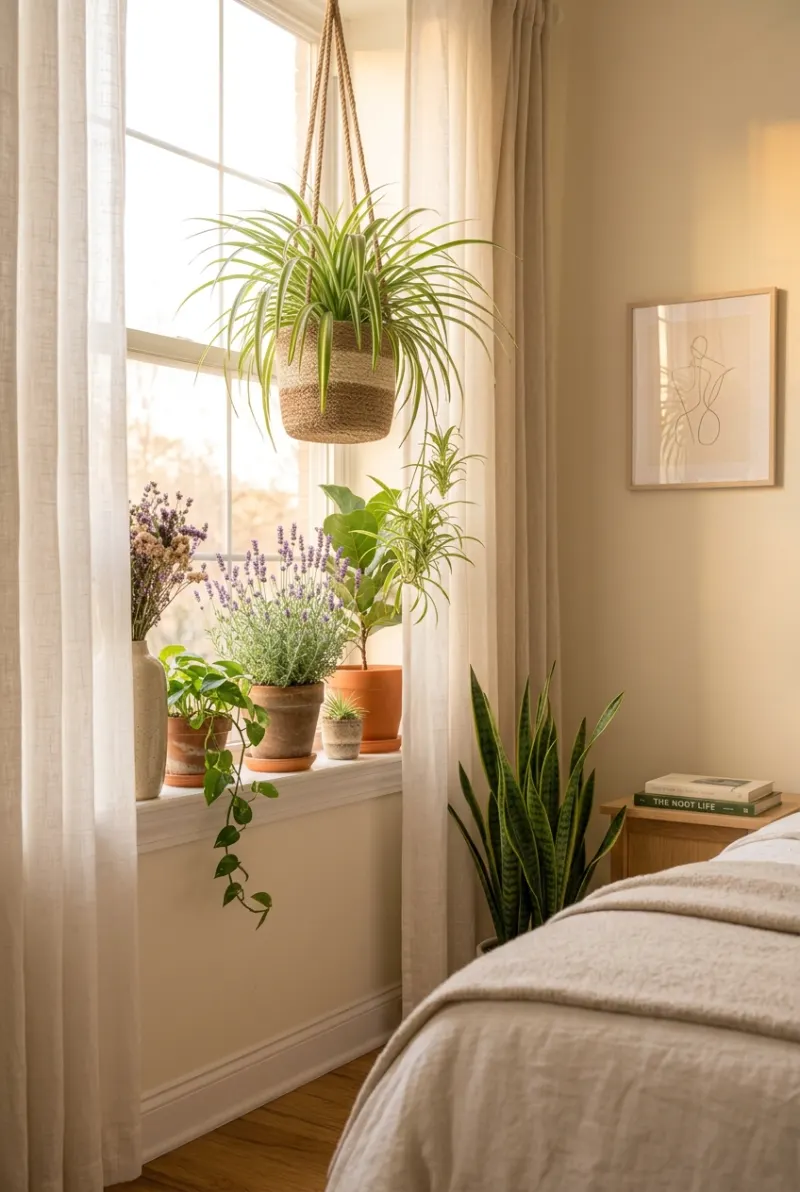
5. Golden Pothos
Golden pothos is known for its heart-shaped leaves and trailing vines. The green and golden leaves can soften shelves, wardrobes, and bedside tables. It is also a useful choice when you want bedroom greenery without a large floor plant.
Pothos prefers bright indirect light but can tolerate lower light conditions. Allow the soil to dry slightly before watering. Trim long vines when needed to keep the plant neat and prevent it from taking over your furniture.
6. Aloe Vera
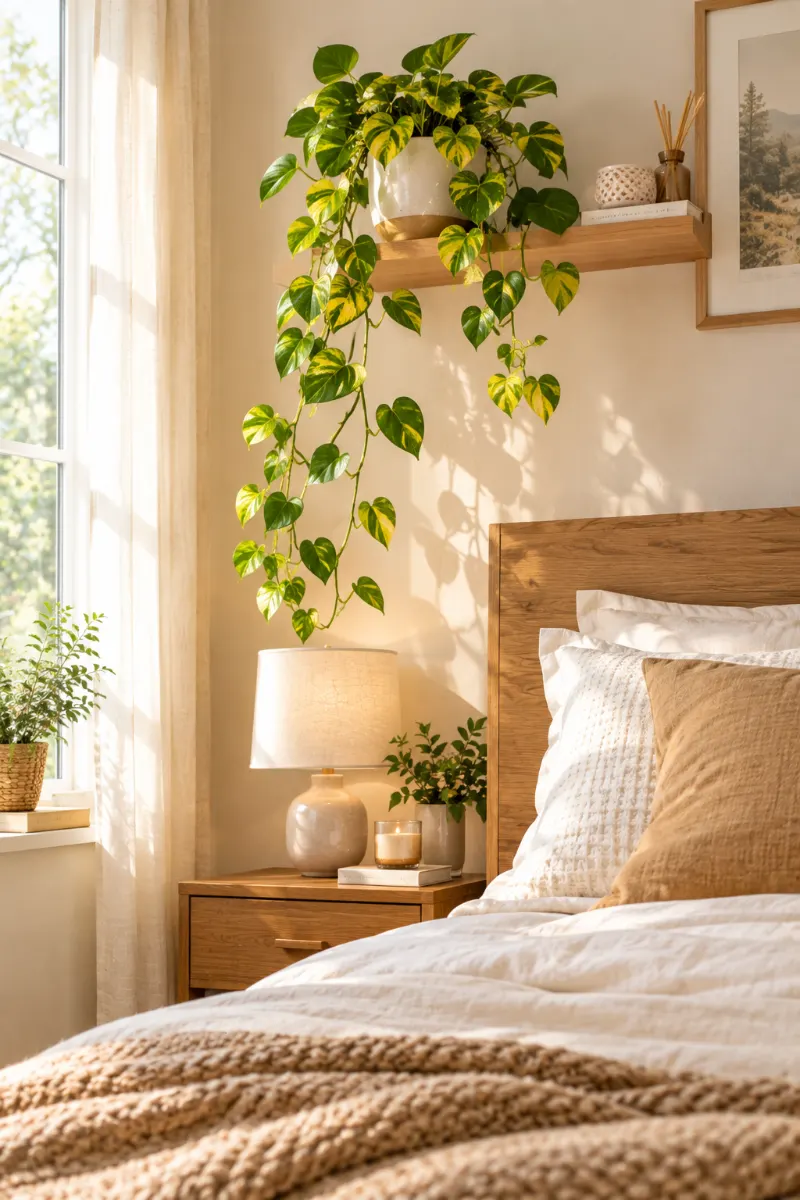
Aloe vera has thick, upright leaves that give a bedroom a clean and natural look. Its compact shape works well on a sunny dresser or windowsill. It also suits simple, modern bedrooms where you want greenery without a busy appearance.
Aloe vera stores water in its leaves, so it does not need frequent watering. Give it bright light and use a pot with drainage holes. Water only after the soil has dried well to avoid root problems.
7. English Ivy
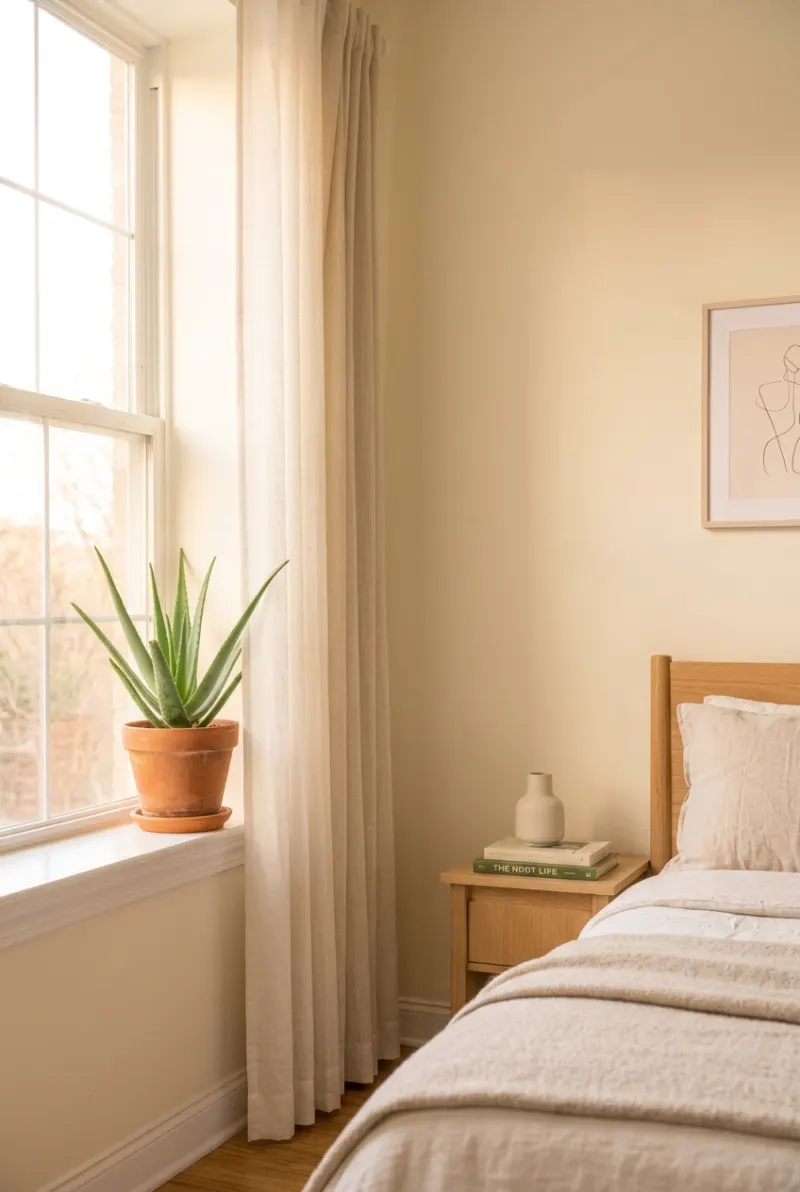
English ivy has trailing leaves that can create a beautiful natural effect in a bedroom. Place it in a hanging planter or on a high shelf where the vines can gently fall. It adds texture without needing much floor space.
Ivy grows best with bright, indirect light and regular moisture. Good airflow also helps keep the plant healthy. Keep it away from pets and children because English ivy can be harmful if eaten.
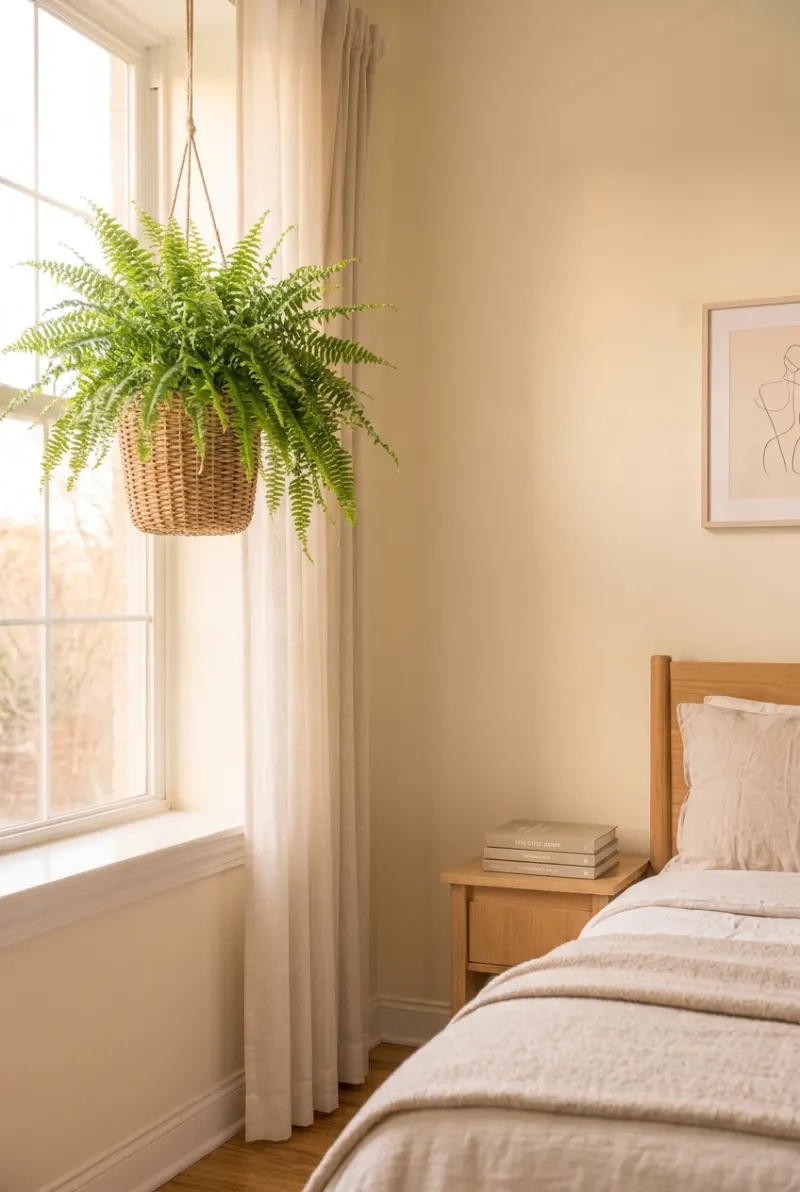
8. Boston Fern
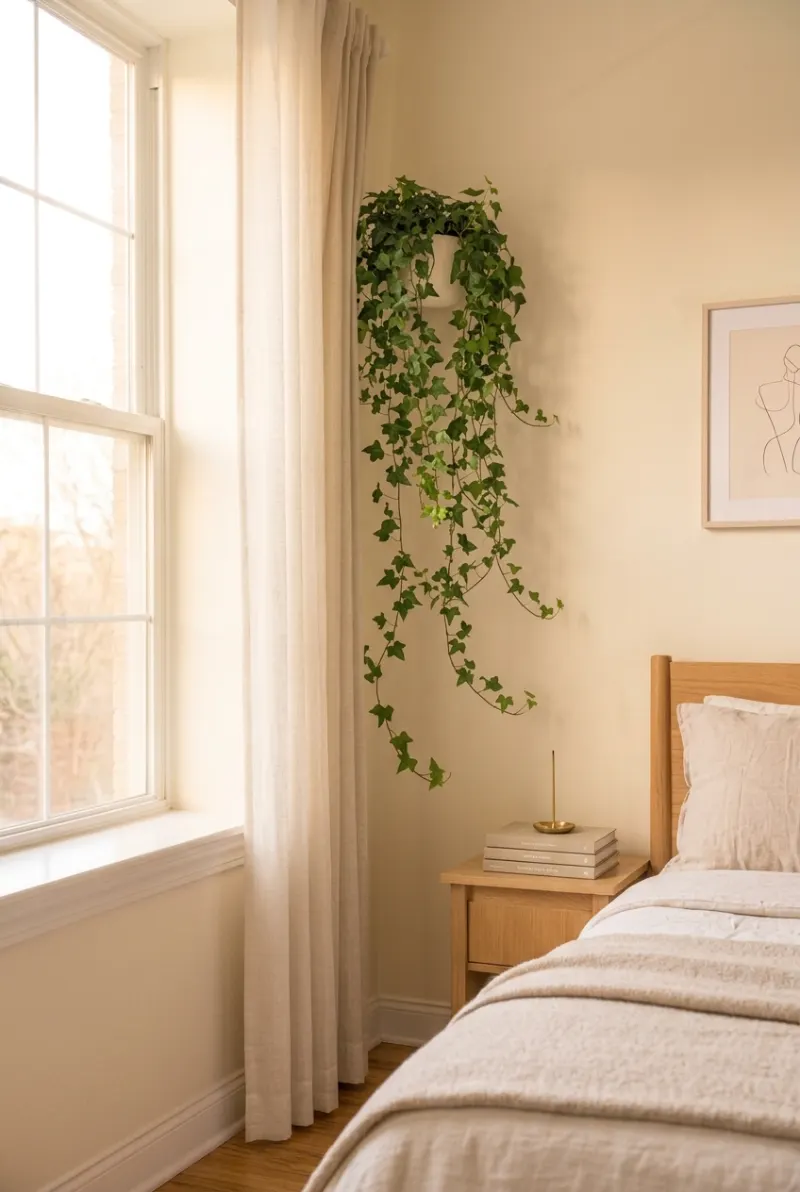
Boston ferns have soft, feathery leaves that can give a bedroom a fresh and natural feel. Their full shape looks beautiful in hanging baskets or on plant stands. They can also add a lush touch to simple neutral interiors.
Boston ferns enjoy higher humidity and indirect light. Keep the soil lightly moist and avoid letting it dry completely. A bathroom-adjacent bedroom or naturally humid room can be a good place for this plant.
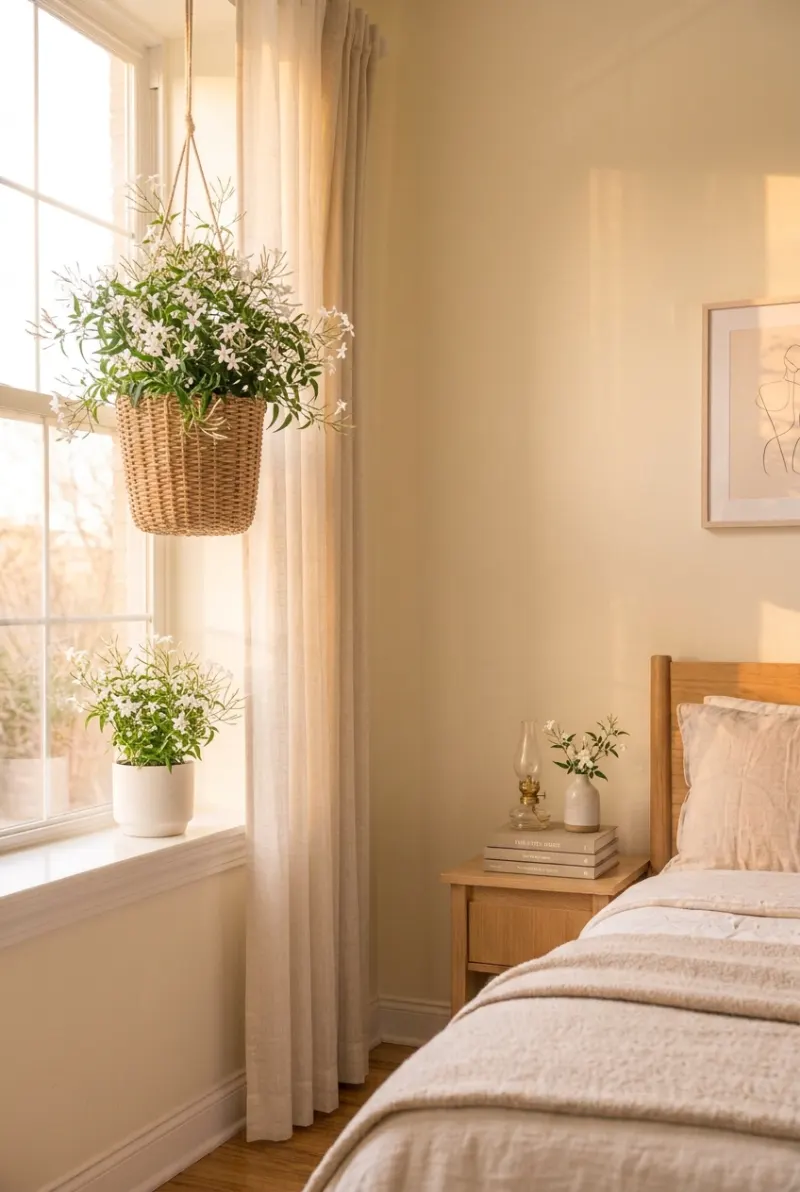
9. Jasmine
Jasmine can add delicate white flowers and a sweet floral fragrance to a bedroom. Its scent may help create a relaxing atmosphere for some people. A flowering jasmine plant also brings a beautiful natural detail to a bedside or sunny window.
Jasmine generally needs plenty of light and regular care to flower well indoors. Keep the soil from becoming completely dry, but avoid soggy roots. Give the plant enough space for its vines to grow naturally.
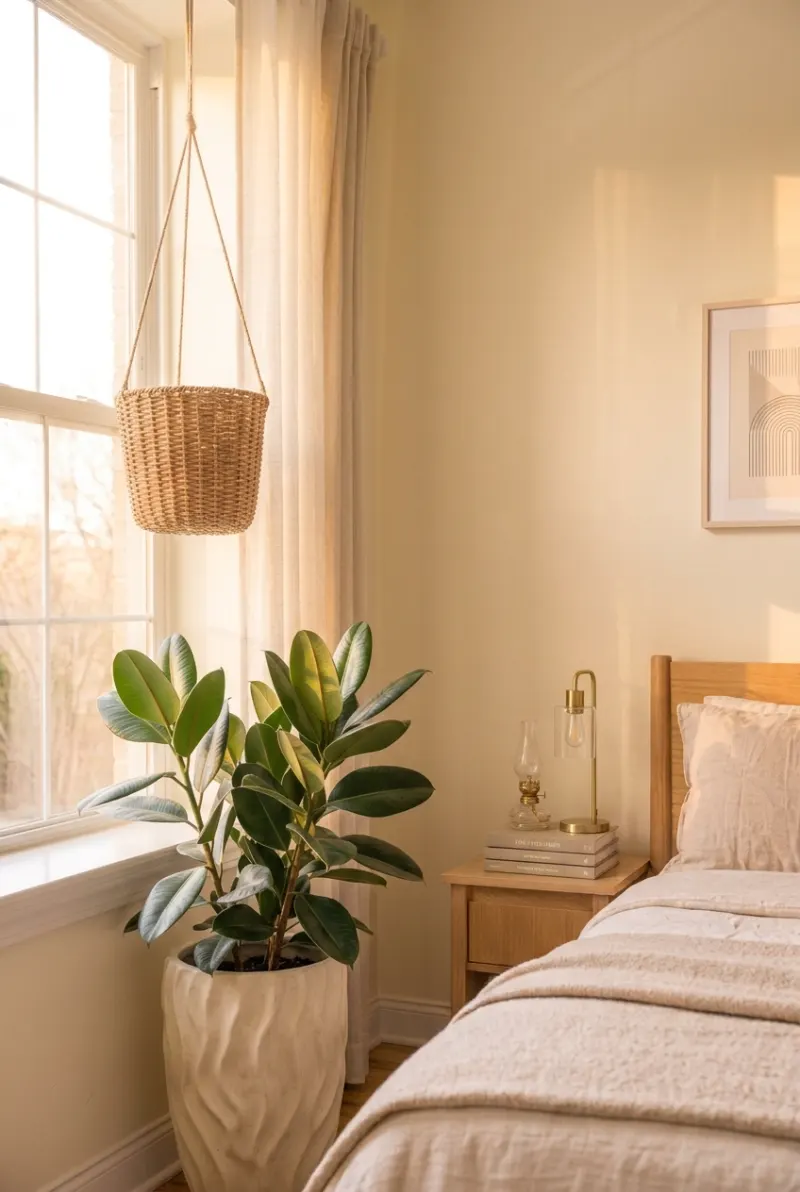
10. Rubber Plant
Rubber plants have large, glossy leaves that create a bold natural focal point. A medium or large plant can fill an empty bedroom corner beautifully. Its clean shape works well with modern, minimalist, and warm neutral bedroom styles.
Rubber plants prefer bright indirect light and moderate watering. Let the upper soil dry before watering again. Wipe the broad leaves gently from time to time to remove dust and help the plant look fresh.
How to Place Plants in Your Bedroom
You do not need to cover every surface with plants. A few well-placed pots can make the room look balanced and calm.
Try these simple placement ideas:
- Put a small plant on your nightstand for a natural touch.
- Use a hanging planter to save floor space.
- Place a tall plant in an empty corner.
- Add a plant to a floating shelf with books and small decor.
- Keep sun-loving plants close to a bright window.
- Use matching planters to create a clean bedroom look.
- Place trailing plants on higher shelves for a soft, flowing effect.
Bedroom Plant Styling Ideas for Worthy Room
The planter matters almost as much as the plant. Choose pots that match your bedroom colors instead of using many different styles.
For a warm bedroom, try terracotta or woven baskets. For a modern room, choose simple white, cream, or stone-colored pots. You can also place plants beside wooden furniture to create a natural and cozy look.
Create a Simple Plant Corner
Have an unused bedroom corner? Turn it into a small plant spot with one tall plant, a small stool, and a warm floor lamp. Keep the rest of the area simple so the greenery becomes the main feature.
Use Plants on Small Shelves
Small bedrooms benefit from vertical decor. A pothos, spider plant, or small aloe vera can sit on a shelf without using valuable floor space. Mix the plant with one or two books and a small decorative object.
Keep the Bed Area Clutter-Free
Plants should add calm, not clutter. Avoid placing too many pots around your bed. One or two carefully chosen plants can create a cleaner and more relaxing bedroom.
How to Keep Bedroom Plants Healthy
Healthy plants look better and are easier to enjoy. A simple care routine can help your bedroom greenery stay fresh throughout the year.
- Check the soil before watering.
- Use pots with drainage holes.
- Match each plant with the right light.
- Remove yellow or damaged leaves.
- Clean dusty leaves gently.
- Do not let roots sit in water.
- Rotate plants when they grow unevenly.
- Check plants regularly for pests.
Do Bedroom Plants Really Improve Air Quality?
Plants can contribute to a pleasant indoor environment, but it is important not to expect a few houseplants to replace ventilation or air-cleaning equipment. Real-world improvements in indoor air quality depend on factors such as room size, ventilation, pollution sources, and the number of plants.
For a healthier bedroom, combine plants with simple habits. Open windows when outdoor conditions allow, control dust, avoid indoor smoke, and keep the room clean. Plants can then serve as a beautiful part of your overall bedroom setup.
Are Bedroom Plants Good for Sleep?
Some plants may make a bedroom feel more relaxing because of their appearance or fragrance. Lavender and jasmine are especially popular for their pleasant scents. However, plants should not be treated as a proven treatment for insomnia or other sleep problems.
Your bedroom environment matters too. Keep the room dark, quiet, comfortable, and cool enough for you. Add plants as part of a calming decor plan rather than relying on them alone for better sleep.
Final Thoughts
The best bedroom plant is one that fits your space and your care routine. Snake plants and pothos suit beginners, while lavender and jasmine can add fragrance. Ferns and peace lilies bring a fuller, softer look.
Start with one plant and see how it works in your room. Choose a suitable pot, give the plant the right light, and keep its watering needs in mind. A little greenery can make your bedroom feel more natural and inviting.






- Be Respectful
- Stay Relevant
- Stay Positive
- True Feedback
- Encourage Discussion
- Avoid Spamming
- No Fake News
- Don't Copy-Paste
- No Personal Attacks
- Be Respectful
- Stay Relevant
- Stay Positive
- True Feedback
- Encourage Discussion
- Avoid Spamming
- No Fake News
- Don't Copy-Paste
- No Personal Attacks
