Best Plants for Balcony Privacy: 10 Ideas That Actually Work
Published: 27 Sep 2026
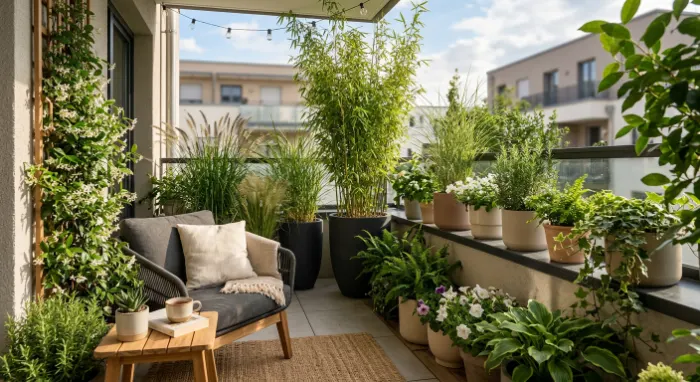
A balcony can feel exposed when nearby homes, roads, or other buildings look directly into your space. The right plants can create a natural screen while making the balcony feel greener and more relaxing.
You do not need a large garden to add privacy. Tall plants, climbing vines, grasses, and dense potted greenery can turn an open balcony into a cozy private spot.
Why Plants Are a Great Choice for Balcony Privacy
Plants can do more than block unwanted views. They add color, texture, shade, and a natural feel to an outdoor space. A row of tall planters can also help define your balcony without making it feel closed.
Green screens work especially well for renters and small balconies. You can move potted plants when needed and change their position as they grow. This makes plant privacy a flexible choice for many homes.
Benefits of Using Plants as a Privacy Screen
- Create a natural visual barrier
- Make the balcony feel more private
- Add greenery to small spaces
- Provide some shade from strong sunlight
- Make plain balconies look more inviting
- Add flowers, fragrance, or fresh herbs
- Work well with pots and balcony planters
- Give you flexible decorating options
What to Look For Before Buying Privacy Plants
The best balcony privacy plant depends on your space. Before buying anything, check how much sunlight reaches the balcony and how much room you have for pots.
Also think about wind, watering, plant height, and the weight of large containers. A plant that looks perfect in a garden may not work well in a small balcony planter.
Check These Things First
- Sunlight: Notice how many hours of direct sun your balcony gets.
- Available space: Measure the floor, railing, and wall areas.
- Plant height: Choose plants that can block the view without overcrowding the space.
- Wind: Pick strong plants if your balcony gets heavy wind.
- Water needs: Choose plants that match the time you can give them.
- Pot size: Make sure the container gives the roots enough room.
- Growth speed: Fast-growing plants can create privacy sooner.
- Local climate: Select plants that can handle your area’s weather.
10 Balcony Plants That Create a Natural Privacy Screen
These balcony plants can help block unwanted views while adding beauty and greenery to your outdoor space. From tall bamboo to flowering vines, there are options for different balcony sizes and light conditions.
1. Bamboo for a Tall Green Screen
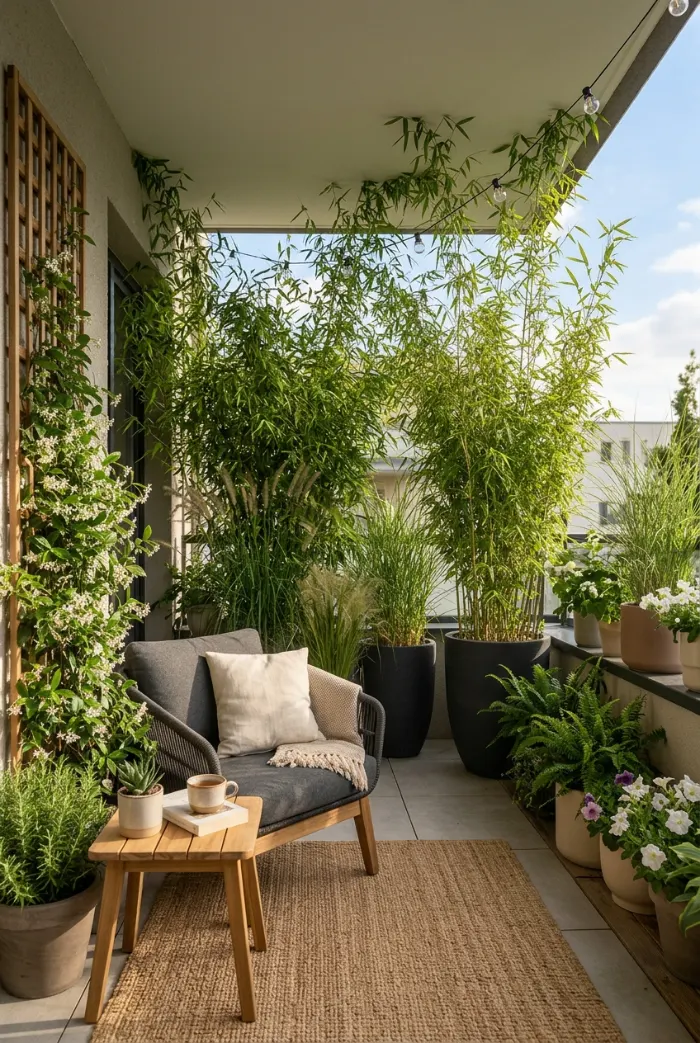
Bamboo can create a tall green wall without taking up the whole balcony. Choose a clumping type for containers because it stays easier to manage. Fargesia is one option for a softer look, while other suitable clumping varieties can create a fuller screen.
Place bamboo pots along the balcony edge where you need the most privacy. Use sturdy containers because tall bamboo can catch wind. Keep the soil evenly moist and trim old stems when needed to keep the screen neat.
2. Tall Ornamental Grass for Soft Privacy
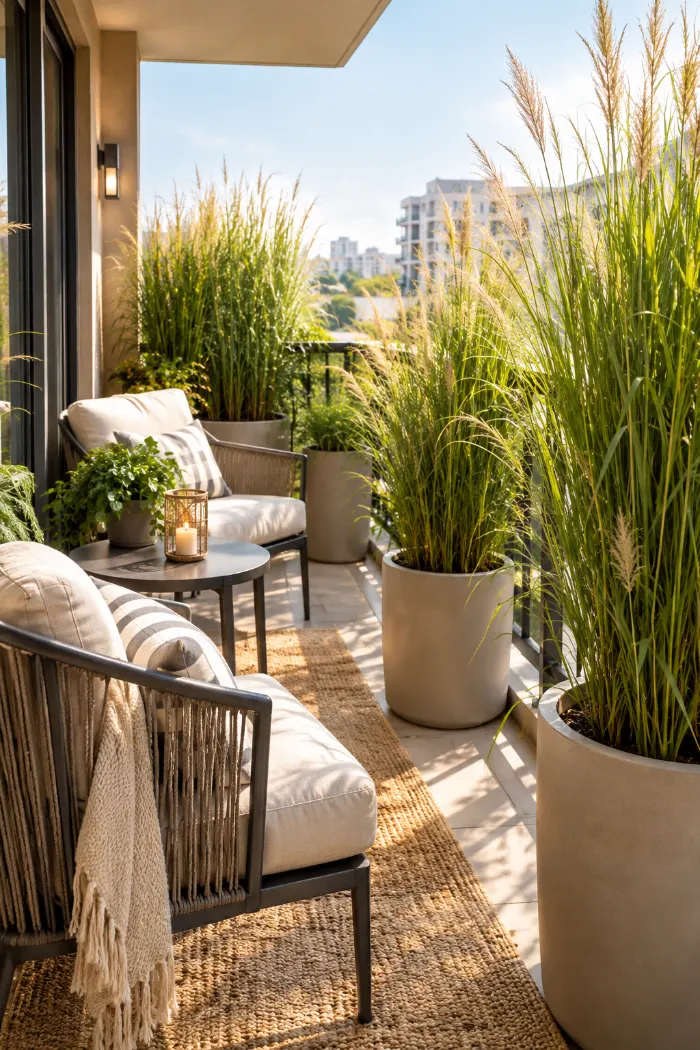
Tall ornamental grasses can give a balcony a soft and airy privacy screen. Their narrow leaves move with the breeze and create a relaxed outdoor feel. Varieties such as Miscanthus can work well when grown in large containers with enough space.
Arrange several grass-filled pots beside each other for better coverage. This option works especially well if you want privacy without a heavy green wall. Cut back many ornamental grasses at the right time to encourage fresh growth.
3. Star Jasmine for a Green Balcony Wall
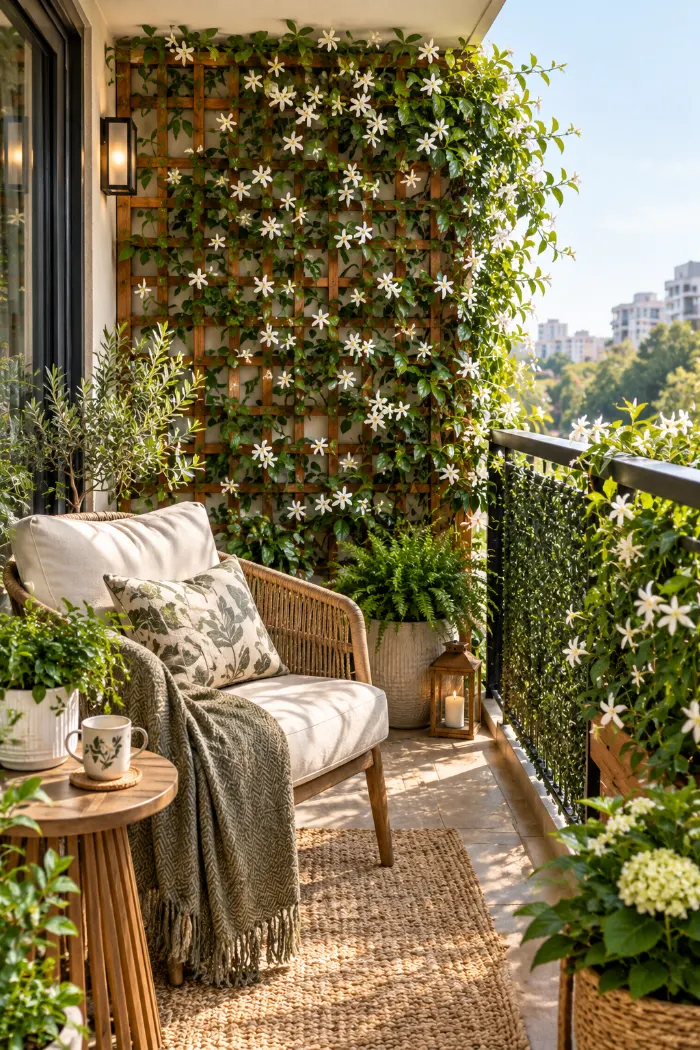
Star jasmine is a useful choice when you want privacy with flowers and fragrance. This climbing plant can grow across a trellis and gradually cover an open section of the balcony. Its glossy leaves also provide a fresh green look during suitable growing conditions.
Give the vine a strong support structure before it grows heavily. Guide new stems around the trellis instead of letting them spread randomly. Place the plant where it receives suitable light and water it according to its growing needs.
4. Bamboo Palm for Lush Balcony Privacy
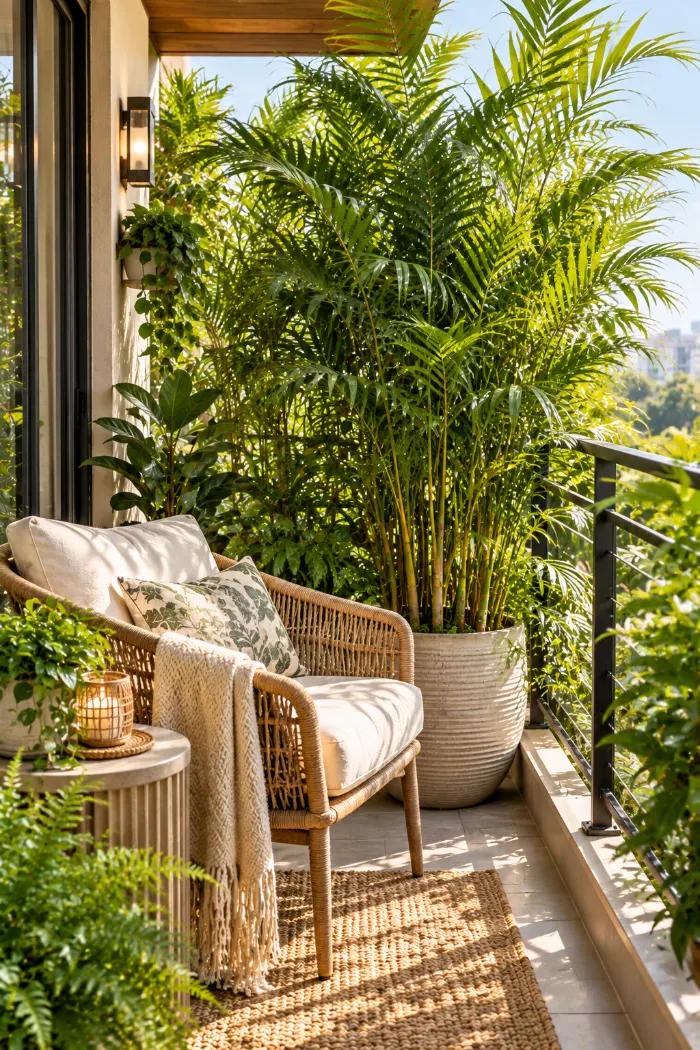
Bamboo palm can bring a tropical touch to a sheltered balcony. Its long leaves create a full shape that works well near railings or exposed corners. It can be especially useful when you want greenery that feels softer than a solid privacy screen.
Use a large, stable pot and place the palm where it gets suitable indirect or filtered light. Avoid crowding several palms into a tiny space. One healthy plant can become a strong focal point while also helping block nearby views.
5. Photinia for a Dense Green Barrier
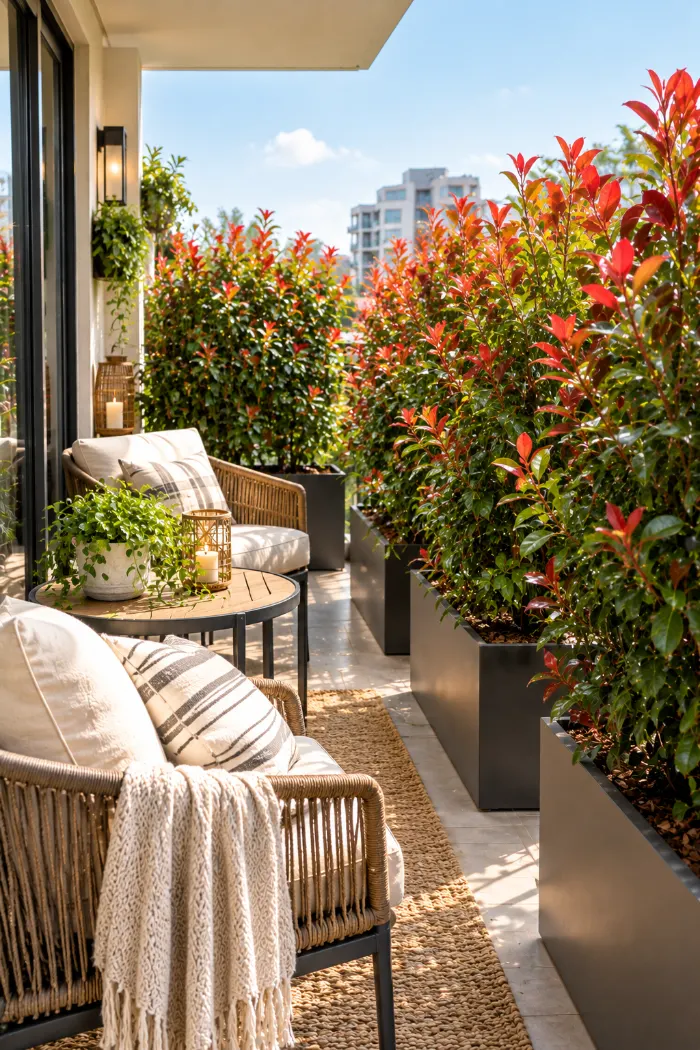
Photinia can provide dense foliage when grown in a suitable container. New leaves on some varieties appear bright red before changing to green, which adds extra color to the balcony. Its fuller shape can work well when you need privacy from nearby windows.
Choose a strong planter with good drainage and give the shrub enough room to grow. Regular trimming can help maintain a tidy shape and control its size. Place it along the balcony edge instead of directly in the main walking area.
6. Lavender for Privacy With Color and Scent
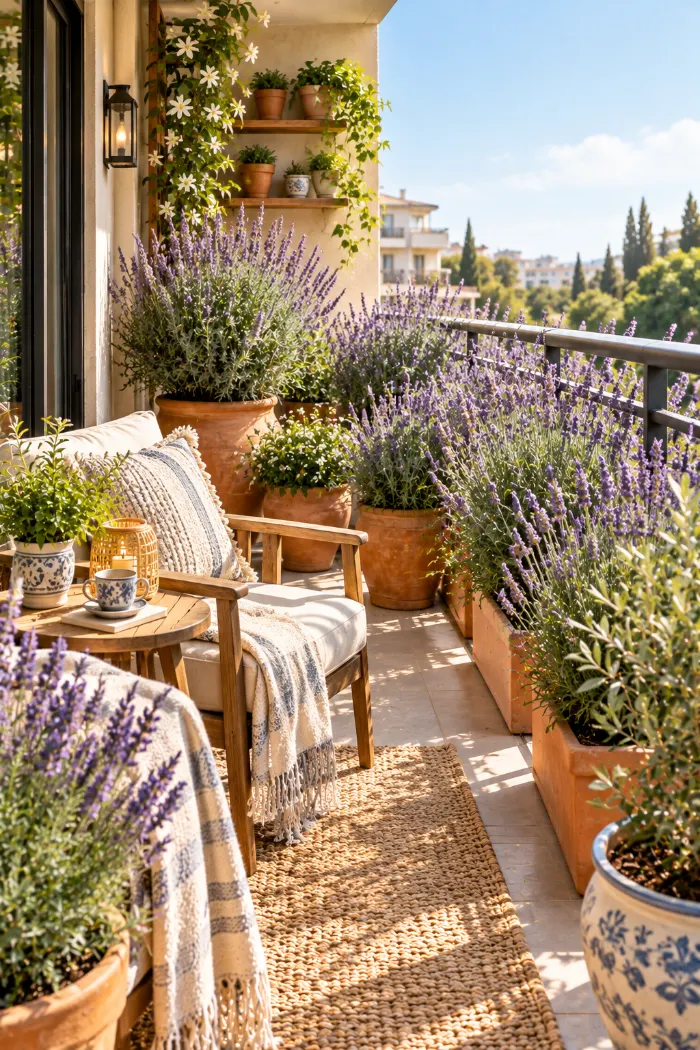
Lavender is shorter than many traditional privacy plants, but it can still help create a soft visual barrier around a balcony. Its purple flowers add color, while its scent can make the outdoor space feel more pleasant. It also works beautifully with simple ceramic or terracotta pots.
Use lavender along the front edge of a balcony where you need low-level screening. Give it plenty of sunlight and use soil that drains well. Combine several plants in matching containers to create a fuller and more connected look.
7. Climbing Hydrangea for a Green Wall Effect
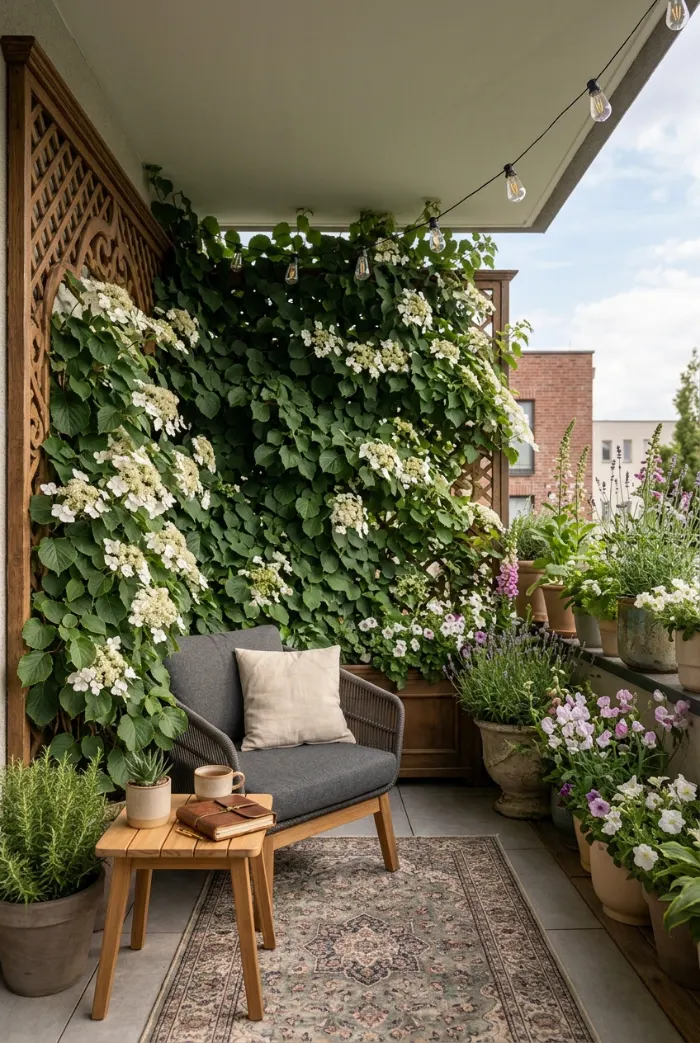
Climbing hydrangea can create a beautiful leafy screen when it has a strong surface to climb. Its large leaves give a balcony a garden-like feel and can soften plain walls or open sections. This plant works best when you have enough vertical space for its growth.
Add a strong trellis or support before the plant becomes large. Give it suitable light, moisture, and room to spread. It is a good choice for people who want their balcony privacy screen to look more like a planted garden wall.
8. Privet for a Classic Potted Screen
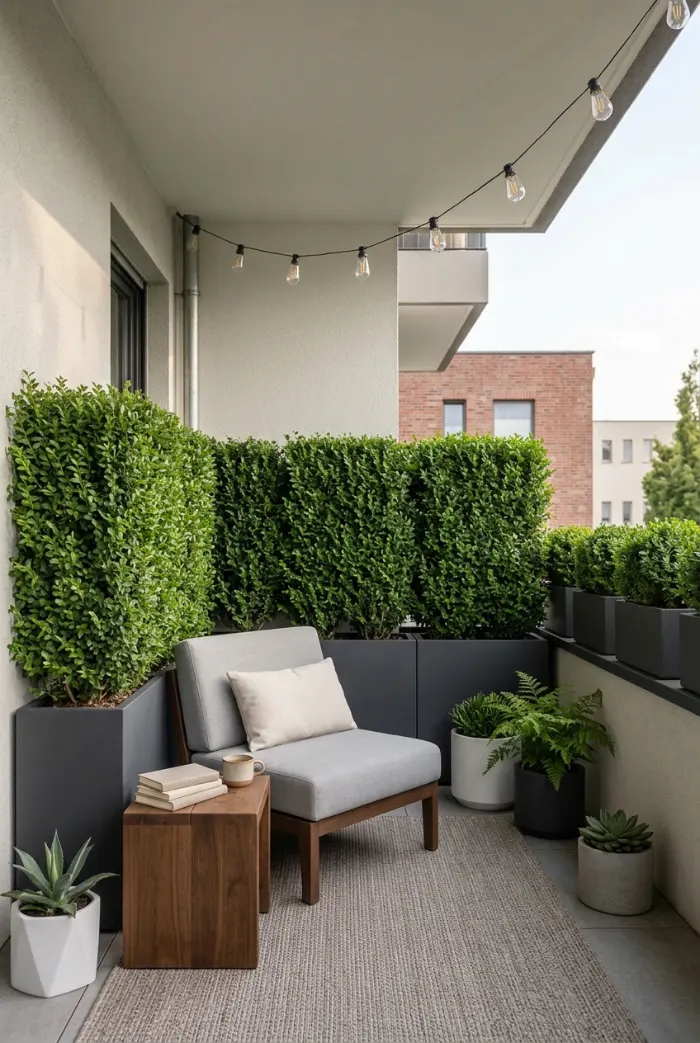
Privet is known for its dense foliage and can be shaped into a neat screen. It can work well when you want a more structured balcony design. Several container-grown plants can form a green line along the edge and reduce direct views from nearby spaces.
Trim privet regularly if you want a clean, compact shape. Use containers with good drainage and enough root space. Check local growing rules before planting it because some privet species can become invasive in certain regions.
9. Tall Ferns for a Soft Green Screen
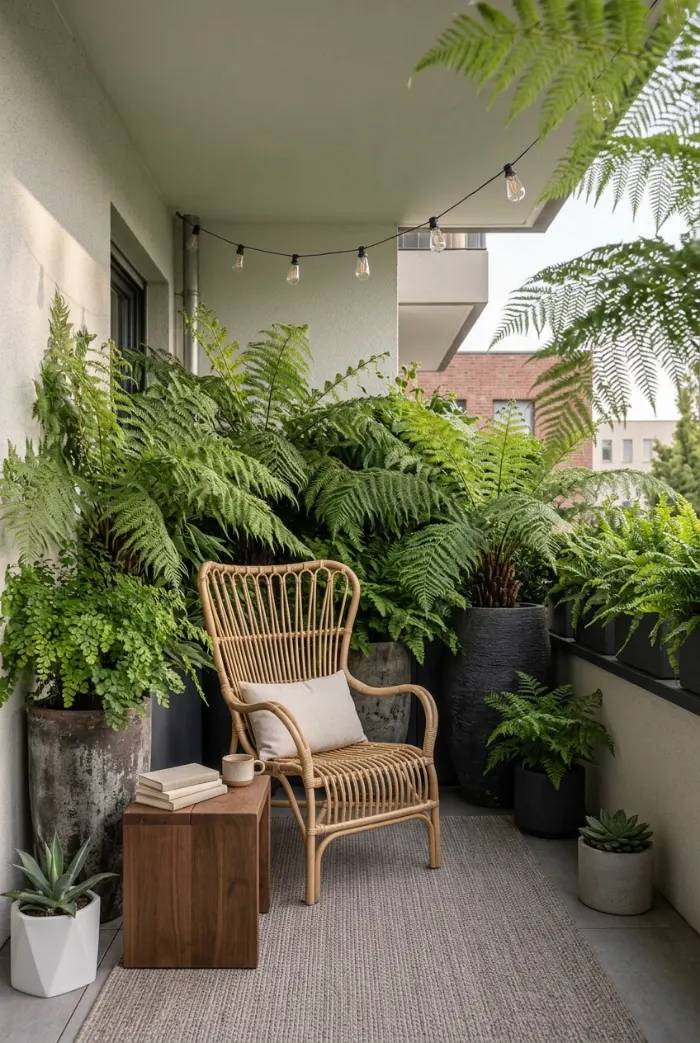
Tall ferns can make a balcony feel cool, leafy, and peaceful. Their large fronds create a softer privacy effect than plants with stiff leaves. They are a good option for balconies with less direct sun, depending on the fern variety you choose.
Group several ferns together to create more coverage. Keep their growing medium appropriately moist and protect them from harsh conditions that can damage delicate fronds. Use tall planters or plant stands to raise the foliage closer to eye level.
10. Upright Rosemary for a Useful Green Screen
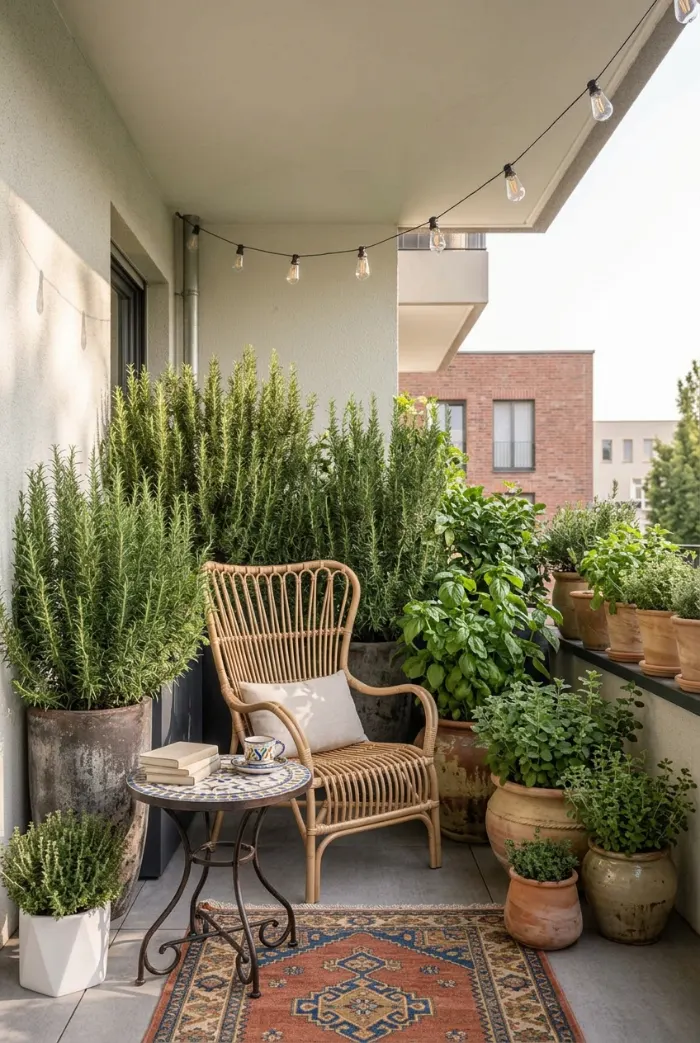
Upright rosemary can add greenery while giving you a useful herb for the kitchen. Its vertical shape makes it more suitable for small balconies than spreading herbs. Several large rosemary plants can create a low or medium screen around seating areas.
Place rosemary in a sunny spot with well-draining soil. Avoid keeping the roots constantly wet. You can trim the plants to maintain their shape and use the fresh leaves while cooking. This makes the privacy planting both attractive and practical.
How to Arrange Plants for Better Balcony Privacy
The right arrangement can make a bigger difference than simply buying tall plants. Start by finding the exact direction of the unwanted view. Then place your tallest plants along that side and keep shorter plants closer to the seating area.
Use different heights to create a layered balcony garden. Tall plants can block eye-level views, medium plants can fill open spaces, and small pots can decorate the front. This creates privacy without making the balcony feel crowded.
Easy Balcony Privacy Layout
- Put tall plants along the exposed railing.
- Use medium plants to fill gaps.
- Place small pots near chairs and tables.
- Use a trellis for climbing plants.
- Keep a clear path around the balcony.
- Choose matching pots for a neat look.
- Turn pots regularly for even plant growth.
- Use sturdy containers in windy locations.
Tips for Keeping Your Balcony Privacy Plants Healthy
A privacy screen only looks good when the plants stay healthy. Check your plants often and remove dry leaves or damaged stems. Make sure containers have drainage holes so excess water can escape.
Remember that plants grow at different speeds. A small plant may need time before it creates a full screen. Give each plant enough room, light, water, and support so it can grow naturally.
Simple Plant Care Checklist
- Check soil moisture before watering.
- Make sure pots drain well.
- Remove dead leaves regularly.
- Trim plants when they become too wide.
- Support climbing plants with a strong trellis.
- Protect tall plants from strong wind.
- Rotate containers when needed.
- Replace unhealthy plants before they affect nearby plants.
Final Thoughts
Balcony privacy does not have to mean adding a large wall or expensive screen. Plants can give you a softer and more natural solution. Bamboo, ornamental grass, jasmine, palms, shrubs, ferns, and herbs all offer different ways to create a private outdoor space.
Think about your balcony size, sunlight, wind, and daily routine before choosing plants. A few well-placed containers can make a simple balcony feel more comfortable, green, and personal.
Frequently Asked Questions
What is the fastest-growing plant for balcony privacy?
Bamboo and some climbing plants can grow quickly under suitable conditions. However, growth speed depends on the plant variety, climate, sunlight, water, and container size.
What plants are good for a small balcony?
Tall grasses, upright rosemary, lavender, compact palms, and suitable climbing plants can work well on small balconies. Choose narrow-growing plants and avoid filling the entire floor with large pots.
How can I create balcony privacy without blocking sunlight?
Use plants with airy foliage, climbing vines on open trellises, or narrow plants along one side. These options can reduce direct views while still allowing light and air to enter.
Can I grow privacy plants in pots?
Yes. Many privacy plants can grow in containers when the pot provides enough root space and drainage. Choose the container size based on the mature plant and check how heavy it will become.
How many plants do I need for a balcony privacy screen?
There is no fixed number. Measure the area you want to cover and consider the mature width of each plant. Start with enough space between containers so the plants can grow without crowding each other.





- Be Respectful
- Stay Relevant
- Stay Positive
- True Feedback
- Encourage Discussion
- Avoid Spamming
- No Fake News
- Don't Copy-Paste
- No Personal Attacks
- Be Respectful
- Stay Relevant
- Stay Positive
- True Feedback
- Encourage Discussion
- Avoid Spamming
- No Fake News
- Don't Copy-Paste
- No Personal Attacks
