10+ Clever Small Workout Space Ideas for Your Home Gym
Published: 27 Oct 2026
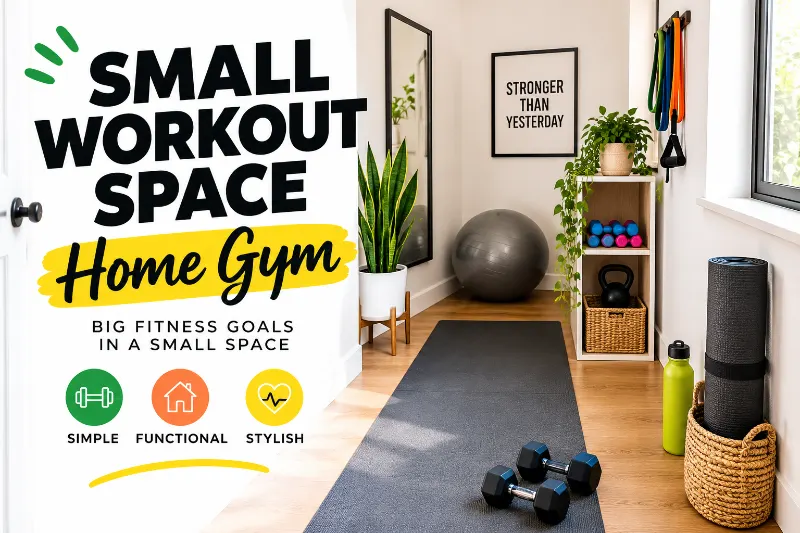
Creating a home gym feels hard when you have a small bedroom, a busy living room, or very little free floor space. You do not need a large room or expensive machines to stay active at home. Want to build a workout area that fits your home and budget? These small workout space ideas will help you make the most of every inch.
Choose one clear area, move away clutter, and start with a mat and a few useful exercise items. A corner of your bedroom, an empty wall, or a spare part of your living room can become a practical small home gym.
Start with bodyweight exercises and add equipment as your routine grows. Keep enough open floor space to move safely, and choose storage that fits your room.
Why Is a Small Workout Space Worth Creating?
A dedicated workout corner makes exercise easier to fit into your daily routine. You can stretch before work, lift light weights after dinner, or follow a short workout without traveling to a gym. A simple setup can also help you keep exercise items organized.
- Save time: Exercise at home without a daily trip to the gym.
- Save money: Begin with bodyweight exercises instead of buying large machines.
- Use space wisely: Turn an unused corner into a useful activity area.
Example: A renter with a 10 × 12-foot (3.05 × 3.66 m) bedroom can use one corner for a mat and a small storage basket. A clean, simple style keeps the room suitable for both sleep and exercise.
How Do You Plan a Workout Area in a Small Home?
Start by measuring the available floor space. Choose a spot with good airflow, enough light, and a floor that supports your exercise routine. Your home workout space should feel comfortable without blocking doors, windows, or daily walking paths.
- Measure the open area before buying equipment.
- Check the ceiling height for standing stretches and overhead movements.
- Pick a storage spot for mats, bands, towels, and weights.
Example: In a 9 × 10-foot (2.74 × 3.05 m) bedroom, a beginner can set aside a 4 × 6-foot (1.22 × 1.83 m) exercise area. This works well for stretching, yoga, and basic bodyweight exercises.
Which Spot Works Best for a Home Gym?
The best location depends on your routine and the way you use your home. A bedroom corner suits quiet exercise, while a spare room may suit strength training. Choose a spot where you can move without disturbing others.
Example: A family in a medium-sized home can use a living room corner near a window. A neutral style with warm white walls and light wood storage helps the gym area blend with the rest of the room.
What Should You Check Before Setting Up?
Look at the floor, nearby furniture, and storage options before you begin. You need enough room to step, bend, and stretch. Check the floor’s grip and protect it from heavy equipment.
- Keep exercise space clear of sharp furniture edges.
- Use a suitable exercise mat on a clean, stable floor.
- Store weights low and secure heavy items against tipping.
Example: A renter with a small living room can move a lightweight coffee table before exercising and return it afterward. This keeps the space flexible and avoids permanent changes to the home.
10 Clever Small Workout Space Ideas for Your Home
These small workout room ideas suit bedrooms, apartments, spare rooms, and shared living areas. Pick the setup that matches your exercise habits instead of trying to fit every piece of equipment into one small space.
1. Turn an Empty Corner Into a Workout Zone
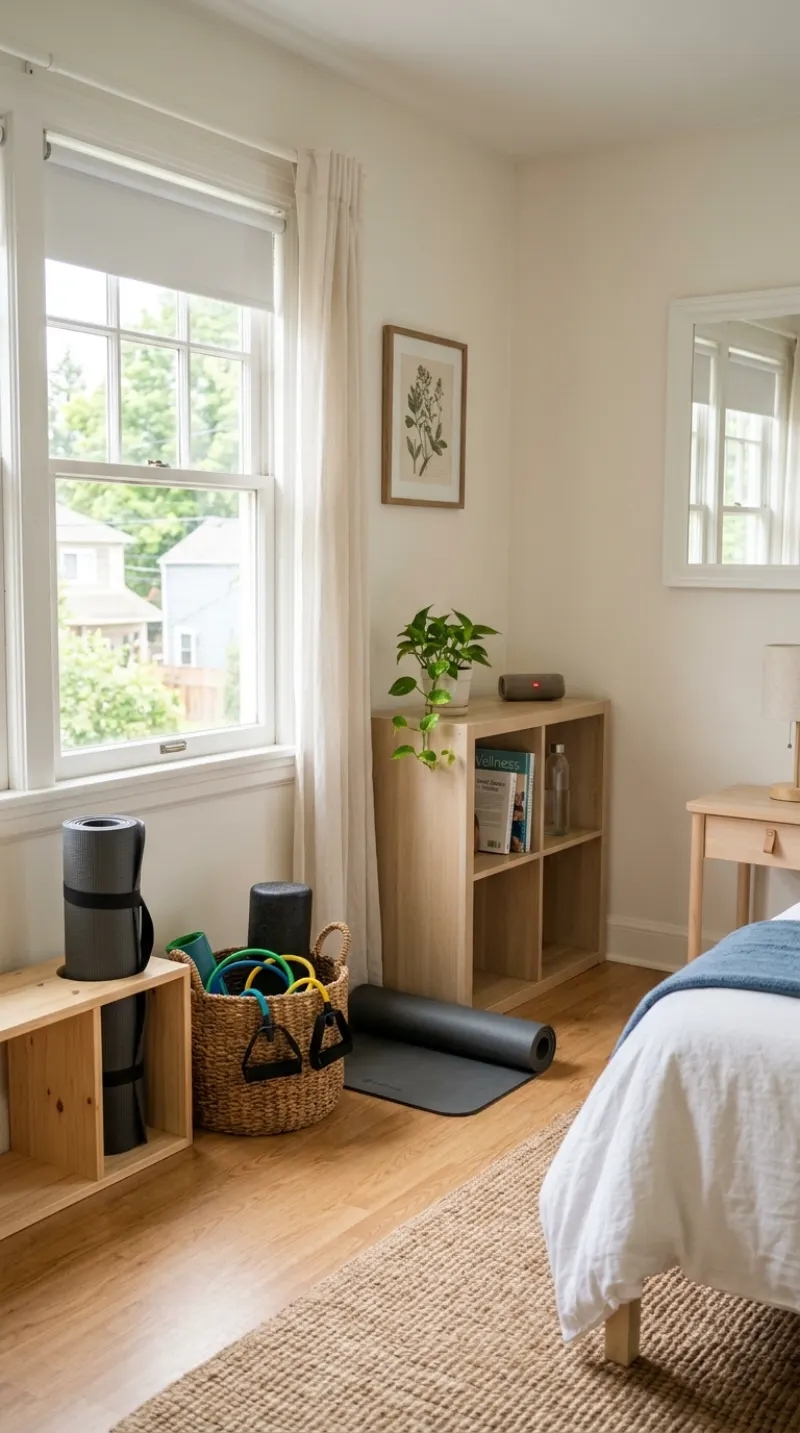
An unused corner can hold a mat, resistance bands, and a small basket. Keep the design simple with warm white walls, a light-colored mat, and one storage container. This setup suits renters, beginners, and small bedrooms.
Example: In a 10 × 10-foot (3.05 × 3.05 m) bedroom, a 4 × 5-foot (1.22 × 1.52 m) corner can support stretching and bodyweight exercises on a low budget.
2. Use a Foldable Exercise Mat and Compact Gear
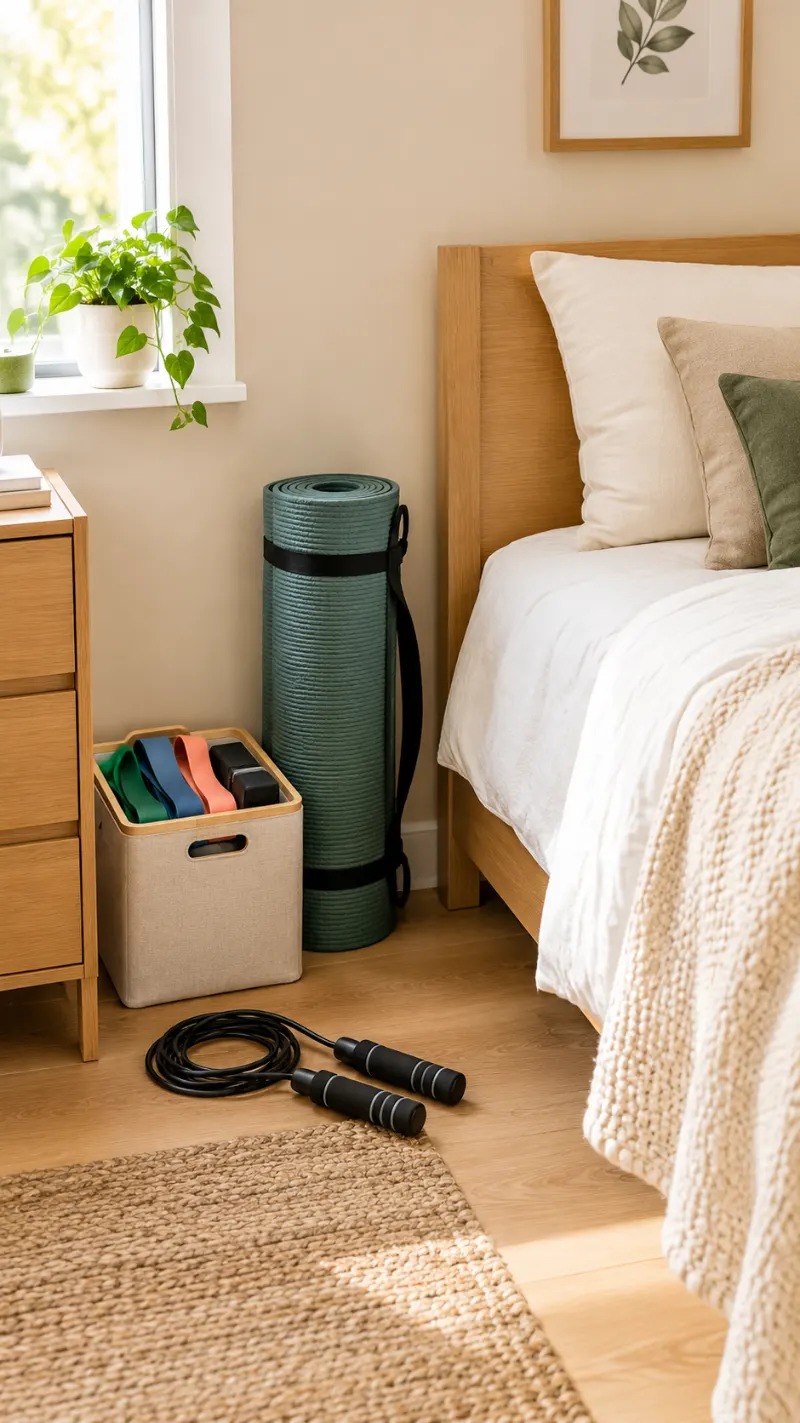
Foldable workout equipment helps you reclaim floor space after exercise. Choose items that fit inside a closet or under a bed. A foldable mat, resistance bands, and a jump rope can support many beginner routines without filling the room.
Example: A renter in a 9 × 11-foot (2.74 × 3.35 m) bedroom can store exercise gear under the bed. This suits a clean, minimal style and a low-cost setup.
3. Make a Living Room Workout Area
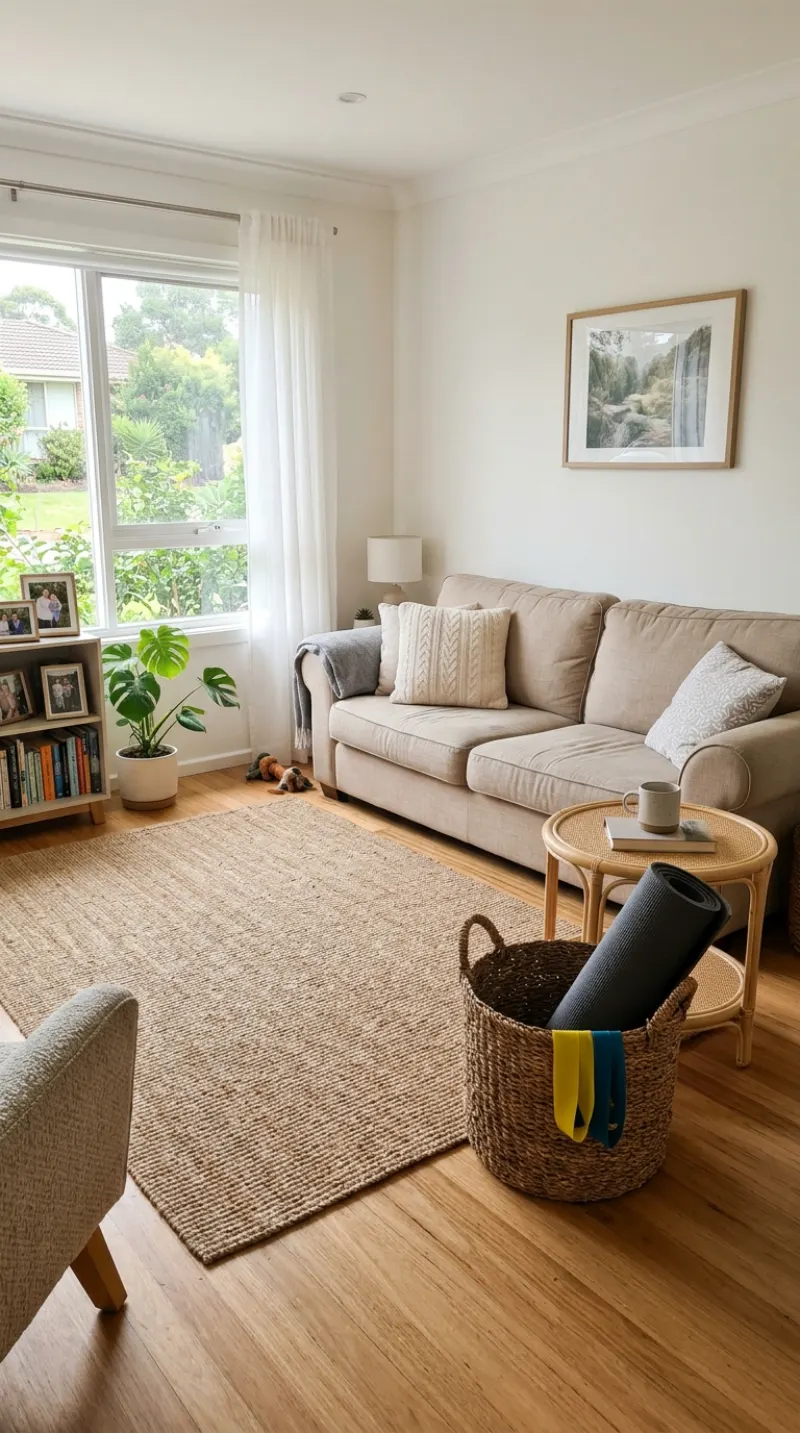
Your living room can double as an exercise space when you keep the layout flexible. Move a lightweight chair or coffee table before your workout, then return it afterward. Choose neutral storage that matches your existing decor.
Example: A family with a 12 × 15-foot (3.66 × 4.57 m) living room can clear a central area for floor exercises. A soft beige and warm white palette keeps the room inviting.
4. Create a Simple Workout Wall
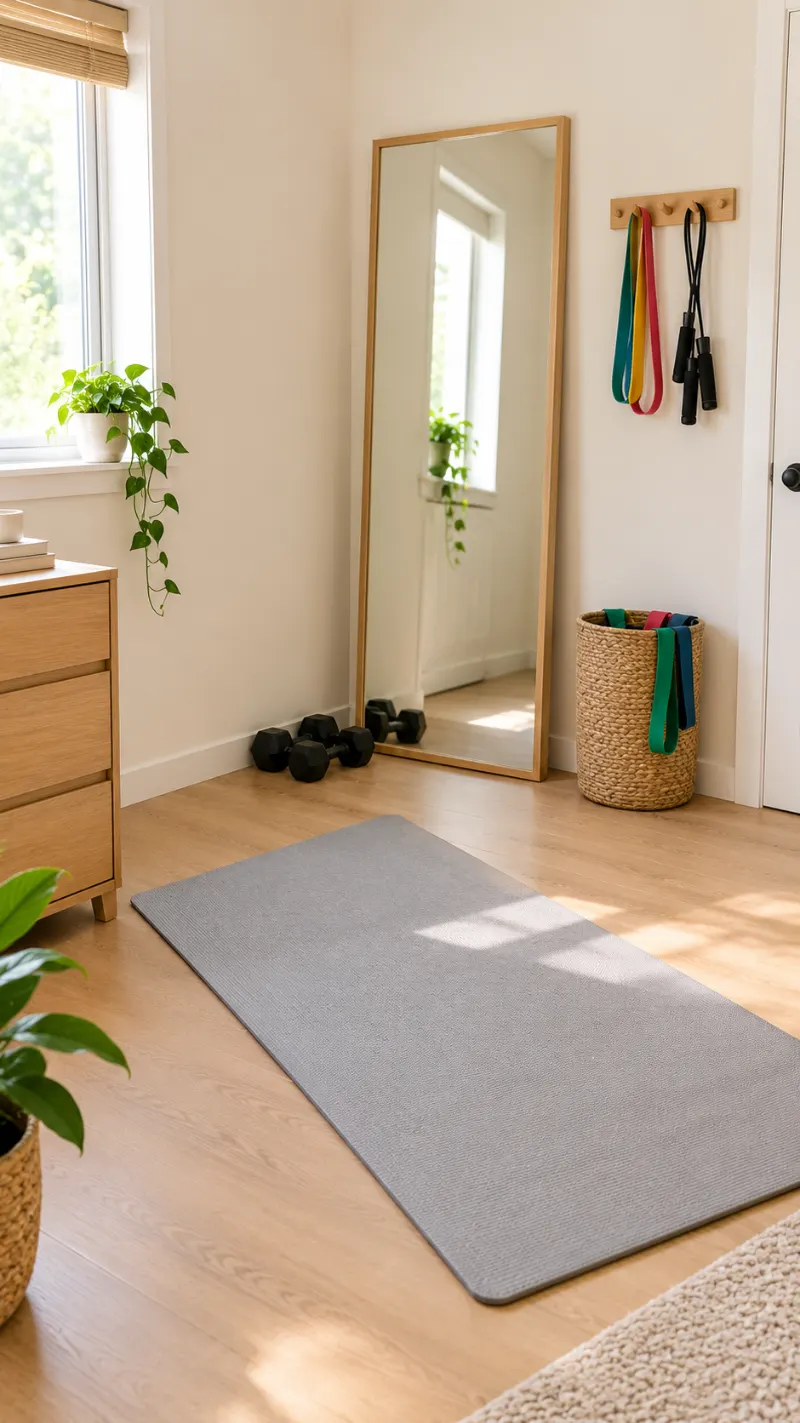
A dedicated wall can make your exercise area feel organized without taking up much floor space. Use a mirror that stands securely or is mounted correctly, and place a basket nearby for small items. Keep the wall decor light and simple.
Example: A 10 × 12-foot (3.05 × 3.66 m) spare room can have a warm white wall, a full-length mirror, and a slim storage basket. This suits renters using freestanding decor.
5. Store Equipment Under the Bed
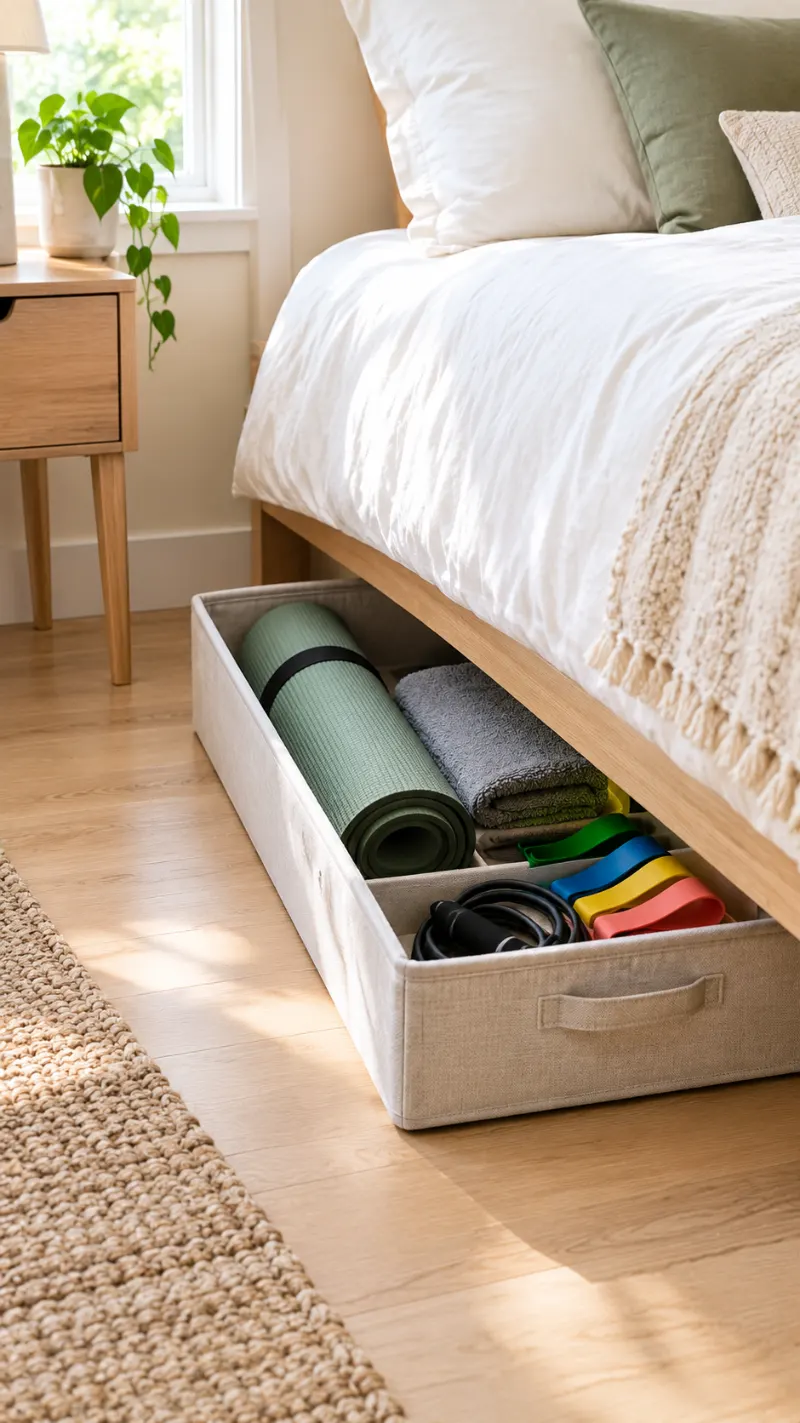
Under-bed storage keeps small workout items out of sight when you finish exercising. Use a shallow container for resistance bands, a mat, or a towel. Check the container’s height before buying it, and keep heavy weights in a safer, easy-to-reach place.
Example: In a 9 × 10-foot (2.74 × 3.05 m) bedroom, a low storage box under the bed suits a renter with limited closet space. A simple white-and-wood style keeps things neat.
6. Use a Spare Room for a Multi-Purpose Gym
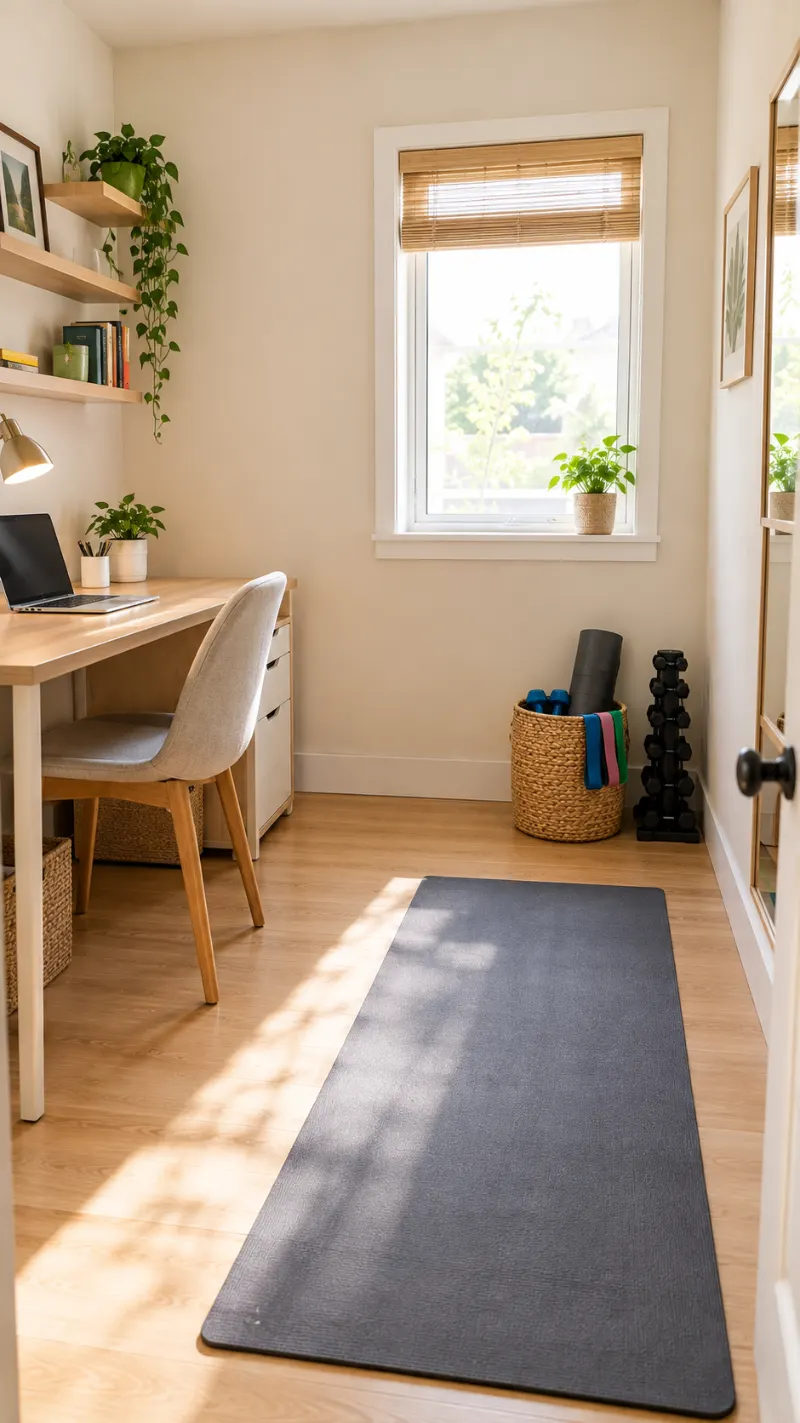
A spare room can serve as a workout area and a home office or guest room. Choose equipment that stores easily and furniture that can move without effort. Keep the center of the room open for exercise.
Example: A 10 × 12-foot (3.05 × 3.66 m) spare room can hold a small desk along one wall and an exercise mat on the other side. This layout suits a modest, functional style.
7. Add a Compact Strength-Training Corner
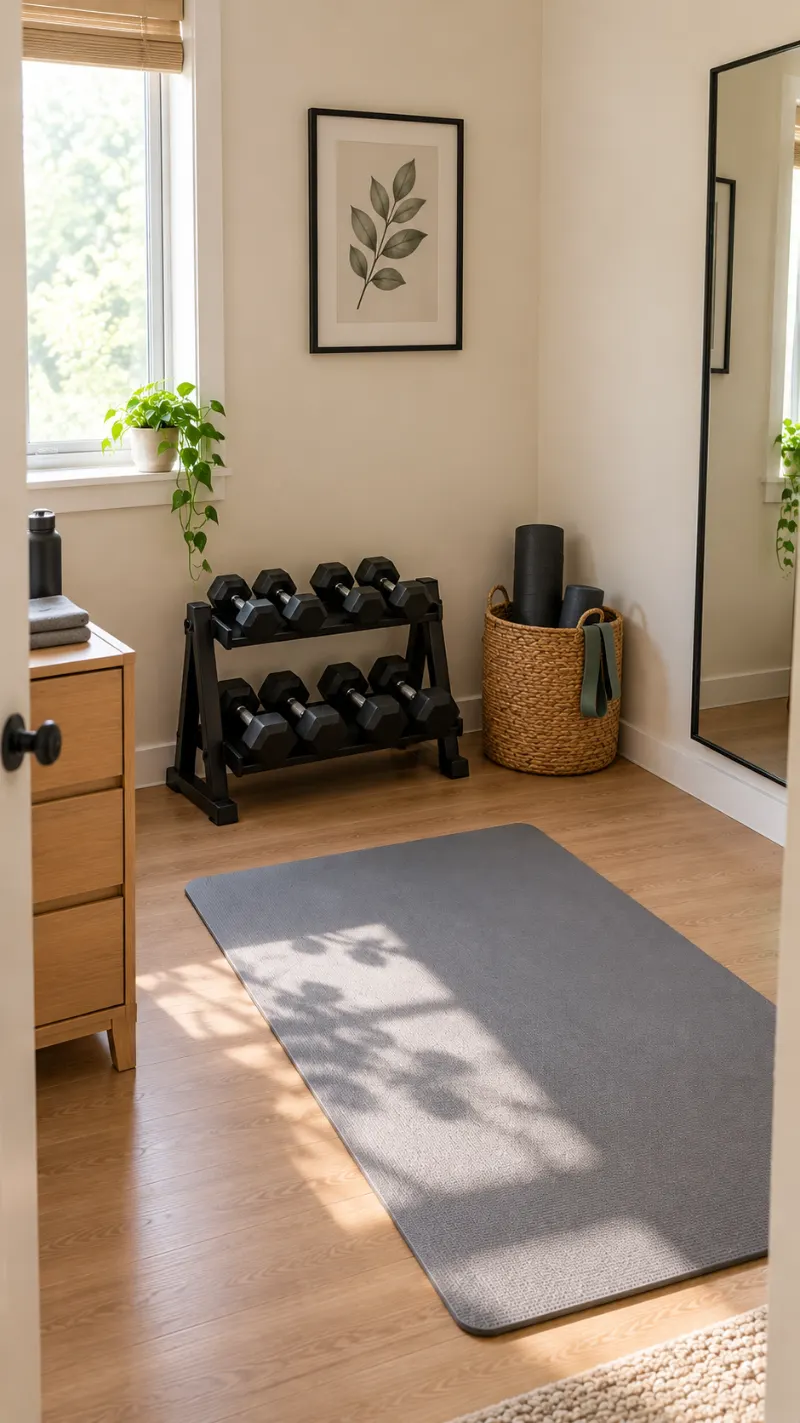
A small strength-training area can work with a few selected items rather than a full rack of equipment. Start with light dumbbells or resistance bands and store them securely. Leave enough space to lift, lower, and move without hitting furniture.
Example: A 10 × 10-foot (3.05 × 3.05 m) spare room can fit a mat and a small, stable weight stand. A simple black-and-gray style suits a beginner who wants a tidy setup.
8. Make a Bright Yoga and Stretching Space
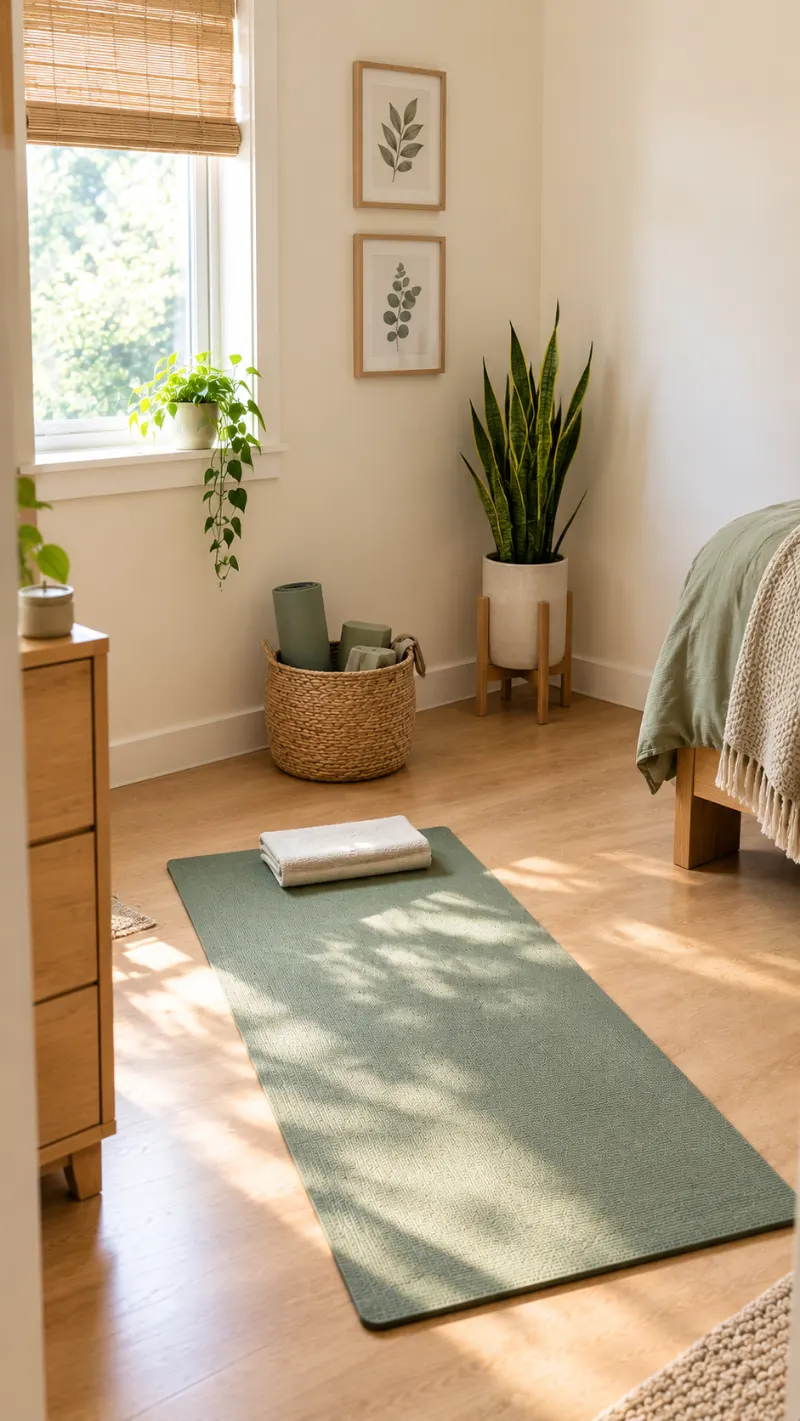
A quiet yoga corner needs little equipment. Use a comfortable mat, a folded towel, and a small basket for blocks or bands. Warm white walls and soft green accents can make the area feel calm without adding clutter.
Example: A 7 × 9-foot (2.13 × 2.74 m) bedroom can hold a yoga mat near a window. This suits renters, beginners, and people who prefer low-impact movement.
9. Try a Closet Workout Setup
A closet can store fitness gear and help you keep the rest of your room clear. Remove items you no longer use, then organize bands, towels, and light accessories in small bins; exercise in the open room, not in a cramped closet.
Example: In a 9 × 10-foot (2.74 × 3.05 m) bedroom, one closet shelf can hold small fitness items. This suits renters who want a clutter-free, neutral room.
10. Use a Balcony or Covered Patio for Movement
A covered outdoor area can provide extra room for stretching or bodyweight exercise. Check the surface for grip and keep equipment protected from rain and moisture. Avoid outdoor exercise during unsafe weather or extreme heat.
Example: A 6 × 8-foot (1.83 × 2.44 m) covered patio can hold a mat and a small storage box. A renter-friendly setup works best with movable items and no permanent fittings.
What Makes a Small Home Gym Easy to Use?
A good gym setup fits your real routine. You need enough room to move, a place to store equipment, and a comfortable surface for exercise. A neat space also makes it easier to return items after every session.
- Keep your most-used equipment within easy reach.
- Store items after exercise to protect walking paths.
- Add a lamp or use natural light if the area feels dark.
Example: A beginner using a 4 × 6-foot (1.22 × 1.83 m) workout zone can keep a mat and bands nearby. A simple style with warm white walls and pale wood storage keeps the space calm.
How Can You Keep the Area Organized?
Use a small basket, a shelf you already own, or a container that fits under a bed. Group similar items together so you can find them quickly. Avoid buying storage before you know what needs a home.
Example: In a small apartment, one basket can hold bands and towels while a mat stands upright beside a wardrobe. This works well for renters who need to clear the room each day.
How Much Space Do You Need to Move Safely?
Your space needs depend on the exercises you plan to do. Measure your full range of movement, including arm extensions and steps to each side. Follow the equipment maker’s clearance guidance when using machines or weights.
Example: In a 10 × 12-foot (3.05 × 3.66 m) room, move furniture away from the exercise zone before a workout. Families should keep children and pets away from moving equipment and loose weights.
How Can You Build a Home Gym on a Budget?
You can begin with items you already own and add equipment as your needs change. A smart budget home gym focuses on regular use, safe movement, and storage rather than expensive machines. For seasonal comfort, room layout also matters; keeping doors and walking paths clear can help the space feel more usable.
| Budget level | What to use | Best for |
| Low | Bodyweight exercises, a towel, and a clear floor | Beginners and renters |
| Medium | An exercise mat, resistance bands, and a storage basket | Regular home workouts |
| High | Additional weights or larger equipment that fits the room | People with an established routine |
Example: Someone with a small bedroom can begin with bodyweight exercises and a clear floor. A medium setup can add a mat and bands. Before buying anything, check current prices and confirm that the item fits your storage space.
For a family-friendly home, choose storage that does not block doors or create a trip hazard. A flexible room can also serve other purposes, just as a thoughtfully planned play area can fit into a backyard without taking over the whole space.
What Safety Rules Should You Follow in a Small Home Gym?
A compact gym must still give you room to move safely. Keep the floor dry, use equipment as directed, and avoid stacking heavy items on unstable furniture. Check the area before each workout, especially in a shared room.
- Secure heavy shelves and mirrors with suitable fixings. Ask a qualified person for help if you are unsure about the wall or mounting method.
- Keep weights away from children and pets, and never leave them where someone can trip.
- Avoid electrical cords across exercise paths. Ask a qualified electrician to handle new outlets or electrical changes.
Example: A family using a 10 × 12-foot (3.05 × 3.66 m) spare room can keep weights in a stable, low storage unit and move loose cords away from the mat. A simple, uncluttered layout helps everyone share the room more safely.
Frequently Asked Questions
1. How do I make a home gym in a very small room?
Choose one clear area and start with bodyweight exercises. Add a mat and compact accessories only when you need them. Store everything after exercise so the room can still serve its main purpose.
2. What is the best room for a small home gym?
A bedroom corner, spare room, or living room can work well. Pick a location with enough open floor space, good airflow, and a safe surface. The best choice depends on your routine and household needs.
3. How can I create a home gym without buying equipment?
Use bodyweight movements such as squats, wall push-ups, and standing exercises that match your fitness level. Follow safe form and choose movements suited to your abilities. A clear floor can be enough for a beginner routine.
4. How do I store workout equipment in a small apartment?
Use a basket, a shallow under-bed box, or a closet shelf for small items. Keep heavy weights low and secure. Avoid filling the room with storage that blocks doors or reduces your exercise area.
5. Can a renter create a workout space without damaging the walls?
Yes. Use movable storage, freestanding mirrors, and equipment that does not need permanent fittings. Ask your landlord before mounting heavy shelves or mirrors, and use safe, stable options for your home.
Final Thoughts
A useful home gym does not need a large room or costly equipment. Start with a clear floor, choose compact items, and make storage part of your plan. Keep the setup safe and easy to maintain.
Choose one idea that fits your room and try it before adding more equipment. Which corner of your home could become your new workout spot?





- Be Respectful
- Stay Relevant
- Stay Positive
- True Feedback
- Encourage Discussion
- Avoid Spamming
- No Fake News
- Don't Copy-Paste
- No Personal Attacks
- Be Respectful
- Stay Relevant
- Stay Positive
- True Feedback
- Encourage Discussion
- Avoid Spamming
- No Fake News
- Don't Copy-Paste
- No Personal Attacks
