25 Creative Craft Room Ideas for Kids to Inspire Creativity
Published: 3 Nov 2026

Every child needs a place where ideas can get messy, colorful, and wonderfully their own. A kids craft room does not need to be big or perfect. It needs a good table, supplies children can reach on their own, and a little room to imagine.
These 25 creative craft room ideas for kids cover art stations, storage, small spaces, and budget-friendly setups, so you can build a creative space for kids that actually gets used every day.
Before You Start: A Craft Room That Works
Start with three basics: a washable work surface, low storage children can reach, and a simple cleanup routine. Keep everyday supplies visible and special supplies up a little higher. When children can find things and put them back on their own, they craft more and you tidy less.
25 Creative Craft Room Ideas for Kids
1. Create a Rainbow Art Wall
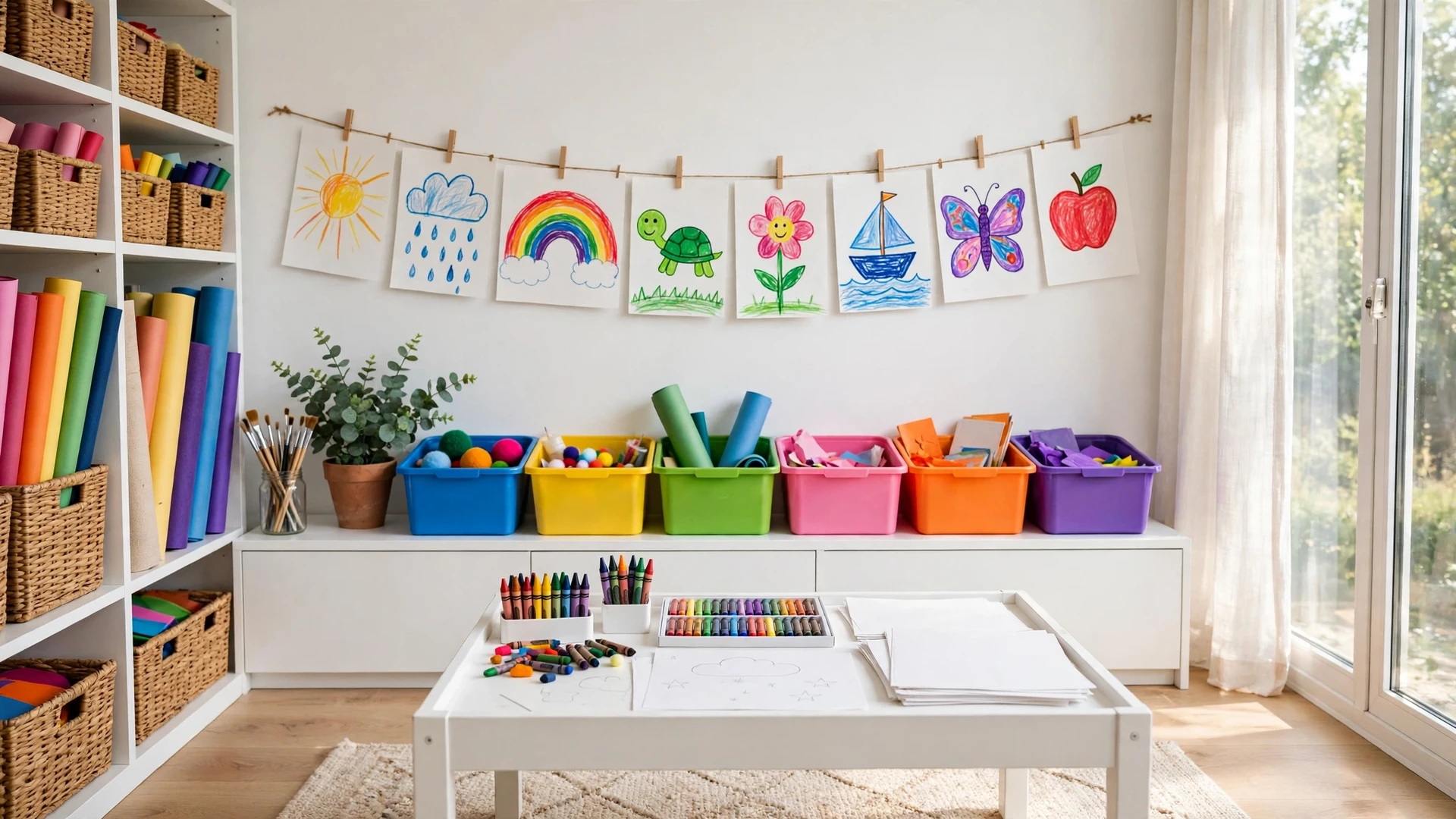
Hang finished artwork in a bright row using clips, a wire, or simple frames. A rainbow art wall makes finished work part of the room. Rotate pieces often so children see their progress and feel proud of what they made.
2. Set Up a Colorful Craft Table Station
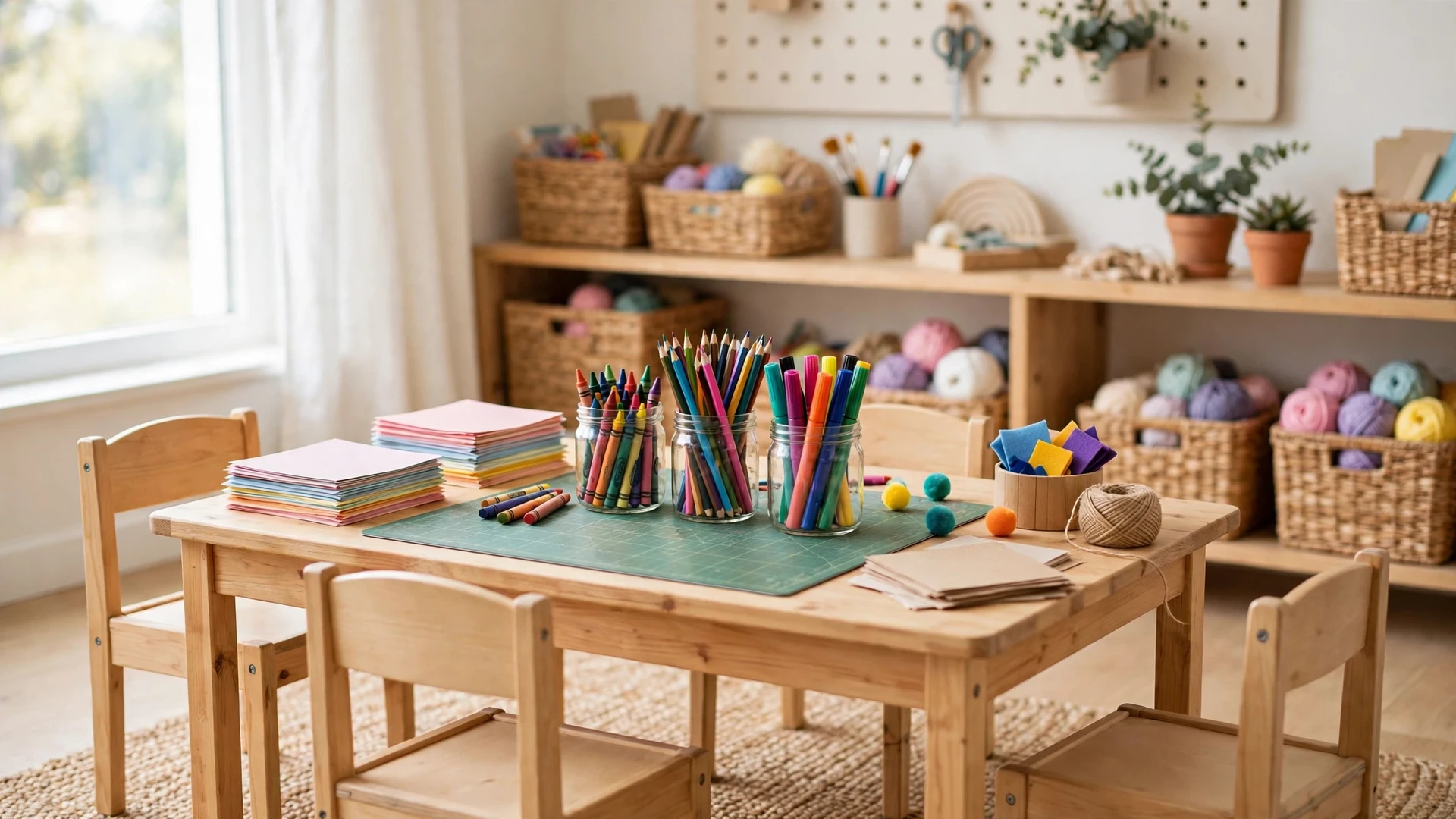
Choose a sturdy, low table with chairs that fit your child. Keep crayons, colored pencils, markers, and paper within reach, and use a tray for projects in progress. A dedicated craft table station keeps supplies in one place and makes it easy for children to start creating on their own.
3. Use a Rolling Supply Caddy Cart
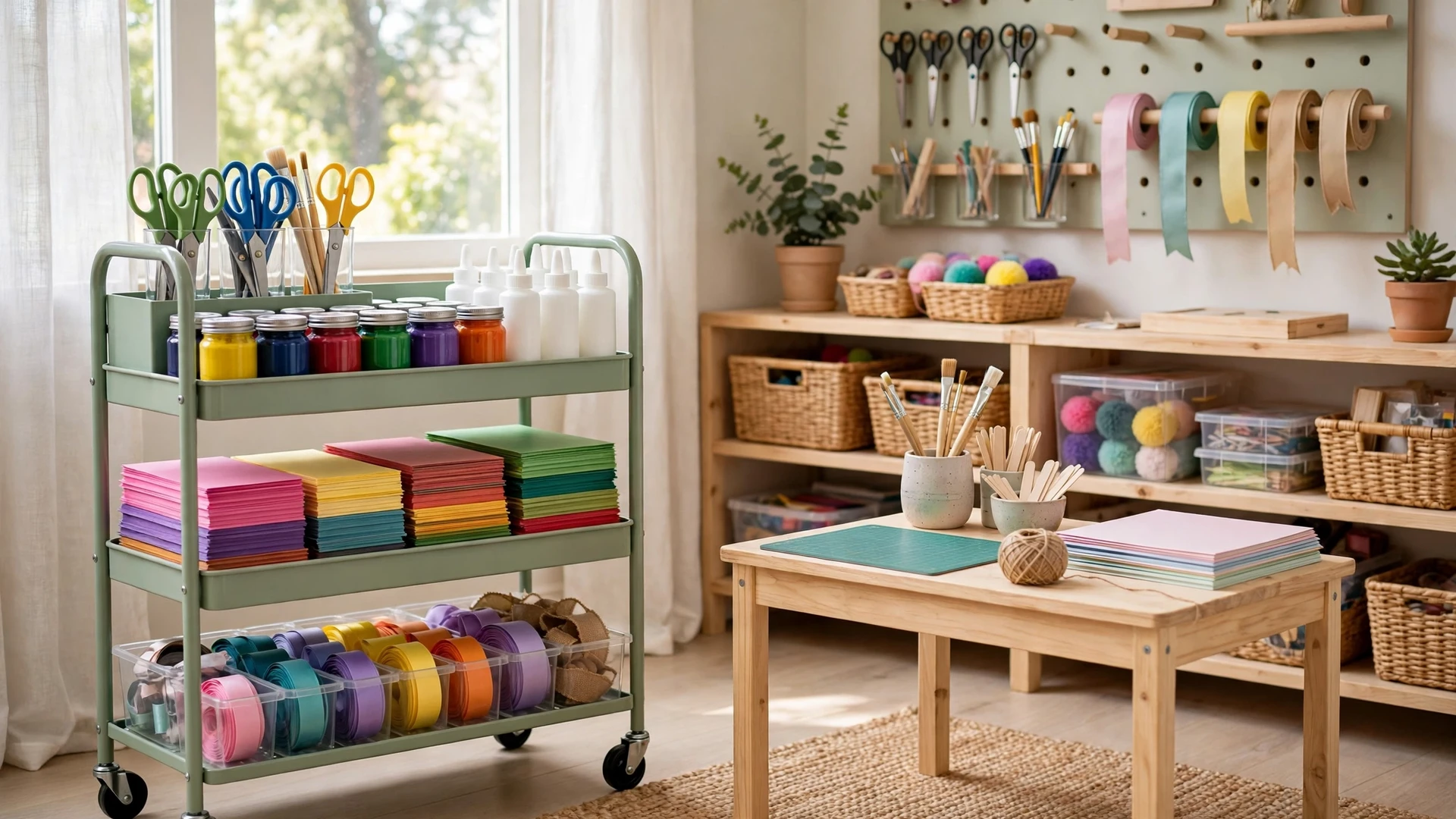
A rolling cart holds paper, glue, paint, and ribbons in tiers that move where the making happens. It is perfect for small homes because it can be rolled into a corner when not in use. Label each tier so children can find and return supplies themselves.
4. Hang a Pegboard Tool Wall
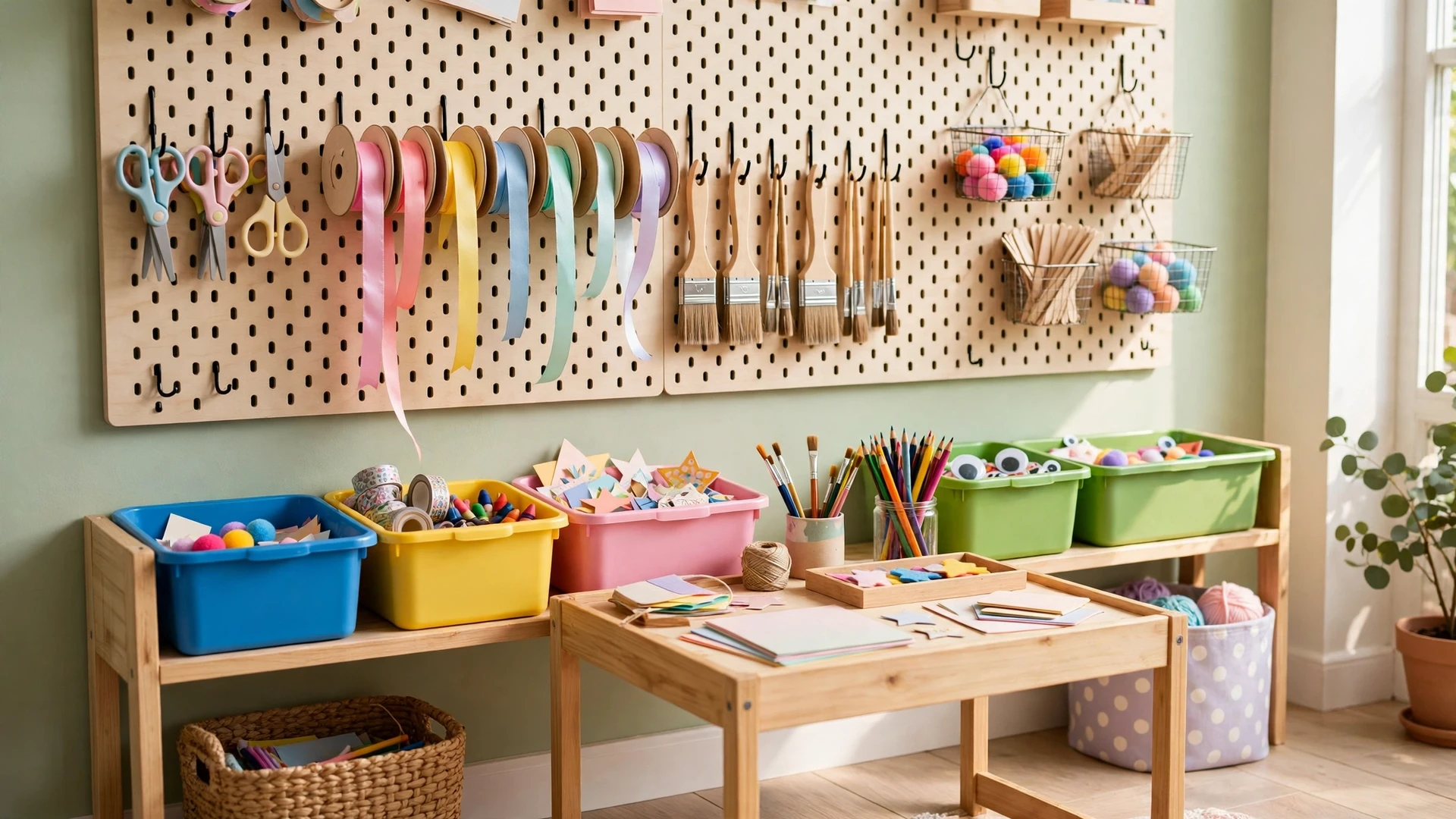
A pegboard keeps scissors, brushes, ribbons, and small baskets visible and off the table. Hang it at child height and use hooks for tools they use most. A pegboard tool wall turns storage into a display that helps children work independently.
5. Build a Small Corner Craft Nook

A corner needs only a small table, a chair, and a shelf or two to become a craft corner idea for kids in a small home. Add a rug, good light, and a few bins to keep the space inviting. Even a tiny nook can spark big creativity when it feels like a special place.
6. Add a Chalkboard or Whiteboard Idea Wall
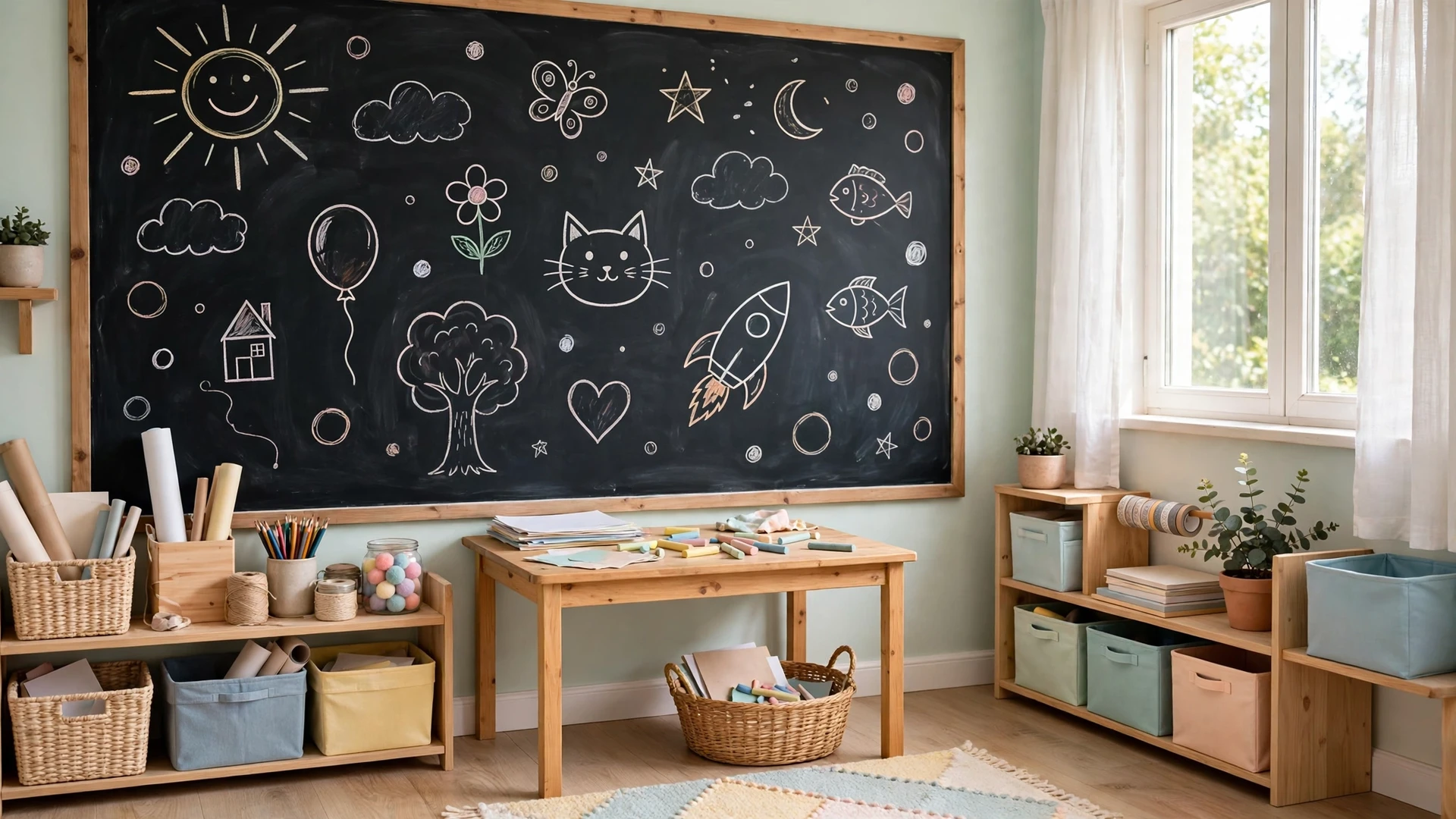
Let children sketch plans, write project ideas, and doodle freely on one wall. A chalkboard wall invites brainstorming and makes it easy to plan the next project. Keep chalk, markers, and an eraser in a small tray nearby.
7. Create a Washable Paint Station
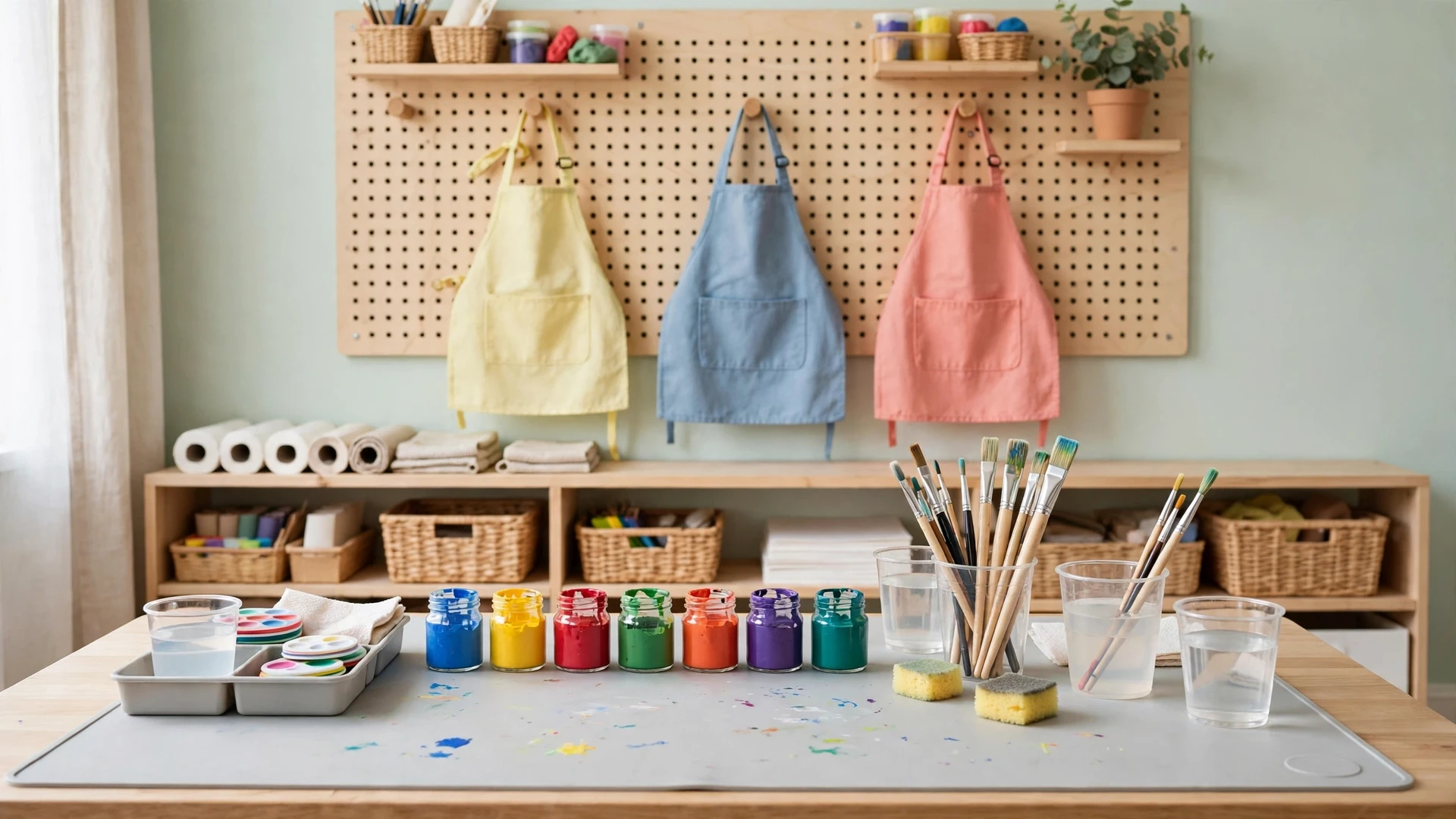
Set up painting on a wipeable mat with water cups, brushes, and aprons in one spot. Keep paint in small, spill-proof jars and store brushes upright. A washable paint station makes messy art fun instead of stressful.
8. Make a Drawing and Sketching Corner

A sketching corner needs good light, smooth paper, and pencils sorted by type. Add a small display ledge for favorite drawings and a jar for sharpened pencils. A quiet drawing corner gives children a calm place to practice and imagine.
9. Build a Collage and Paper Craft Station
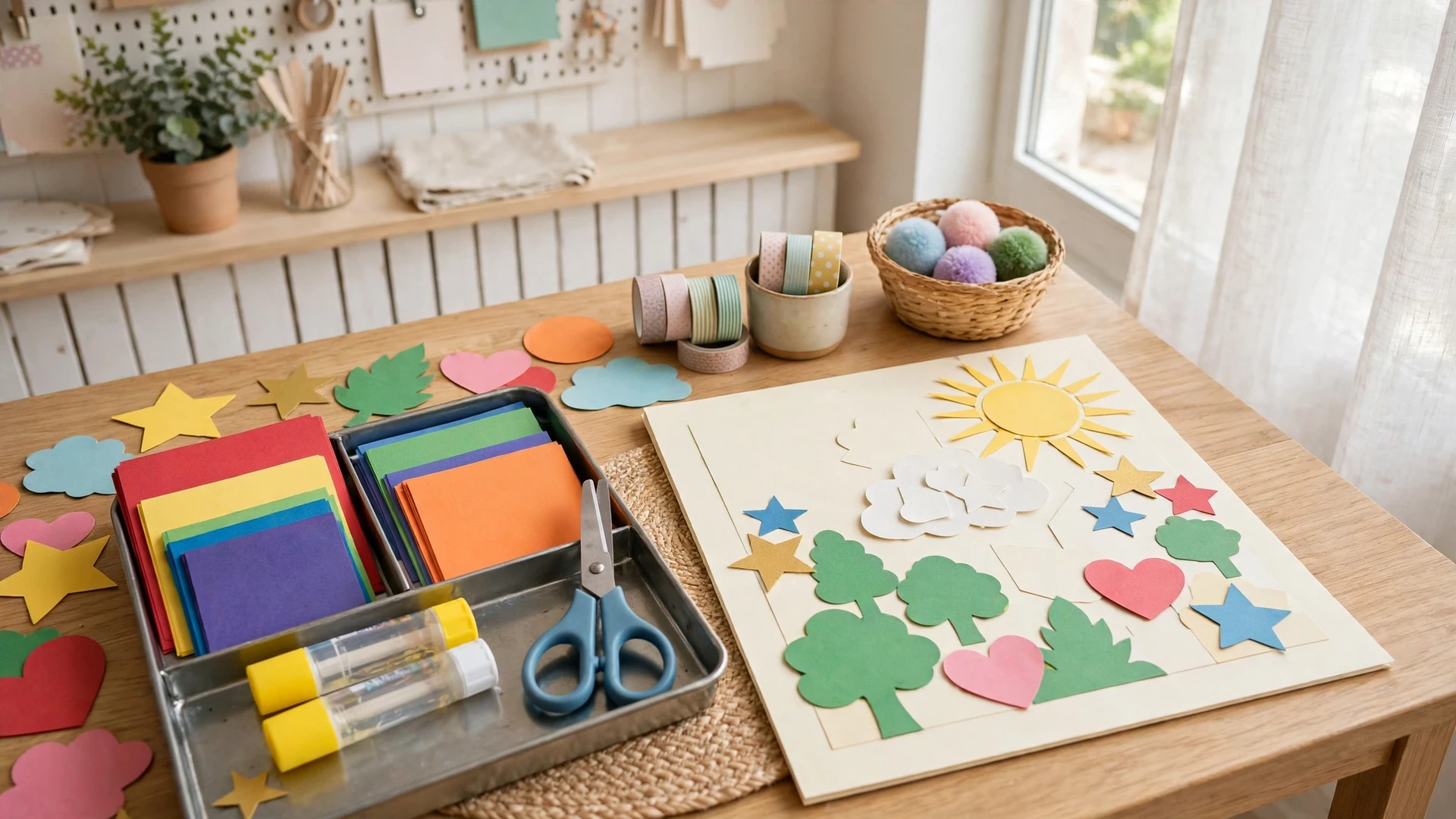
Stock colored paper, old magazines for cutting, glue sticks, and safety scissors in one tray. Collage is perfect for younger makers because it needs little setup and builds fine motor skills. Keep a finished collage board nearby for inspiration.
10. Try a Simple Sewing and Fabric Scrap Corner
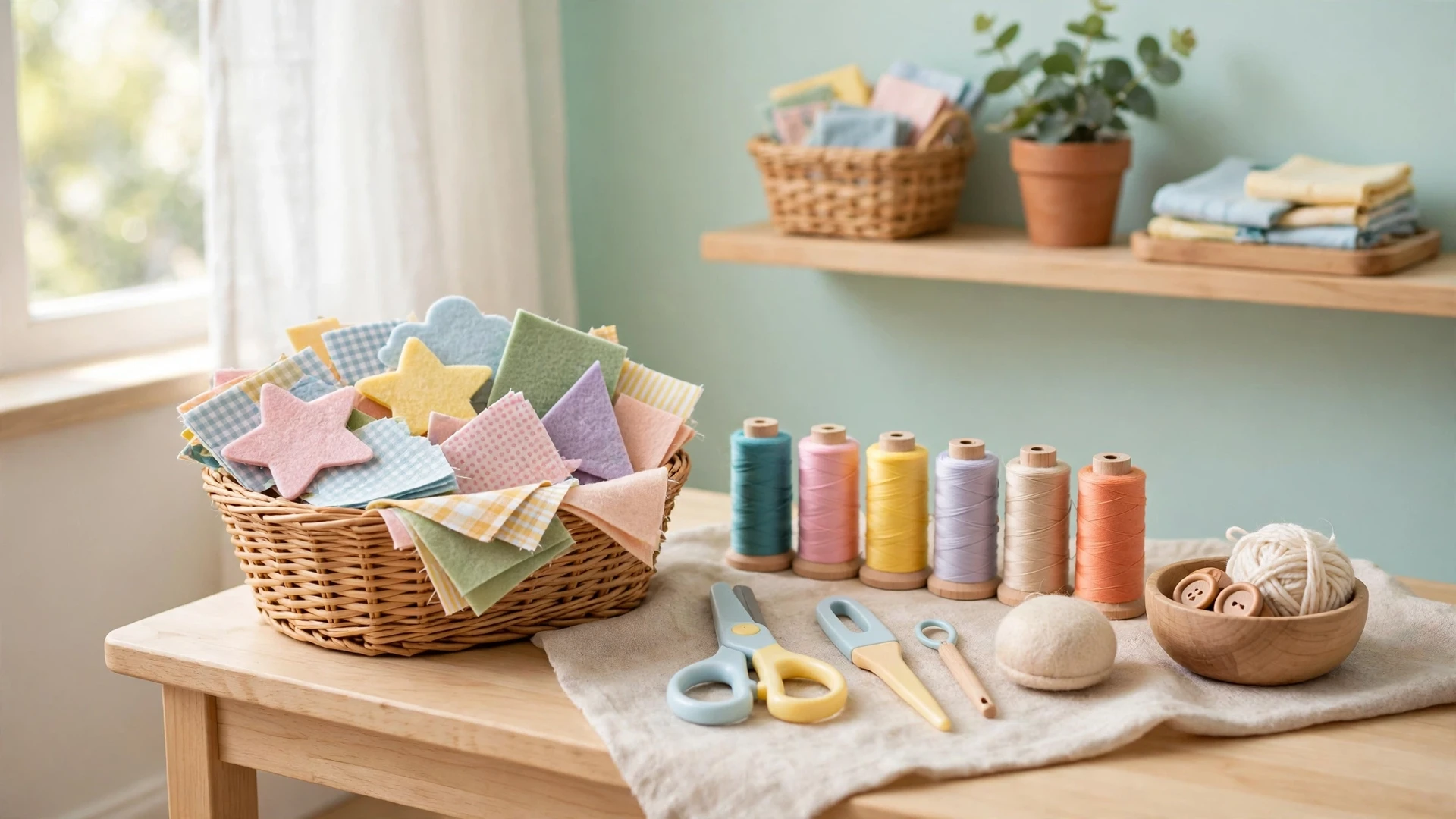
Keep fabric scraps, felt, blunt needles, and thread in a small basket for simple stitching projects. Start with felt shapes and simple running stitches. A sewing corner teaches patience and lets older children make useful gifts.
11. Set Up a Clay and Play Dough Zone

A tray, a mat, and a few tools are all a clay zone needs. Keep dough in sealed containers and tools in a small cup. Clay and play dough build hand strength and imagination, and a contained zone keeps the mess in one place.
12. Add a Building and Brick Table
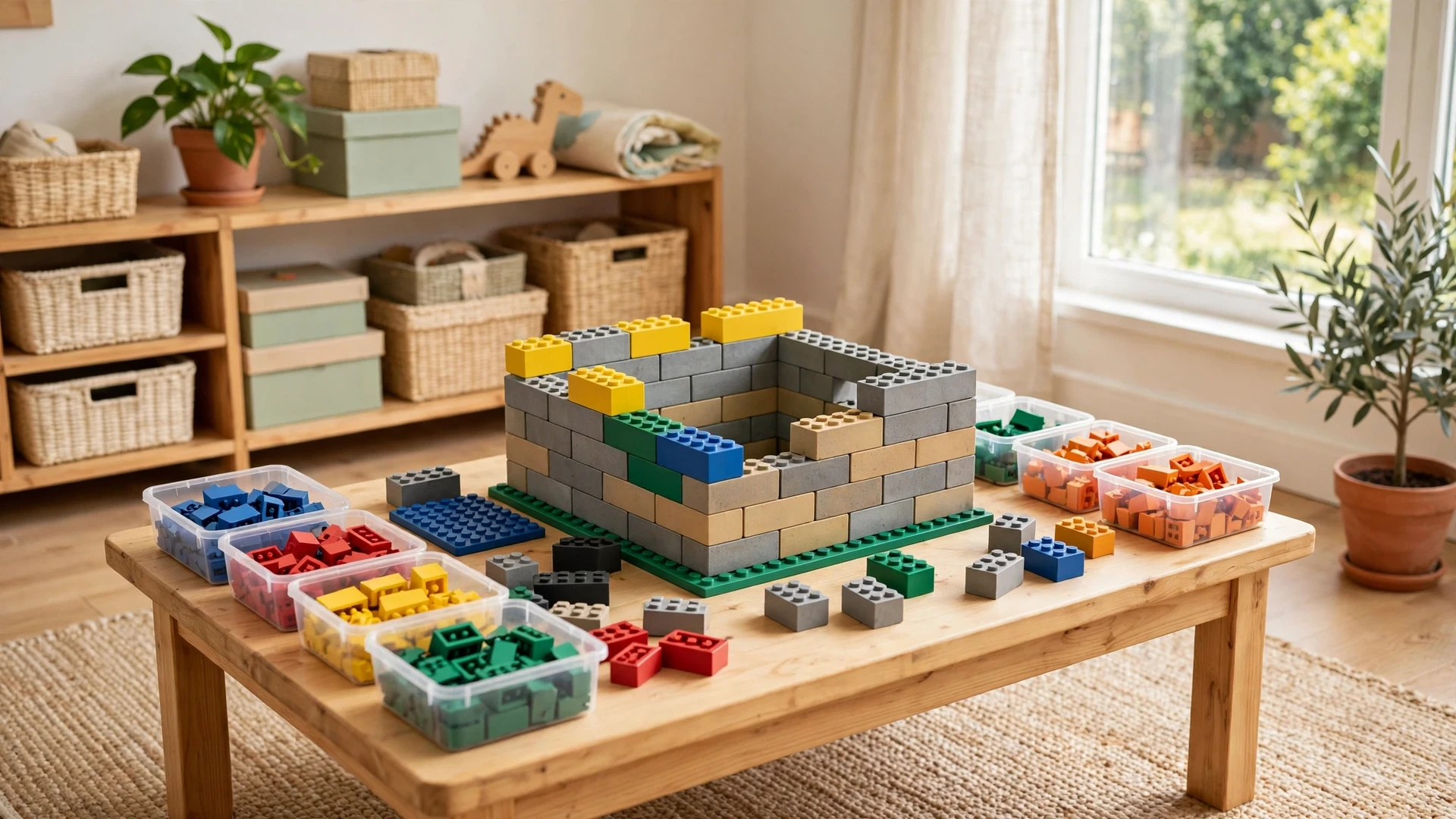
A low table with building bricks and base plates gives children a place to build without pieces spreading across the floor. Sort bricks by color or size in small bins. A building table invites long, focused play and easy cleanup.
13. Create a Nature Craft Corner
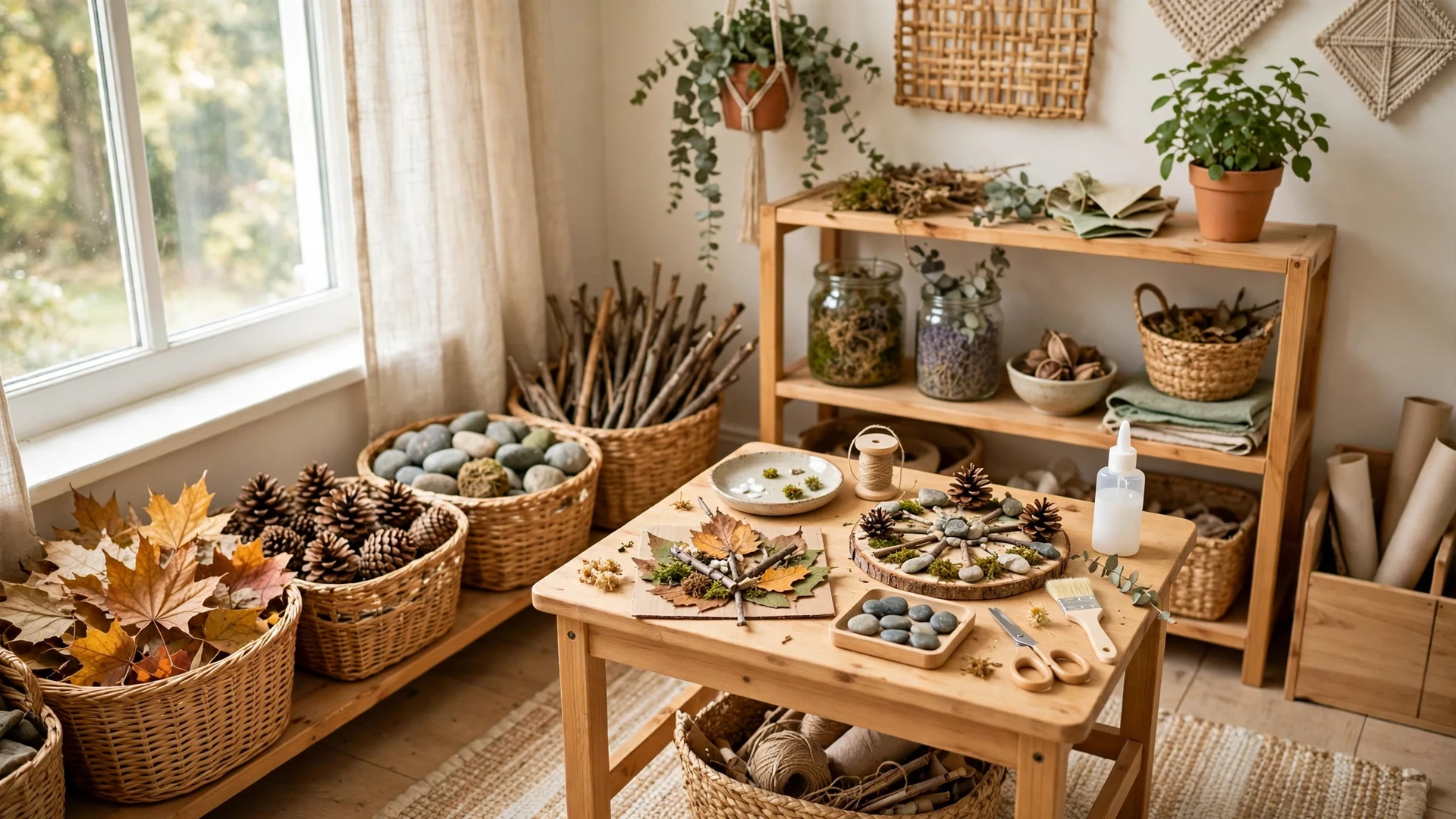
Collect leaves, pinecones, stones, and shells on nature walks and display them in trays. Children can use natural materials for collages, sorting games, and seasonal art. A nature corner connects outdoor exploring with indoor making.
14. Keep a Recycled Material Craft Bin
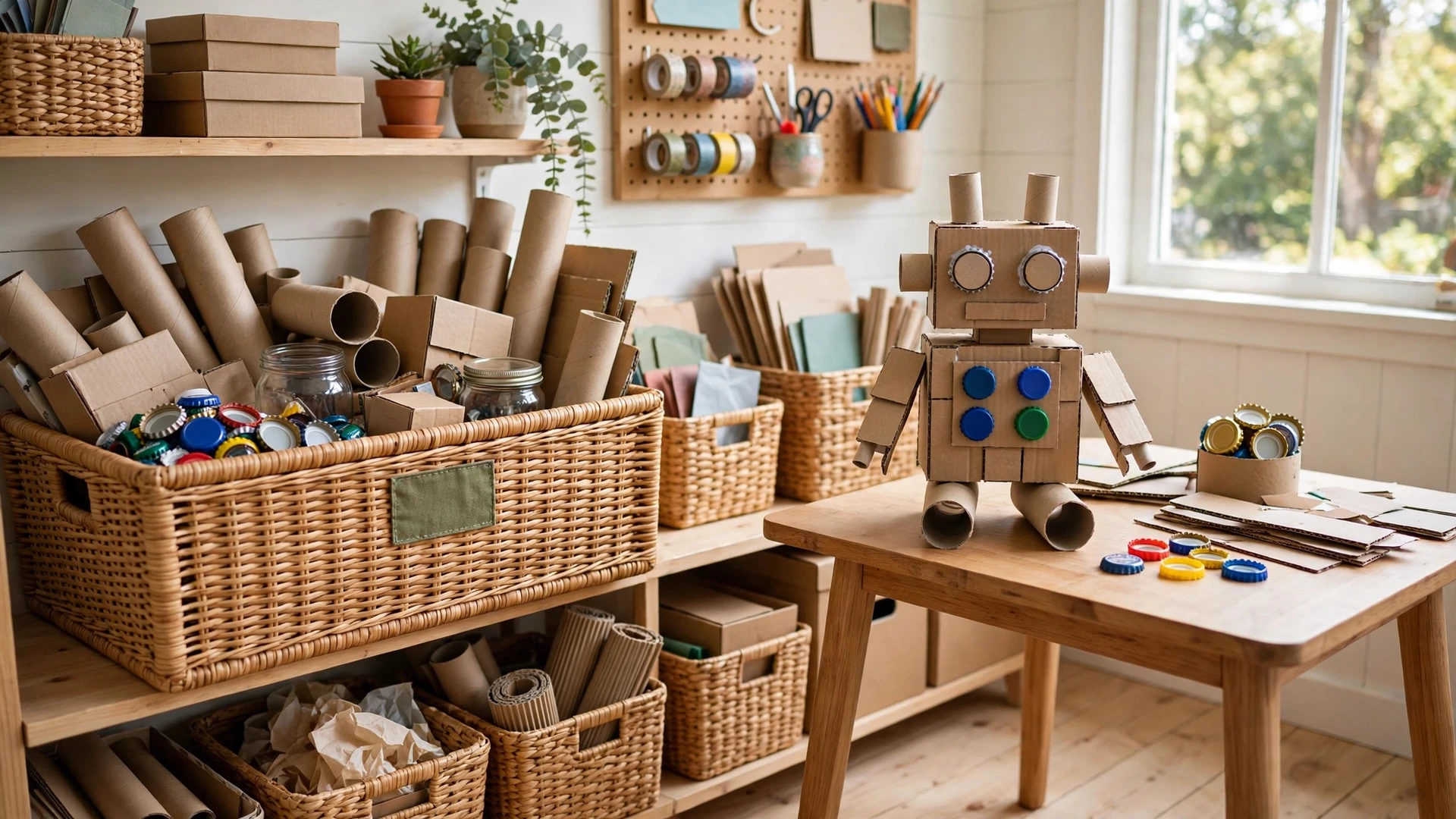
Save clean boxes, tubes, lids, and paper rolls in one labeled bin. Recycled materials turn into robots, houses, and sculptures with a little glue and imagination. This budget-friendly station teaches creativity and care for the planet.
15. Make a Sticker and Stamp Station

Stickers and stamps are small, joyful, and perfect for quick projects. Keep them in a shallow tray with paper and ink pads that are easy to open. A sticker station is ideal for younger children and for busy days.
16. Set Up a Bead and Jewelry Making Table
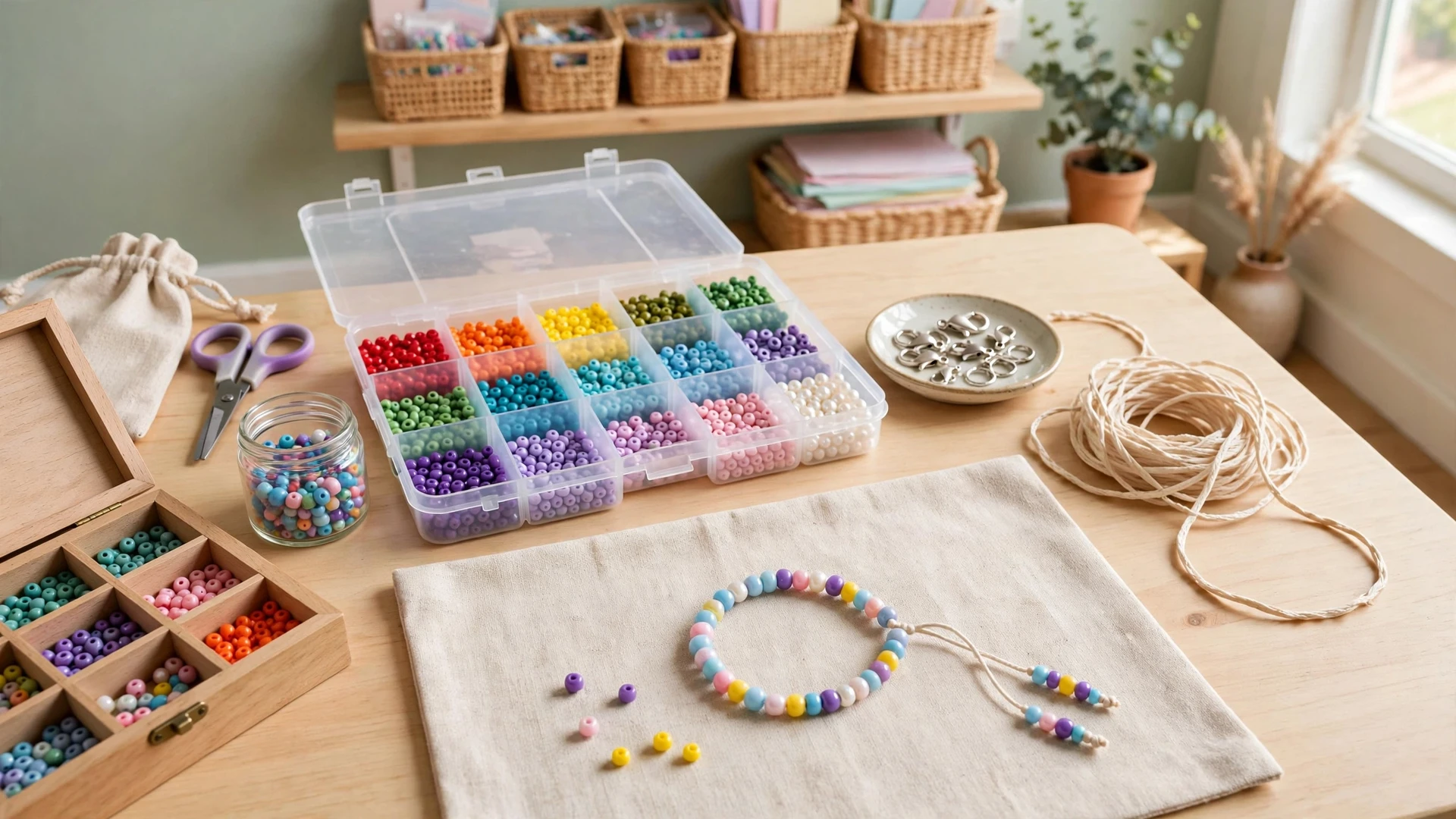
Sort beads by color in small containers and keep string, elastic, and clasps in a tray. Children can make bracelets, necklaces, and gifts while practicing patterns and counting. Use a tray with edges to stop beads rolling away.
17. Use Storage Cubbies with Picture Labels
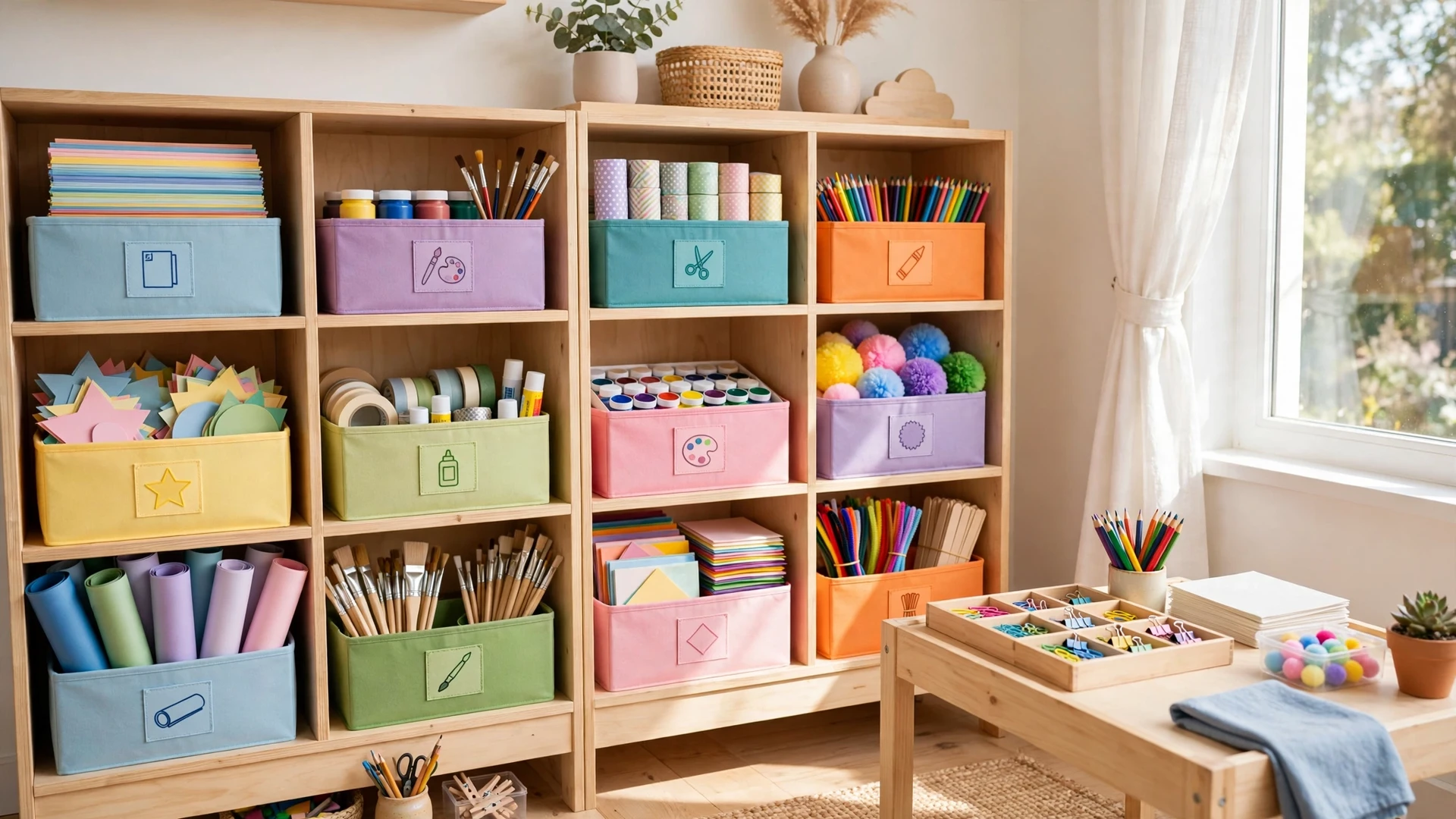
Picture labels help children who cannot read yet find and return supplies on their own. Photograph or draw each item and stick the picture on its bin. Labeled cubbies make tidy-up faster and give children independence.
18. Store Supplies in Clear Jars and Bins
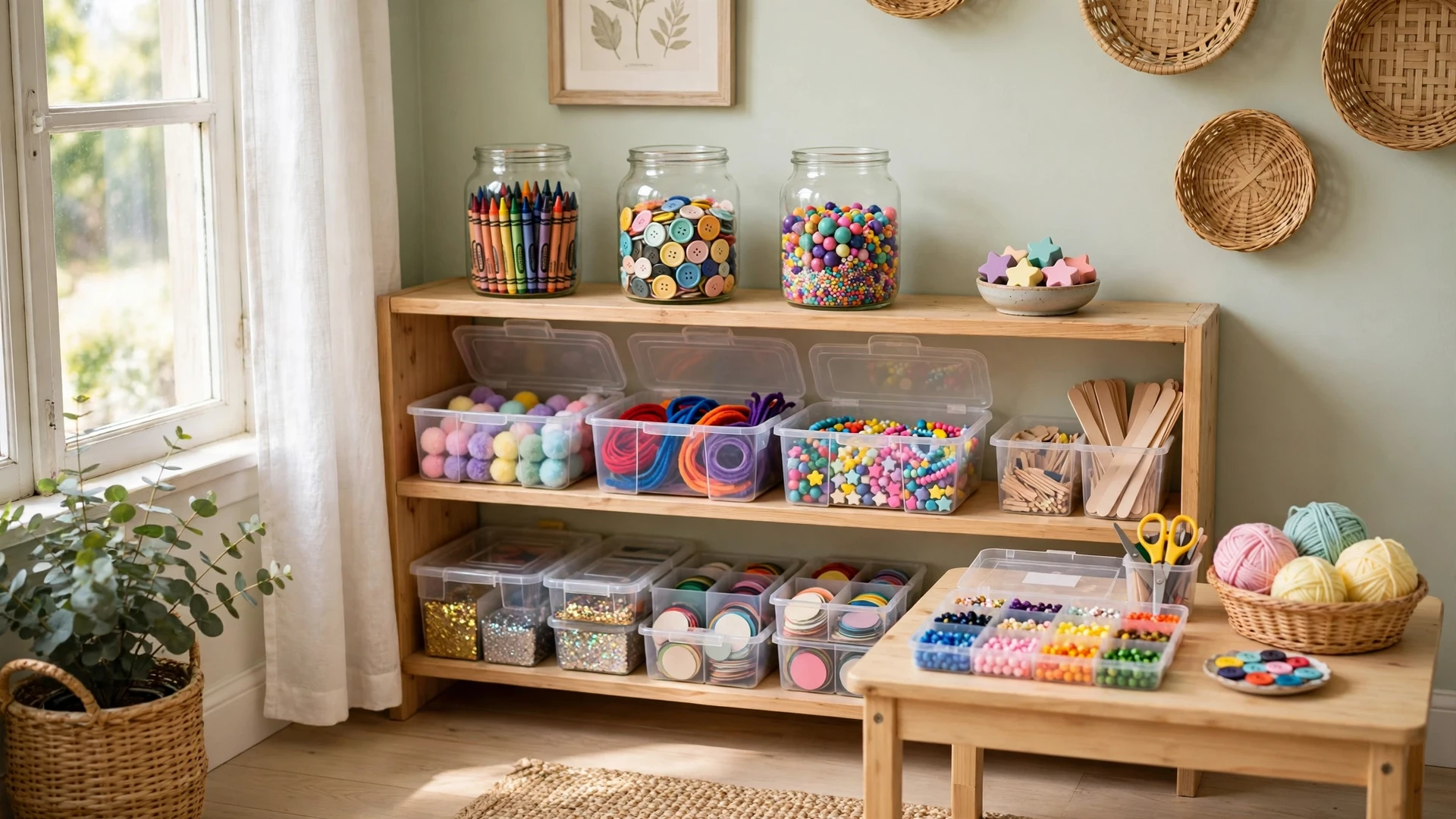
Clear storage lets children see what they have without opening every box. Use jars for crayons, buttons, and beads, and bins for paper and fabric. Clear jars also add color to shelves and make the room feel like a real studio.
19. Hang a Wall-Mounted Paper Roll

A paper roll on the wall gives children a huge canvas for murals, maps, and big drawings. Pull down a fresh length when one is finished and keep crayons and markers nearby. Big paper encourages big ideas and group art.
20. Create a Magnetic Art Display Wall

A magnetic board or sheet lets children swap artwork in seconds with no tape or pins. Use colorful magnets to hold drawings, photos, and project plans. A magnetic display wall makes rotating art easy and fun.
21. Turn a Closet into a Craft Closet
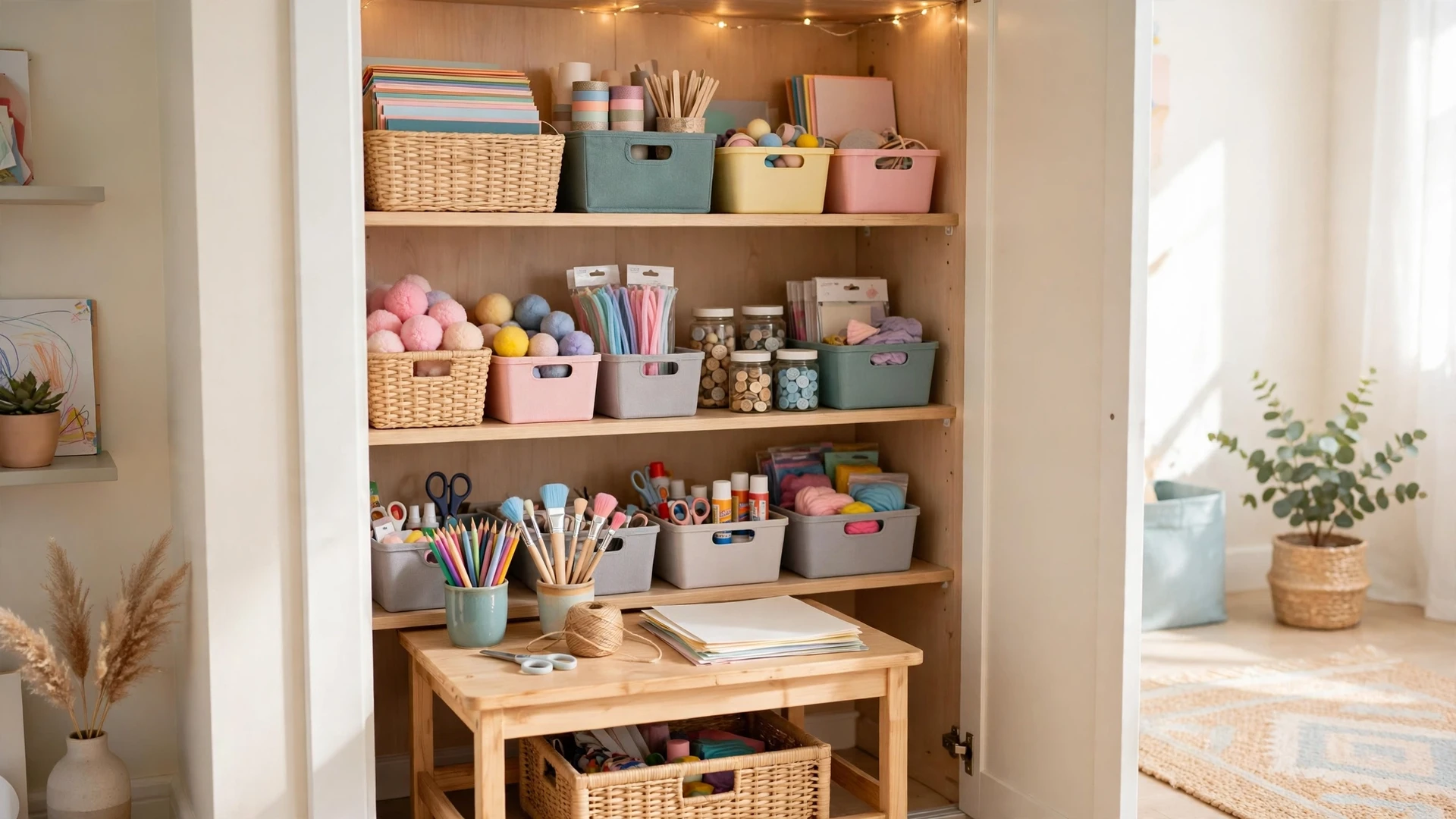
Remove the doors or keep them open, add shelves and a small table, and a closet becomes a hidden craft room. Store supplies on shelves and close the doors to hide the mess when guests arrive. A craft closet is perfect for small homes.
22. Add a Craft Apron and Cleanup Station
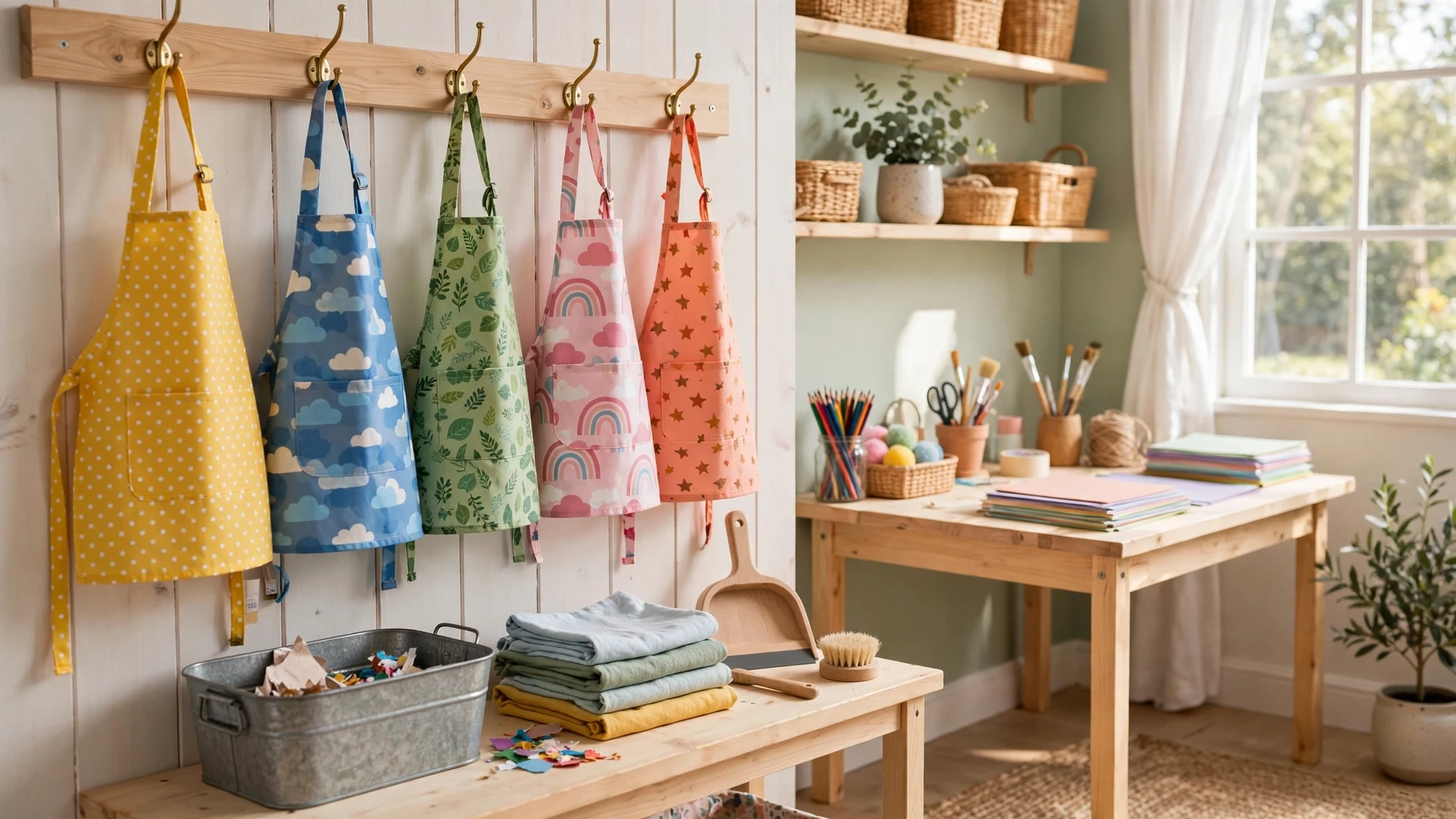
Hang aprons on low hooks, keep a bin nearby, and add cloths for wiping tables. When cleanup tools are easy to reach, children learn to tidy up as part of making. An apron station protects clothes and keeps paint off furniture.
23. Build a Display Shelf for Finished Art

A single shelf for favorite pieces gives children a sense of achievement. Rotate the display monthly so new work gets a turn. A display shelf turns finished art into a celebration, not just a pile to store.
24. Create a Group Craft Table for Siblings and Friends

A larger table with shared supplies in the middle invites siblings and friends to create together. Set out enough tools for everyone and a big tray for shared materials. Group crafting builds teamwork and turns art time into social time.
25. Rotate Projects with a Seasonal Display Shelf

Keep one shelf for seasonal projects and change it through the year. Spring flowers, summer sea creatures, autumn leaves, and winter snowflakes keep the room fresh. Seasonal displays give children new ideas all year long.
Comparison Table
| Idea | Best For | Space Needed | Effort |
|---|---|---|---|
| Rainbow Art Wall | Displaying work | Wall only | Low |
| Colorful Craft Table Station | Everyday making | Small table | Low |
| Rolling Supply Caddy Cart | Small homes | Cart footprint | Low |
| Pegboard Tool Wall | Visible storage | Wall only | Medium |
| Small Corner Craft Nook | Tiny spaces | One corner | Low |
| Chalkboard or Whiteboard Idea Wall | Planning and doodling | Wall only | Low |
| Washable Paint Station | Painting | Table area | Medium |
| Drawing and Sketching Corner | Quiet drawing | Small table | Low |
| Collage and Paper Craft Station | Younger makers | Tray or table | Low |
| Sewing and Fabric Scrap Corner | Older children | Basket and table | Medium |
| Clay and Play Dough Zone | Hands-on modeling | Tray and table | Low |
| Building and Brick Table | Building play | Low table | Low |
| Nature Craft Corner | Outdoor finds | Trays and shelf | Low |
| Recycled Material Craft Bin | Budget making | One bin | Low |
| Sticker and Stamp Station | Quick projects | Tray | Low |
| Bead and Jewelry Making Table | Patterns and gifts | Small table | Medium |
| Storage Cubbies with Picture Labels | Independent tidy-up | Cubby unit | Medium |
| Clear Jars and Bins | Seeing supplies | Shelf | Low |
| Wall-Mounted Paper Roll | Big murals | Wall only | Low |
| Magnetic Art Display Wall | Rotating display | Wall only | Low |
| Craft Closet | Hidden storage | One closet | Medium |
| Apron and Cleanup Station | Messy crafts | Hooks and bin | Low |
| Display Shelf for Finished Art | Celebrating work | One shelf | Low |
| Group Craft Table | Siblings and friends | Larger table | Low |
| Seasonal Display Shelf | Fresh ideas | One shelf | Low |
Frequently Asked Questions
How much space do I need for a kids craft room?
A corner, a closet, or a small table is enough. Focus on reachable storage and a washable surface rather than a large room.
What supplies should I start with?
Paper, crayons, colored pencils, markers, glue, safety scissors, and paint. Add one special station at a time as your child shows interest.
How do I keep a kids craft room tidy?
Use picture labels, clear bins, and a cleanup station. Keep everyday supplies low and special supplies out of reach until needed.
Are craft rooms safe for younger children?
Yes, with age-appropriate supplies. Keep small parts, sharp tools, and paint out of reach for very young children, and supervise messy projects.
How can I set up a craft room on a budget?
Use a rolling cart, recycled materials, and items you already own. Thrifted shelves, jars, and bins keep costs low while keeping supplies organized.
What is the best age for a craft room?
Children of all ages enjoy one. Younger children need simple stations and supervision, while older children can handle more tools and detailed projects.
How do I handle paint and mess?
Use a washable mat, aprons, and a dedicated paint zone. Wipeable surfaces and a cleanup station make paint time easy to manage.
Can a craft room work in a small home?
Absolutely. A corner nook, a craft closet, or a rolling cart gives children a creative space without needing a spare room.
How often should I rotate supplies and displays?
Rotate displays monthly and swap a few supplies seasonally. Fresh materials and a new display keep children excited to create.
Conclusion
A kids craft room is not about having every supply. It is about giving children a place where they can try, make mistakes, and proudly show what they create. Start small, keep it organized, and let the room grow with your child.
Pick one idea from this list today, set up a table or a corner, and invite your child to make something wonderful.





- Be Respectful
- Stay Relevant
- Stay Positive
- True Feedback
- Encourage Discussion
- Avoid Spamming
- No Fake News
- Don't Copy-Paste
- No Personal Attacks
- Be Respectful
- Stay Relevant
- Stay Positive
- True Feedback
- Encourage Discussion
- Avoid Spamming
- No Fake News
- Don't Copy-Paste
- No Personal Attacks
